

GIVE THE PERFECT GIFT
Erin Mills Town Centre Gift Cards are the perfect choice for your gift giving needs.Purchase gift cards at kiosks near the food court or centre court, at Guest Services, or click below to purchase online.PURCHASE HEREHome
Digital Transformation Non-profit Organizations: A Multi-Layered Perspective
Indigo
Loading Inventory...
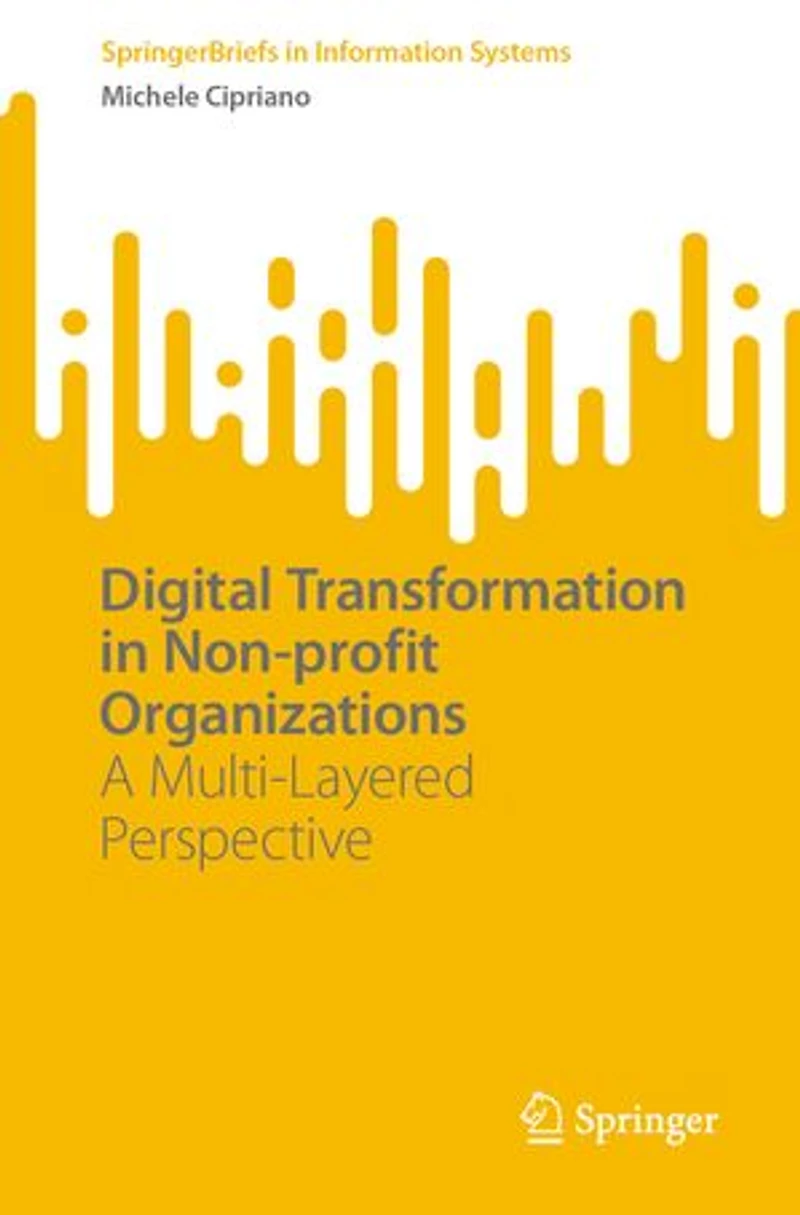

Digital Transformation Non-profit Organizations: A Multi-Layered Perspective
Current price: $219.39
Original price: $274.13

Digital Transformation Non-profit Organizations: A Multi-Layered Perspective
Current price: $219.39
Original price: $274.13
Loading Inventory...
Size: Kobo eBook
*Product information may vary - to confirm product availability, pricing, shipping and return information please contact Indigo
This book presents a digital transformation (DT) methodology for non-profit organizations (NPOs), integrating bibliometric analysis, thematic synthesis, strategic framework development, and empirical case studies. Differentiating itself from similar publications, the book captures the complexity of DT in mission-driven contexts, emphasizing the interplay between organizational identity, strategic logics, and stakeholder pressures. It also proposes multivariate analysis methods in order to identify opportunities for digital change across operational, cultural, and strategic dimensions. Key topics include the classification of DT pathways, strategic benchmarking against for-profit models, and the development of a recursive framework that links readiness, strategic intent, and organizational profiles. Drawing on case studies from UK-based NPOs, the book explores how digital tools are adopted, adapted, and contested in practice, highlighting tensions between innovation and mission alignment. While focused on the non-profit sector, the book&s frameworks and findings are relevant to all scholars and practitioners of digital innovation, organizational change, and public value creation.
This book presents a digital transformation (DT) methodology for non-profit organizations (NPOs), integrating bibliometric analysis, thematic synthesis, strategic framework development, and empirical case studies. Differentiating itself from similar publications, the book captures the complexity of DT in mission-driven contexts, emphasizing the interplay between organizational identity, strategic logics, and stakeholder pressures. It also proposes multivariate analysis methods in order to identify opportunities for digital change across operational, cultural, and strategic dimensions. Key topics include the classification of DT pathways, strategic benchmarking against for-profit models, and the development of a recursive framework that links readiness, strategic intent, and organizational profiles. Drawing on case studies from UK-based NPOs, the book explores how digital tools are adopted, adapted, and contested in practice, highlighting tensions between innovation and mission alignment. While focused on the non-profit sector, the book&s frameworks and findings are relevant to all scholars and practitioners of digital innovation, organizational change, and public value creation.
You May Also Like











More About Indigo at Erin Mills Town Centre
The largest book retailer in Canada also offers toys, music, home décor, gifts and lifestyle products. What's Inside...Books, Magazines, CD’s and DVD’s, Toys and Gifts, Home Accents, Electronics, Baby’s and Children’s Section, Bath and Body, Kitchen and Bedroom, Stationary Located outside in the exterior plaza.
5015 Glen Erin Dr, Mississauga, ON L5M 0R7, Canada
Find Indigo at Erin Mills Town Centre in Mississauga ON
Visit Indigo at Erin Mills Town Centre in Mississauga ON