

GIVE THE PERFECT GIFT
Erin Mills Town Centre Gift Cards are the perfect choice for your gift giving needs.Purchase gift cards at kiosks near the food court or centre court, at Guest Services, or click below to purchase online.PURCHASE HEREHome
Discourse Markers in Early Koine Greek: Cognitive-Functional Analysis and LXX Translation Technique
Indigo
Loading Inventory...
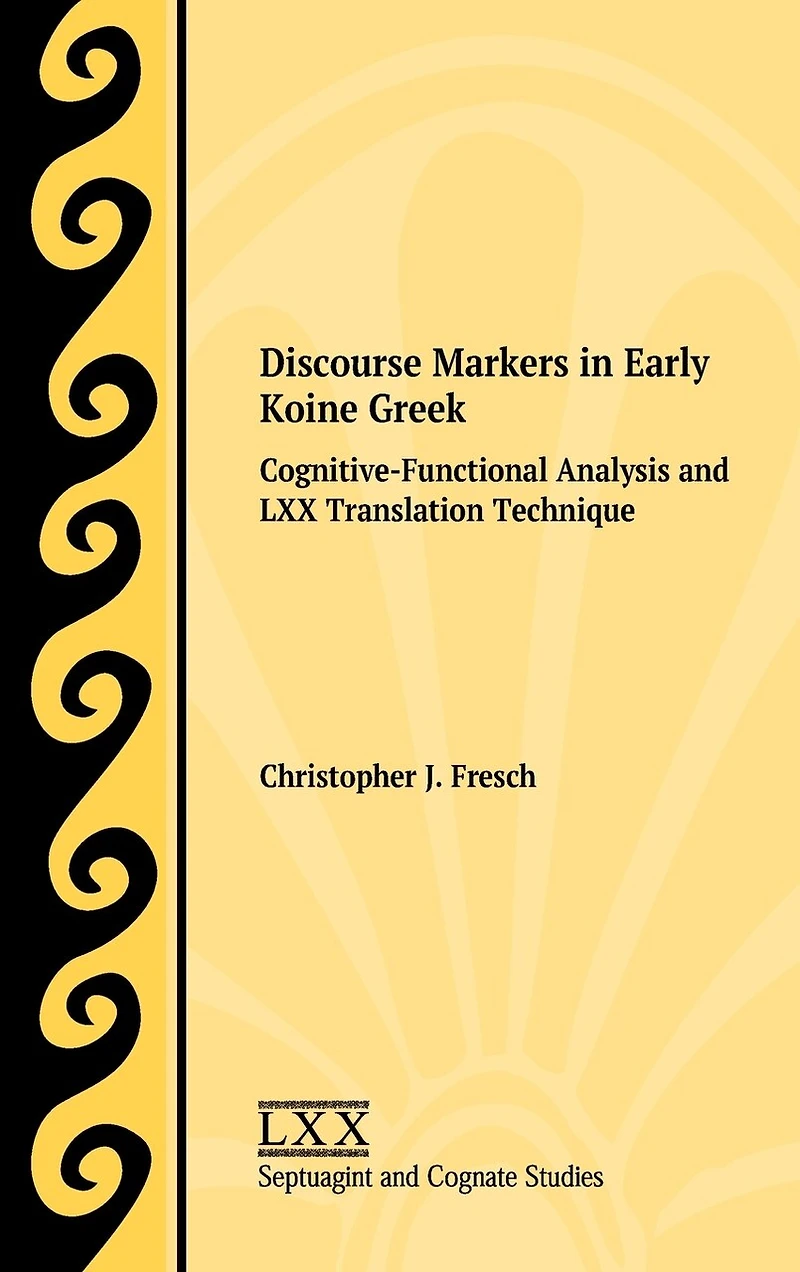
Discourse Markers in Early Koine Greek: Cognitive-Functional Analysis and LXX Translation Technique
Current price: $91.00

Discourse Markers in Early Koine Greek: Cognitive-Functional Analysis and LXX Translation Technique
Current price: $91.00
Loading Inventory...
Size: Hardcover
*Product information may vary - to confirm product availability, pricing, shipping and return information please contact Indigo
Using a cognitive-functional linguistic framework and cross-linguistic research on discourse markers, Christopher J. Fresch investigates the use of five discourse markers in the early Koine Greek found in the documentary papyri of the third to first centuries BCE and the Greek translations of the Hebrew Bible. Through this analysis, Fresch proposes linguistically grounded descriptions for how each discourse marker guides readers in how they process and comprehend the text. Based on these descriptions, he examines the instances of these discourse markers in the Minor Prophets and how the translator used them to render the Hebrew text. Fresch presents a picture of a translator who selected discourse markers based on their own understanding of the structure, flow, and meaning of the underlying Hebrew text. Their use attests to a translator who was contextually aware and who desired to produce a translation in idiomatic Koine.
Using a cognitive-functional linguistic framework and cross-linguistic research on discourse markers, Christopher J. Fresch investigates the use of five discourse markers in the early Koine Greek found in the documentary papyri of the third to first centuries BCE and the Greek translations of the Hebrew Bible. Through this analysis, Fresch proposes linguistically grounded descriptions for how each discourse marker guides readers in how they process and comprehend the text. Based on these descriptions, he examines the instances of these discourse markers in the Minor Prophets and how the translator used them to render the Hebrew text. Fresch presents a picture of a translator who selected discourse markers based on their own understanding of the structure, flow, and meaning of the underlying Hebrew text. Their use attests to a translator who was contextually aware and who desired to produce a translation in idiomatic Koine.
You May Also Like










More About Indigo at Erin Mills Town Centre
The largest book retailer in Canada also offers toys, music, home décor, gifts and lifestyle products. What's Inside...Books, Magazines, CD’s and DVD’s, Toys and Gifts, Home Accents, Electronics, Baby’s and Children’s Section, Bath and Body, Kitchen and Bedroom, Stationary Located outside in the exterior plaza.
5015 Glen Erin Dr, Mississauga, ON L5M 0R7, Canada
Find Indigo at Erin Mills Town Centre in Mississauga ON
Visit Indigo at Erin Mills Town Centre in Mississauga ON