

GIVE THE PERFECT GIFT
Erin Mills Town Centre Gift Cards are the perfect choice for your gift giving needs.Purchase gift cards at kiosks near the food court or centre court, at Guest Services, or click below to purchase online.PURCHASE HEREHome
Discrete Causal Theory: Emergent Spacetime And The Metric Hypothesis
Indigo
Loading Inventory...
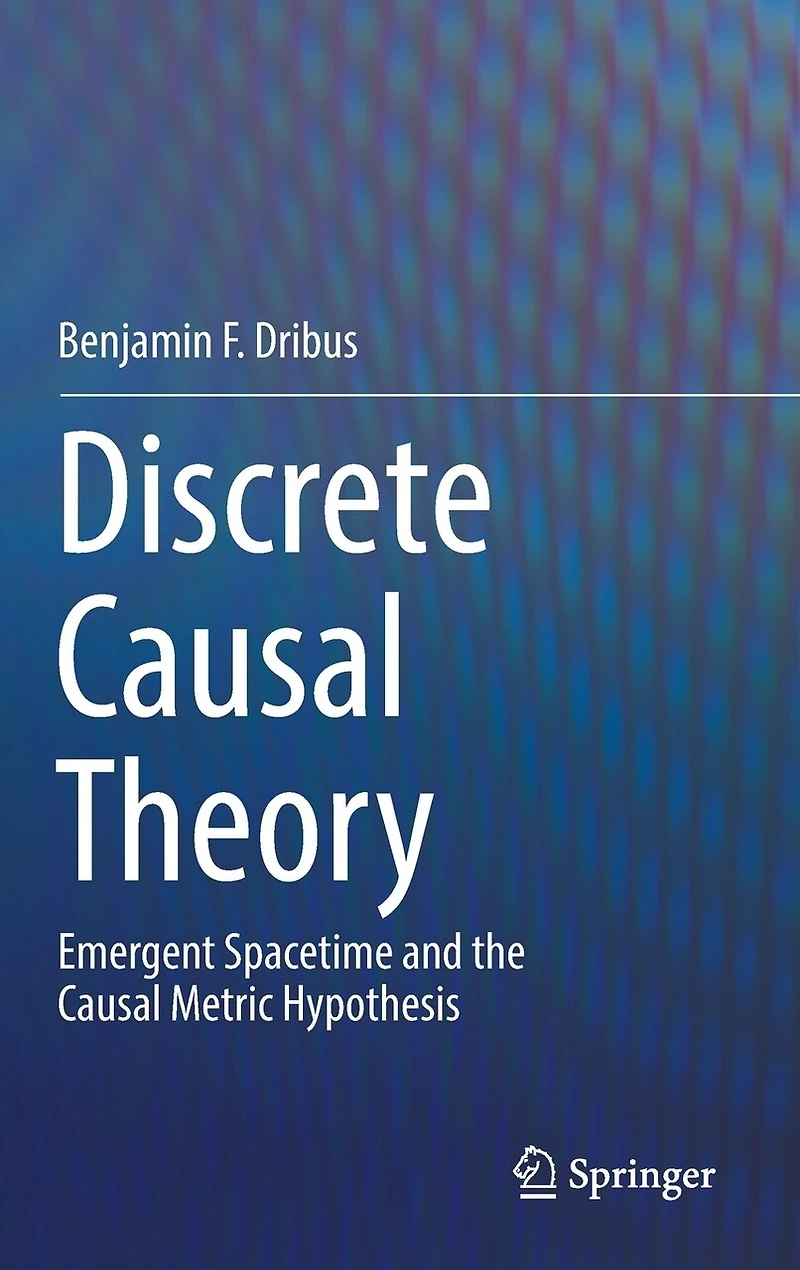
Discrete Causal Theory: Emergent Spacetime And The Metric Hypothesis
Current price: $291.95

Discrete Causal Theory: Emergent Spacetime And The Metric Hypothesis
Current price: $291.95
Loading Inventory...
Size: Hardcover
*Product information may vary - to confirm product availability, pricing, shipping and return information please contact Indigo
This book evaluates and suggests potentially critical improvements to causal set theory, one of the best-motivated approaches to the outstanding problems of fundamental physics. Spacetime structure is of central importance to physics beyond general relativity and the standard model. The causal metric hypothesis treats causal relations as the basis of this structure. The book develops the consequences of this hypothesis under the assumption of a fundamental scale, with smooth spacetime geometry viewed as emergent. This approach resembles causal set theory, but differs in important ways; for example, the relative viewpoint, emphasizing relations between pairs of events, and relationships between pairs of histories, is central. The book culminates in a dynamical law for quantum spacetime, derived via generalized path summation.
This book evaluates and suggests potentially critical improvements to causal set theory, one of the best-motivated approaches to the outstanding problems of fundamental physics. Spacetime structure is of central importance to physics beyond general relativity and the standard model. The causal metric hypothesis treats causal relations as the basis of this structure. The book develops the consequences of this hypothesis under the assumption of a fundamental scale, with smooth spacetime geometry viewed as emergent. This approach resembles causal set theory, but differs in important ways; for example, the relative viewpoint, emphasizing relations between pairs of events, and relationships between pairs of histories, is central. The book culminates in a dynamical law for quantum spacetime, derived via generalized path summation.
You May Also Like








More About Indigo at Erin Mills Town Centre
The largest book retailer in Canada also offers toys, music, home décor, gifts and lifestyle products. What's Inside...Books, Magazines, CD’s and DVD’s, Toys and Gifts, Home Accents, Electronics, Baby’s and Children’s Section, Bath and Body, Kitchen and Bedroom, Stationary Located outside in the exterior plaza.
5015 Glen Erin Dr, Mississauga, ON L5M 0R7, Canada
Find Indigo at Erin Mills Town Centre in Mississauga ON
Visit Indigo at Erin Mills Town Centre in Mississauga ON