

GIVE THE PERFECT GIFT
Erin Mills Town Centre Gift Cards are the perfect choice for your gift giving needs.Purchase gift cards at kiosks near the food court or centre court, at Guest Services, or click below to purchase online.PURCHASE HEREHome
Discrete Computational Mechanics of Masonry Structures
Indigo
Loading Inventory...
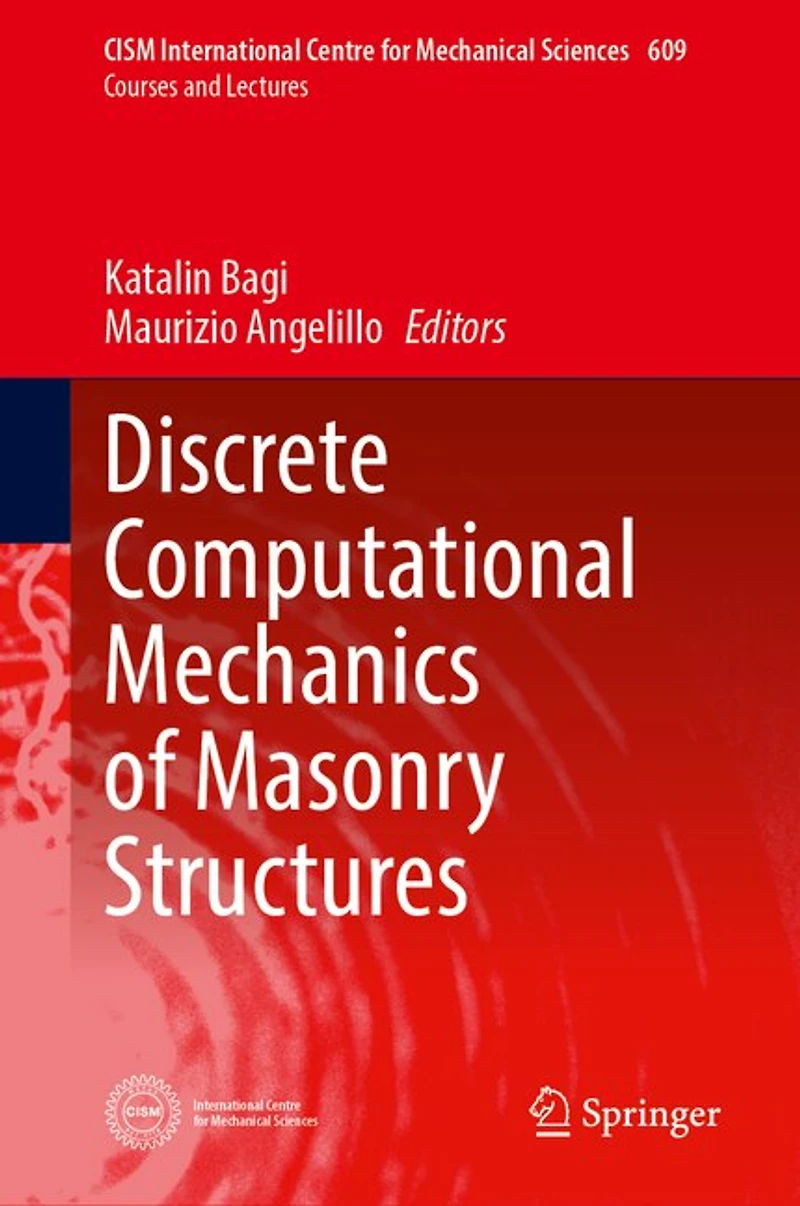
Discrete Computational Mechanics of Masonry Structures
Current price: $262.95

Discrete Computational Mechanics of Masonry Structures
Current price: $262.95
Loading Inventory...
Size: Hardcover
*Product information may vary - to confirm product availability, pricing, shipping and return information please contact Indigo
This book provides an overview to those most important modern and traditional methods of masonry analysis that are able to capture the discrete internal built-up of masonry structures. Such methods are available in a wide variety today - from computational packages based on classical graphical statics techniques through discrete element methods or the most sophisticated no-tension semi-continuum models - , and this book reviews their theoretical foundations, as well as their advantages and preferable fields of application, also calling the attention on their limitations so that the reader could build up a critical view of the choices they have when attacking a masonry mechanics problem. The book gives a basis for the readers to become able to develop their own methods, inspired either by classical graphical statics, or by any modern technique they find promising.
This book provides an overview to those most important modern and traditional methods of masonry analysis that are able to capture the discrete internal built-up of masonry structures. Such methods are available in a wide variety today - from computational packages based on classical graphical statics techniques through discrete element methods or the most sophisticated no-tension semi-continuum models - , and this book reviews their theoretical foundations, as well as their advantages and preferable fields of application, also calling the attention on their limitations so that the reader could build up a critical view of the choices they have when attacking a masonry mechanics problem. The book gives a basis for the readers to become able to develop their own methods, inspired either by classical graphical statics, or by any modern technique they find promising.
You May Also Like








More About Indigo at Erin Mills Town Centre
The largest book retailer in Canada also offers toys, music, home décor, gifts and lifestyle products. What's Inside...Books, Magazines, CD’s and DVD’s, Toys and Gifts, Home Accents, Electronics, Baby’s and Children’s Section, Bath and Body, Kitchen and Bedroom, Stationary Located outside in the exterior plaza.
5015 Glen Erin Dr, Mississauga, ON L5M 0R7, Canada
Find Indigo at Erin Mills Town Centre in Mississauga ON
Visit Indigo at Erin Mills Town Centre in Mississauga ON