

GIVE THE PERFECT GIFT
Erin Mills Town Centre Gift Cards are the perfect choice for your gift giving needs.Purchase gift cards at kiosks near the food court or centre court, at Guest Services, or click below to purchase online.PURCHASE HEREHome
Discrimination and Delegation: Explaining State Responses to Refugees
Indigo
Loading Inventory...
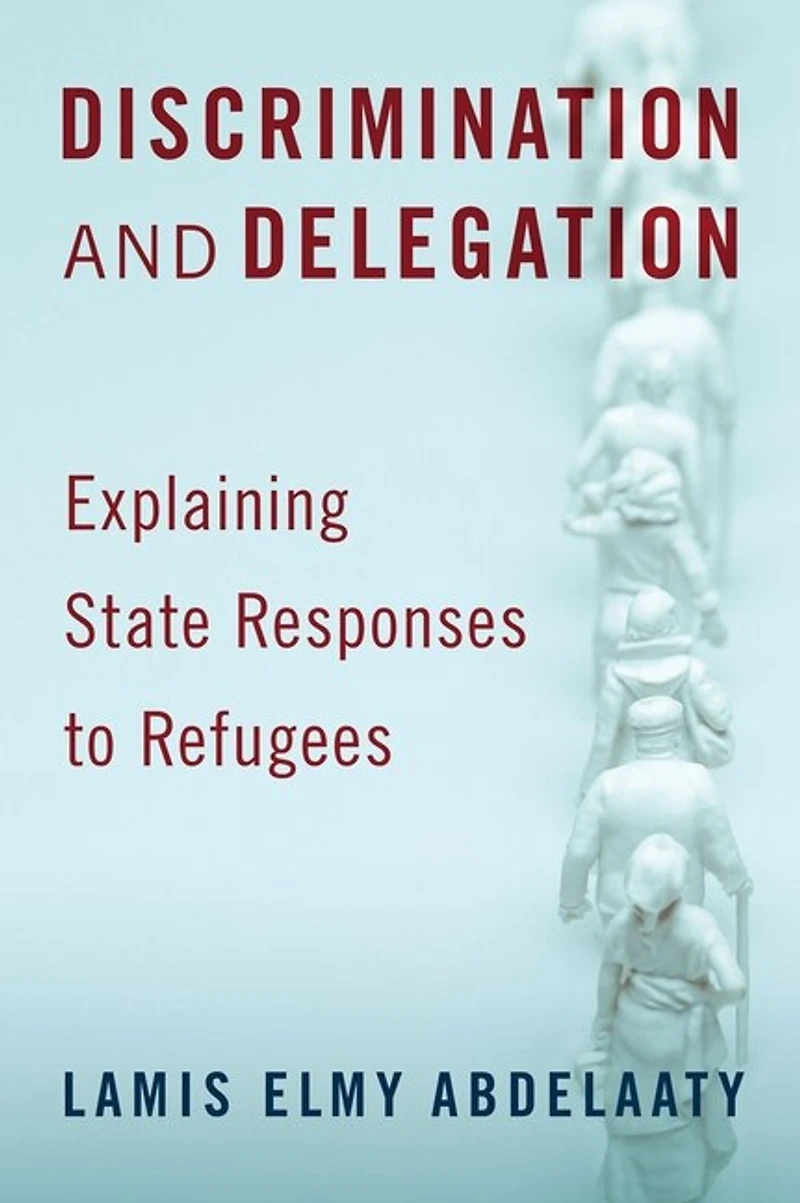
Discrimination and Delegation: Explaining State Responses to Refugees
Current price: $81.50

Discrimination and Delegation: Explaining State Responses to Refugees
Current price: $81.50
Loading Inventory...
Size: Hardcover
*Product information may vary - to confirm product availability, pricing, shipping and return information please contact Indigo
What explains the variety of responses that states adopt toward different refugee groups? Refugees might be granted protection or turned away; they might be permitted to live where they wish and earn an income, pursue education, and access medical treatment; or, they might be confined to a camp and forced to rely on aid while being denied basic services. However, states do not consistently wield their capacity for control, nor do they jealously guard their authority to regulate.
In this book, Lamis Elmy Abdelaaty asks why states sometimes assert their sovereignty vis-à-vis refugee rights and at other times seemingly cede it by delegating refugee oversight to the United Nations. To explain this selective exercise of sovereignty, Abdelaaty develops a two-part theoretical framework in which policymakers in refugee-receiving countries weigh international and domestic concerns. Policymakers in a receiving country might decide to offer protection to refugees from a rival country in order to undermine the sending country's stability, saddle it with reputation costs, and even engage in guerilla-style cross-border attacks. At the domestic level, policymakers consider political competition among ethnic groups - welcoming refugees who are ethnic kin of citizens can satisfy domestic constituencies, expand the base of support for the government, and encourage mobilization along ethnic lines. When these international and domestic incentives conflict, the state shifts responsibility for refugees to the UN, which allows policymakers to placate both refugee-sending countries and domestic constituencies.
Abdelaaty analyzes asylum admissions worldwide, and then examines three case studies in-depth: Egypt (a country that is broadly representative of most refugee recipients), Turkey (an outlier that has limited the geographic application of the Refugee Convention), and Kenya (home to one of the largest refugee populations in the world). Discrimination and Delegation argues that foreign policy and ethnic identity, more so than resources, humanitarianism, or labor skills, shape reactions to refugees.
What explains the variety of responses that states adopt toward different refugee groups? Refugees might be granted protection or turned away; they might be permitted to live where they wish and earn an income, pursue education, and access medical treatment; or, they might be confined to a camp and forced to rely on aid while being denied basic services. However, states do not consistently wield their capacity for control, nor do they jealously guard their authority to regulate.
In this book, Lamis Elmy Abdelaaty asks why states sometimes assert their sovereignty vis-à-vis refugee rights and at other times seemingly cede it by delegating refugee oversight to the United Nations. To explain this selective exercise of sovereignty, Abdelaaty develops a two-part theoretical framework in which policymakers in refugee-receiving countries weigh international and domestic concerns. Policymakers in a receiving country might decide to offer protection to refugees from a rival country in order to undermine the sending country's stability, saddle it with reputation costs, and even engage in guerilla-style cross-border attacks. At the domestic level, policymakers consider political competition among ethnic groups - welcoming refugees who are ethnic kin of citizens can satisfy domestic constituencies, expand the base of support for the government, and encourage mobilization along ethnic lines. When these international and domestic incentives conflict, the state shifts responsibility for refugees to the UN, which allows policymakers to placate both refugee-sending countries and domestic constituencies.
Abdelaaty analyzes asylum admissions worldwide, and then examines three case studies in-depth: Egypt (a country that is broadly representative of most refugee recipients), Turkey (an outlier that has limited the geographic application of the Refugee Convention), and Kenya (home to one of the largest refugee populations in the world). Discrimination and Delegation argues that foreign policy and ethnic identity, more so than resources, humanitarianism, or labor skills, shape reactions to refugees.
You May Also Like












More About Indigo at Erin Mills Town Centre
The largest book retailer in Canada also offers toys, music, home décor, gifts and lifestyle products. What's Inside...Books, Magazines, CD’s and DVD’s, Toys and Gifts, Home Accents, Electronics, Baby’s and Children’s Section, Bath and Body, Kitchen and Bedroom, Stationary Located outside in the exterior plaza.
5015 Glen Erin Dr, Mississauga, ON L5M 0R7, Canada
Find Indigo at Erin Mills Town Centre in Mississauga ON
Visit Indigo at Erin Mills Town Centre in Mississauga ON