

GIVE THE PERFECT GIFT
Erin Mills Town Centre Gift Cards are the perfect choice for your gift giving needs.Purchase gift cards at kiosks near the food court or centre court, at Guest Services, or click below to purchase online.PURCHASE HEREHome
Dostoevsky, The Bible, and History: A close look into the layers of the novel Demons
Indigo
Loading Inventory...
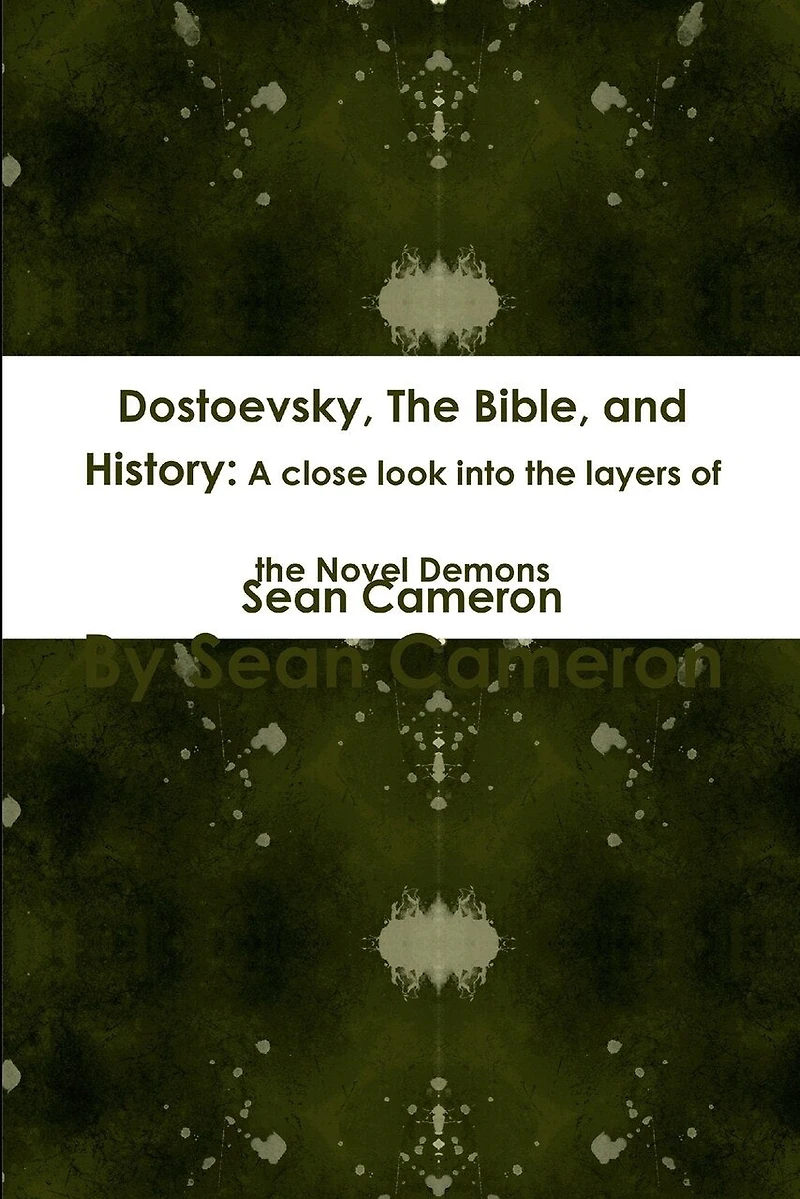
Dostoevsky, The Bible, and History: A close look into the layers of the novel Demons
Current price: $10.17

Dostoevsky, The Bible, and History: A close look into the layers of the novel Demons
Current price: $10.17
Loading Inventory...
Size: Paperback
*Product information may vary - to confirm product availability, pricing, shipping and return information please contact Indigo
Fyodor Dostoevsky's Demons (1871-1872) is a novel that depicts a real event in Russian history, the "Nachaev affair" of 1869, in which an individual, Sergei Nachaev, a Nihilist revolutionary who was sponsored by another famous revolutionary, philosopher, and anarchist: Mikhail Bakunin-who has been called the father of anarchist theory, was involved, if not totally responsible for the murder of a student who was intent on revealing some of the activities of Nachaev. Nachaev represents a new form of revolutionary spirit which Dostoevsky imparts to his character Pyotr Steponovich Verkovensky in which what was only a product of intellectual ideation becomes a wild and uncontrollable force unto itself. Dostoesvky translates this anarchist drama into a powerful myth that serves as a testament and warning of the dangers of revolutionary methods and ideas. An important message for today's heavily polarized world.
Fyodor Dostoevsky's Demons (1871-1872) is a novel that depicts a real event in Russian history, the "Nachaev affair" of 1869, in which an individual, Sergei Nachaev, a Nihilist revolutionary who was sponsored by another famous revolutionary, philosopher, and anarchist: Mikhail Bakunin-who has been called the father of anarchist theory, was involved, if not totally responsible for the murder of a student who was intent on revealing some of the activities of Nachaev. Nachaev represents a new form of revolutionary spirit which Dostoevsky imparts to his character Pyotr Steponovich Verkovensky in which what was only a product of intellectual ideation becomes a wild and uncontrollable force unto itself. Dostoesvky translates this anarchist drama into a powerful myth that serves as a testament and warning of the dangers of revolutionary methods and ideas. An important message for today's heavily polarized world.
You May Also Like











More About Indigo at Erin Mills Town Centre
The largest book retailer in Canada also offers toys, music, home décor, gifts and lifestyle products. What's Inside...Books, Magazines, CD’s and DVD’s, Toys and Gifts, Home Accents, Electronics, Baby’s and Children’s Section, Bath and Body, Kitchen and Bedroom, Stationary Located outside in the exterior plaza.
5015 Glen Erin Dr, Mississauga, ON L5M 0R7, Canada
Find Indigo at Erin Mills Town Centre in Mississauga ON
Visit Indigo at Erin Mills Town Centre in Mississauga ON