

GIVE THE PERFECT GIFT
Erin Mills Town Centre Gift Cards are the perfect choice for your gift giving needs.Purchase gift cards at kiosks near the food court or centre court, at Guest Services, or click below to purchase online.PURCHASE HEREHome
Drawing Music, Marking Time: The design, structure and impact of musical notation
Indigo
Loading Inventory...
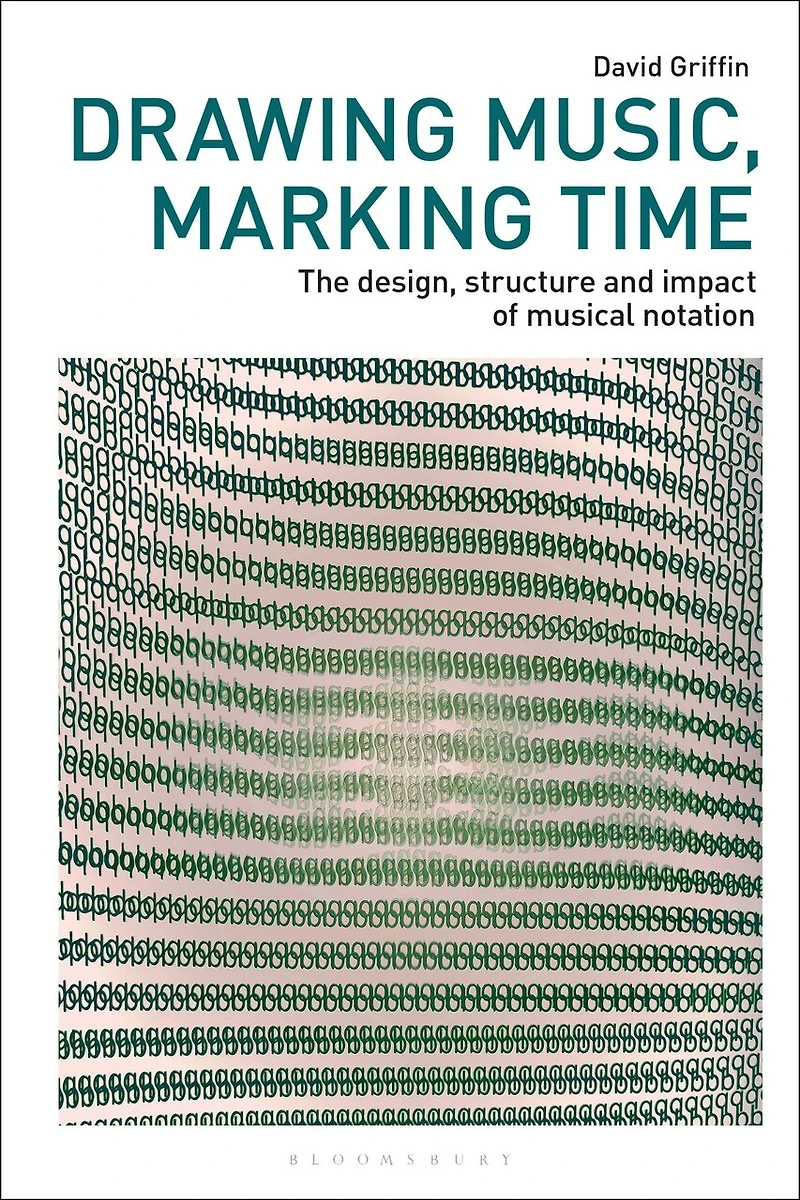
Drawing Music, Marking Time: The design, structure and impact of musical notation
Current price: $167.95

Drawing Music, Marking Time: The design, structure and impact of musical notation
Current price: $167.95
Loading Inventory...
Size: Hardcover
*Product information may vary - to confirm product availability, pricing, shipping and return information please contact Indigo
Marking down the complexities of musical pieces on paper allows them to become portable, shareable, and eminently teachable, but how are the simple geometries of a music notation unfolded into space and time? A music notation is an almost impossibly complicated bit of drawing. Calling it a map or a diagram does not quite do the trick. Its tracery supplies mechanisms for planning, composition, analysis, annotation, and performance of music. But how is it that we read that simple, strategic two-dimensional geometry and make such complex, four-dimensional performances? In this book David Griffin guides readers to a comprehensive understanding of the structural properties of music notations, with a particular focus on the standard Western staff notation system, looking at composers such as Bach, John Cage, Earle Brown and Stockhausen. Developed over a thousand years ago, the staff notation is a geometrical drawing method using dots and lines on a horizontal timeline for explaining the structure of a musical piece. The system behaves a bit like a picture, but it is also like a diagram, and a bit like writing in its structure. In the hands of an experienced user, the notation's complex of marks and phatic elements allows us to leave behind the mere denotation of diagrams or pictures to become a connotative drawing system. This book will attempt to de-code music drawings, untangling their strange knots of graphic and linguistic elements. Using a series of visual examples, Griffin presents background information on how the staff notation developed as an inter-linguistic inscription, a drawing that slips through the mere denotation of pictorial or diagrammatic graphics to become a connotative system, with which we may craft subtle and powerful elements of musical poetry.
Marking down the complexities of musical pieces on paper allows them to become portable, shareable, and eminently teachable, but how are the simple geometries of a music notation unfolded into space and time? A music notation is an almost impossibly complicated bit of drawing. Calling it a map or a diagram does not quite do the trick. Its tracery supplies mechanisms for planning, composition, analysis, annotation, and performance of music. But how is it that we read that simple, strategic two-dimensional geometry and make such complex, four-dimensional performances? In this book David Griffin guides readers to a comprehensive understanding of the structural properties of music notations, with a particular focus on the standard Western staff notation system, looking at composers such as Bach, John Cage, Earle Brown and Stockhausen. Developed over a thousand years ago, the staff notation is a geometrical drawing method using dots and lines on a horizontal timeline for explaining the structure of a musical piece. The system behaves a bit like a picture, but it is also like a diagram, and a bit like writing in its structure. In the hands of an experienced user, the notation's complex of marks and phatic elements allows us to leave behind the mere denotation of diagrams or pictures to become a connotative drawing system. This book will attempt to de-code music drawings, untangling their strange knots of graphic and linguistic elements. Using a series of visual examples, Griffin presents background information on how the staff notation developed as an inter-linguistic inscription, a drawing that slips through the mere denotation of pictorial or diagrammatic graphics to become a connotative system, with which we may craft subtle and powerful elements of musical poetry.
You May Also Like
















More About Indigo at Erin Mills Town Centre
The largest book retailer in Canada also offers toys, music, home décor, gifts and lifestyle products. What's Inside...Books, Magazines, CD’s and DVD’s, Toys and Gifts, Home Accents, Electronics, Baby’s and Children’s Section, Bath and Body, Kitchen and Bedroom, Stationary Located outside in the exterior plaza.
5015 Glen Erin Dr, Mississauga, ON L5M 0R7, Canada
Find Indigo at Erin Mills Town Centre in Mississauga ON
Visit Indigo at Erin Mills Town Centre in Mississauga ON