

GIVE THE PERFECT GIFT
Erin Mills Town Centre Gift Cards are the perfect choice for your gift giving needs.Purchase gift cards at kiosks near the food court or centre court, at Guest Services, or click below to purchase online.PURCHASE HEREHome
Dynamic Image Analysis of Granular Materials: Particle Granulometry for Geotechnical, Material, and Geological Applications
Indigo
Loading Inventory...
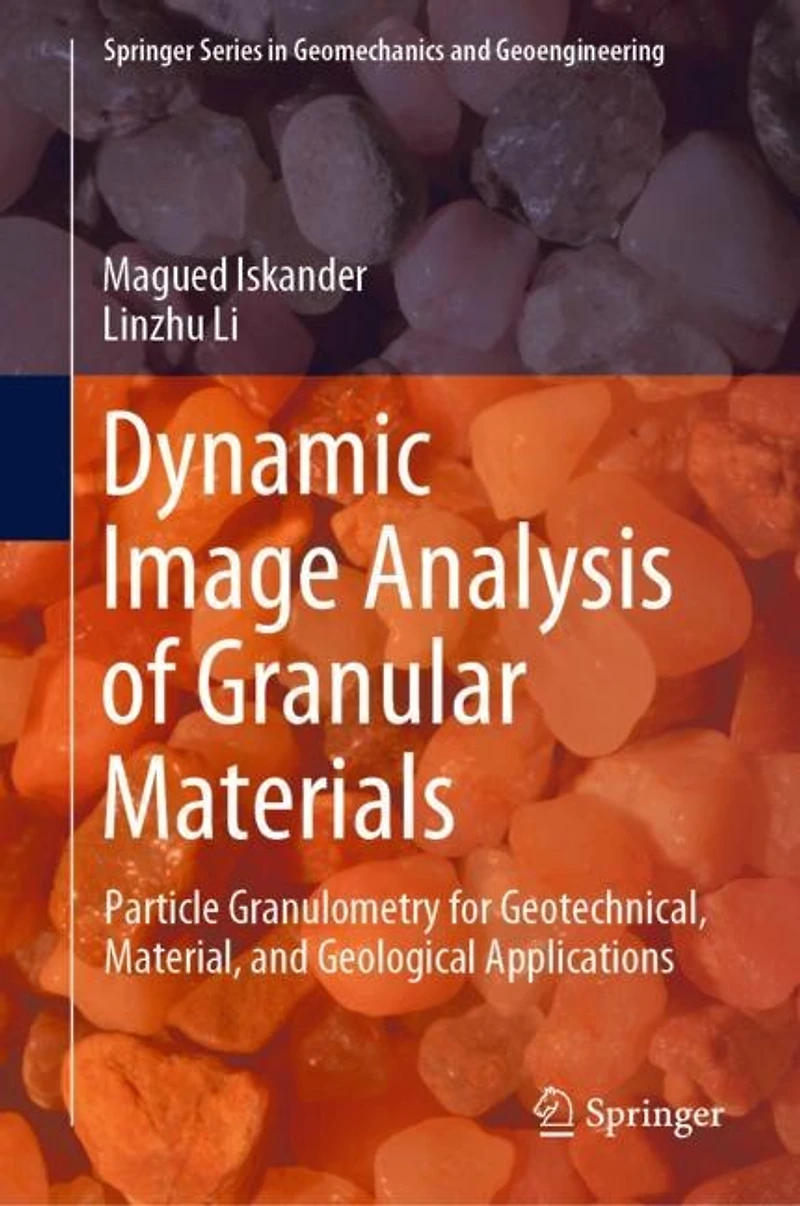
Dynamic Image Analysis of Granular Materials: Particle Granulometry for Geotechnical, Material, and Geological Applications
Current price: $262.95

Dynamic Image Analysis of Granular Materials: Particle Granulometry for Geotechnical, Material, and Geological Applications
Current price: $262.95
Loading Inventory...
Size: Hardcover
*Product information may vary - to confirm product availability, pricing, shipping and return information please contact Indigo
This book explores the effectiveness of Dynamic Image Analysis (DIA) in granulometry studies of sand, and presents criteria for soil characterization using DIA, including test parameters, specimen size, efficacy in gap-graded soils, and its limitations. DIA is a modern experimental technique used to analyze and classify particulate materials based on their size, shape, and other morphological properties. This method employs a high-frame-rate camera to capture images of individual sand particles, which have been transported and separated using various techniques. DIA generates both particle size and shape information by analyzing thousands to millions of particles, providing a quantitative statistical description of grain size and shape distribution within the specimen. The manuscript also offers a comprehensive examination of 2D and 3D particle size and shape descriptors. It demonstrates that there is no correlation between size and shape parameters in many sands and that shape descriptors can be reduced to four independent parameters representing sand granulometry at different scales. Additionally, the use of DIA in exploring the depositional history of two complex calcareous sands is presented. The manuscript presents the properties of 30 representative sands, including size and shape parameters, and fits them to statistical distributions. The investigated soils encompass both natural and machine-sorted materials, particles with regular and irregular shapes, as well as siliceous and calcareous sands. Physical granulometry of sand particles is compared using 2D, 3D DIA, and micro-computed tomography (μCT). The work demonstrates that DIA offers significant advantages in terms of efficiency for 3D shape analysis while providing an adequate representation of particle sizes and shapes of most sands. Finally, the manuscript integrates classical geotechnical engineering with computer vision and artificial intelligence. Size and shape descriptors are utilized for sand classification through machine learning models. This work represents a crucial step toward the automatic machine classification of soils, potentially enabling on-site classification using smartphones equipped with high-resolution cameras.
This book explores the effectiveness of Dynamic Image Analysis (DIA) in granulometry studies of sand, and presents criteria for soil characterization using DIA, including test parameters, specimen size, efficacy in gap-graded soils, and its limitations. DIA is a modern experimental technique used to analyze and classify particulate materials based on their size, shape, and other morphological properties. This method employs a high-frame-rate camera to capture images of individual sand particles, which have been transported and separated using various techniques. DIA generates both particle size and shape information by analyzing thousands to millions of particles, providing a quantitative statistical description of grain size and shape distribution within the specimen. The manuscript also offers a comprehensive examination of 2D and 3D particle size and shape descriptors. It demonstrates that there is no correlation between size and shape parameters in many sands and that shape descriptors can be reduced to four independent parameters representing sand granulometry at different scales. Additionally, the use of DIA in exploring the depositional history of two complex calcareous sands is presented. The manuscript presents the properties of 30 representative sands, including size and shape parameters, and fits them to statistical distributions. The investigated soils encompass both natural and machine-sorted materials, particles with regular and irregular shapes, as well as siliceous and calcareous sands. Physical granulometry of sand particles is compared using 2D, 3D DIA, and micro-computed tomography (μCT). The work demonstrates that DIA offers significant advantages in terms of efficiency for 3D shape analysis while providing an adequate representation of particle sizes and shapes of most sands. Finally, the manuscript integrates classical geotechnical engineering with computer vision and artificial intelligence. Size and shape descriptors are utilized for sand classification through machine learning models. This work represents a crucial step toward the automatic machine classification of soils, potentially enabling on-site classification using smartphones equipped with high-resolution cameras.
You May Also Like















More About Indigo at Erin Mills Town Centre
The largest book retailer in Canada also offers toys, music, home décor, gifts and lifestyle products. What's Inside...Books, Magazines, CD’s and DVD’s, Toys and Gifts, Home Accents, Electronics, Baby’s and Children’s Section, Bath and Body, Kitchen and Bedroom, Stationary Located outside in the exterior plaza.
5015 Glen Erin Dr, Mississauga, ON L5M 0R7, Canada
Find Indigo at Erin Mills Town Centre in Mississauga ON
Visit Indigo at Erin Mills Town Centre in Mississauga ON