

GIVE THE PERFECT GIFT
Erin Mills Town Centre Gift Cards are the perfect choice for your gift giving needs.Purchase gift cards at kiosks near the food court or centre court, at Guest Services, or click below to purchase online.PURCHASE HEREHome
Dynamical Corporate Finance: An Equilibrium Approach
Indigo
Loading Inventory...
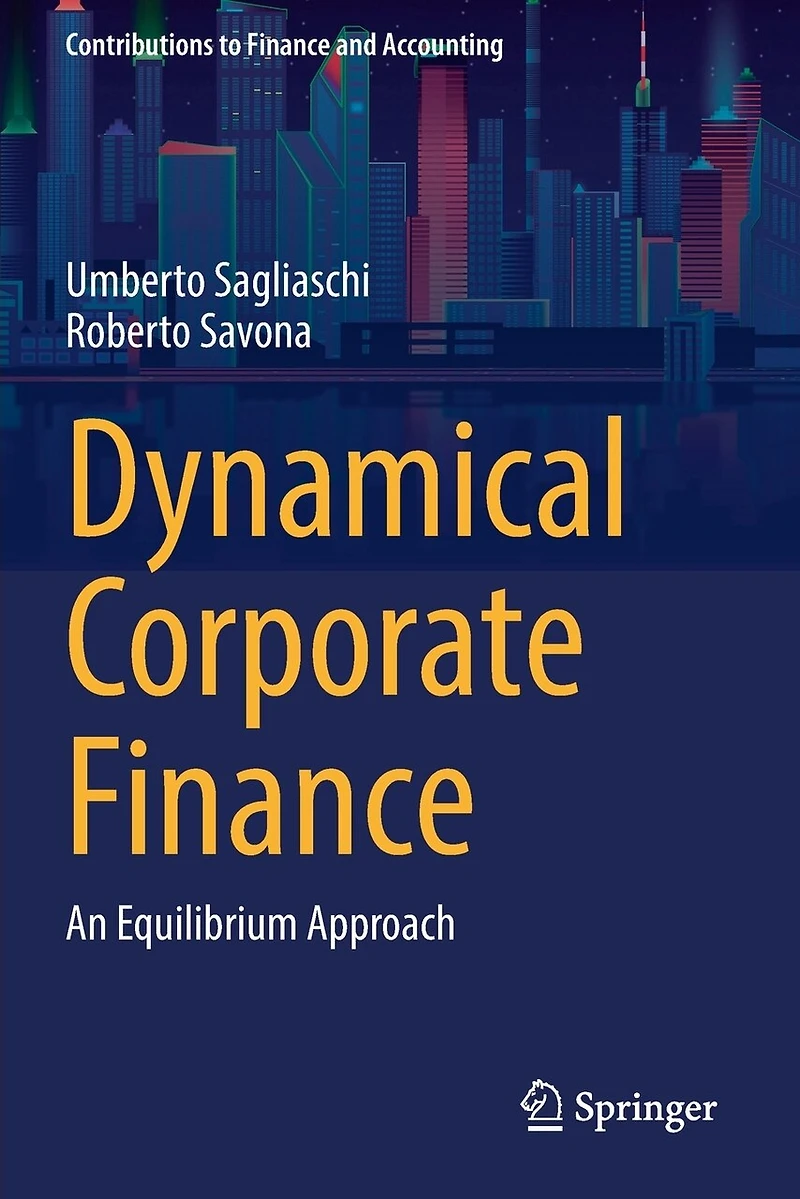
Dynamical Corporate Finance: An Equilibrium Approach
Current price: $204.50

Dynamical Corporate Finance: An Equilibrium Approach
Current price: $204.50
Loading Inventory...
Size: Paperback
*Product information may vary - to confirm product availability, pricing, shipping and return information please contact Indigo
The way in which leverage and its expected dynamics impact on firm valuation is very different from what is assumed by the traditional static capital structure framework. Recent work that allows the firm to restructure its debt over time proves to be able to explain much of the observed cross-sectional and time-series variation in leverage, while static capital structure predictions do not. The purpose of this book is to re-characterize the firm's valuation process within a dynamical capital structure environment, by drawing on a vast body of recent and more traditional theoretical insights and empirical findings on firm evaluation, also including asset pricing literature, offering a new setting in which practitioners and researchers are provided with new tools to anticipate changes in capital structure and setting prices for firm's debt and equity accordingly.
The way in which leverage and its expected dynamics impact on firm valuation is very different from what is assumed by the traditional static capital structure framework. Recent work that allows the firm to restructure its debt over time proves to be able to explain much of the observed cross-sectional and time-series variation in leverage, while static capital structure predictions do not. The purpose of this book is to re-characterize the firm's valuation process within a dynamical capital structure environment, by drawing on a vast body of recent and more traditional theoretical insights and empirical findings on firm evaluation, also including asset pricing literature, offering a new setting in which practitioners and researchers are provided with new tools to anticipate changes in capital structure and setting prices for firm's debt and equity accordingly.
You May Also Like












More About Indigo at Erin Mills Town Centre
The largest book retailer in Canada also offers toys, music, home décor, gifts and lifestyle products. What's Inside...Books, Magazines, CD’s and DVD’s, Toys and Gifts, Home Accents, Electronics, Baby’s and Children’s Section, Bath and Body, Kitchen and Bedroom, Stationary Located outside in the exterior plaza.
5015 Glen Erin Dr, Mississauga, ON L5M 0R7, Canada
Find Indigo at Erin Mills Town Centre in Mississauga ON
Visit Indigo at Erin Mills Town Centre in Mississauga ON