

GIVE THE PERFECT GIFT
Erin Mills Town Centre Gift Cards are the perfect choice for your gift giving needs.Purchase gift cards at kiosks near the food court or centre court, at Guest Services, or click below to purchase online.PURCHASE HEREHome
Economic terms the news during Great Recession: A diachronic sentiment and collocational analysis
Indigo
Loading Inventory...
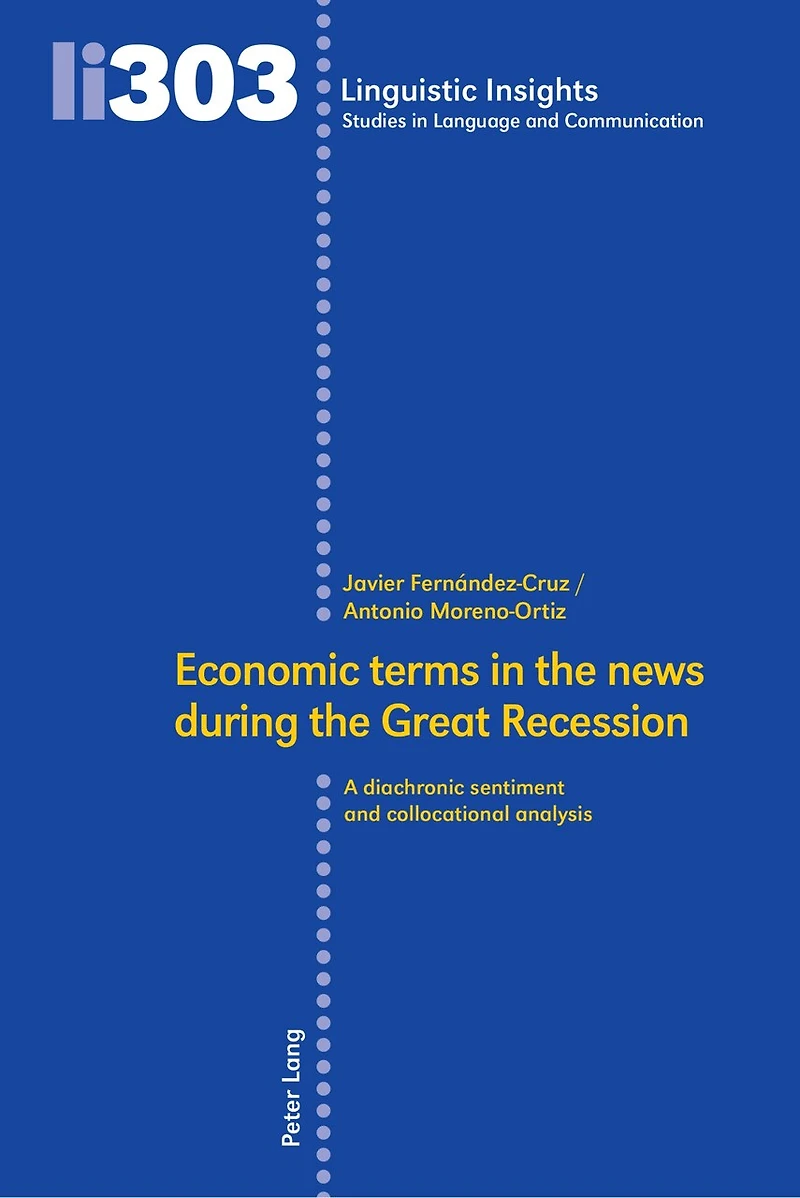
Economic terms the news during Great Recession: A diachronic sentiment and collocational analysis
Current price: $70.89

Economic terms the news during Great Recession: A diachronic sentiment and collocational analysis
Current price: $70.89
Loading Inventory...
Size: Hardcover
*Product information may vary - to confirm product availability, pricing, shipping and return information please contact Indigo
This book explores the evolution of sentiment in economic terms in the press during financial crises applying a combination of sentiment analysis techniques and usage fluctuation analysis on a diachronic corpus derived from editorials in quality newspapers during the Great Recession. The book uncovers two key findings: first, certain economic terms become event words during times of crisis due to their increased use in the press and the general public, revealing rapid semantic changes in economic terms caused by major socio-economic events. Second, sentiment-laden collocations are found to be influenced by culture, highlighting language’s adaptability to financial upheavals. This work proposes an innovative methodology that combines lexicon-based Sentiment Analysis, Corpus Linguistics, and qualitative Discourse Analysis to shed light on how language shapes economic discourse, making it a valuable resource for scholars exploring the relationship between language and historic events.
This book explores the evolution of sentiment in economic terms in the press during financial crises applying a combination of sentiment analysis techniques and usage fluctuation analysis on a diachronic corpus derived from editorials in quality newspapers during the Great Recession. The book uncovers two key findings: first, certain economic terms become event words during times of crisis due to their increased use in the press and the general public, revealing rapid semantic changes in economic terms caused by major socio-economic events. Second, sentiment-laden collocations are found to be influenced by culture, highlighting language’s adaptability to financial upheavals. This work proposes an innovative methodology that combines lexicon-based Sentiment Analysis, Corpus Linguistics, and qualitative Discourse Analysis to shed light on how language shapes economic discourse, making it a valuable resource for scholars exploring the relationship between language and historic events.
You May Also Like








More About Indigo at Erin Mills Town Centre
The largest book retailer in Canada also offers toys, music, home décor, gifts and lifestyle products. What's Inside...Books, Magazines, CD’s and DVD’s, Toys and Gifts, Home Accents, Electronics, Baby’s and Children’s Section, Bath and Body, Kitchen and Bedroom, Stationary Located outside in the exterior plaza.
5015 Glen Erin Dr, Mississauga, ON L5M 0R7, Canada
Find Indigo at Erin Mills Town Centre in Mississauga ON
Visit Indigo at Erin Mills Town Centre in Mississauga ON