

GIVE THE PERFECT GIFT
Erin Mills Town Centre Gift Cards are the perfect choice for your gift giving needs.Purchase gift cards at kiosks near the food court or centre court, at Guest Services, or click below to purchase online.PURCHASE HEREHome
Education for Thinking
Indigo
Loading Inventory...
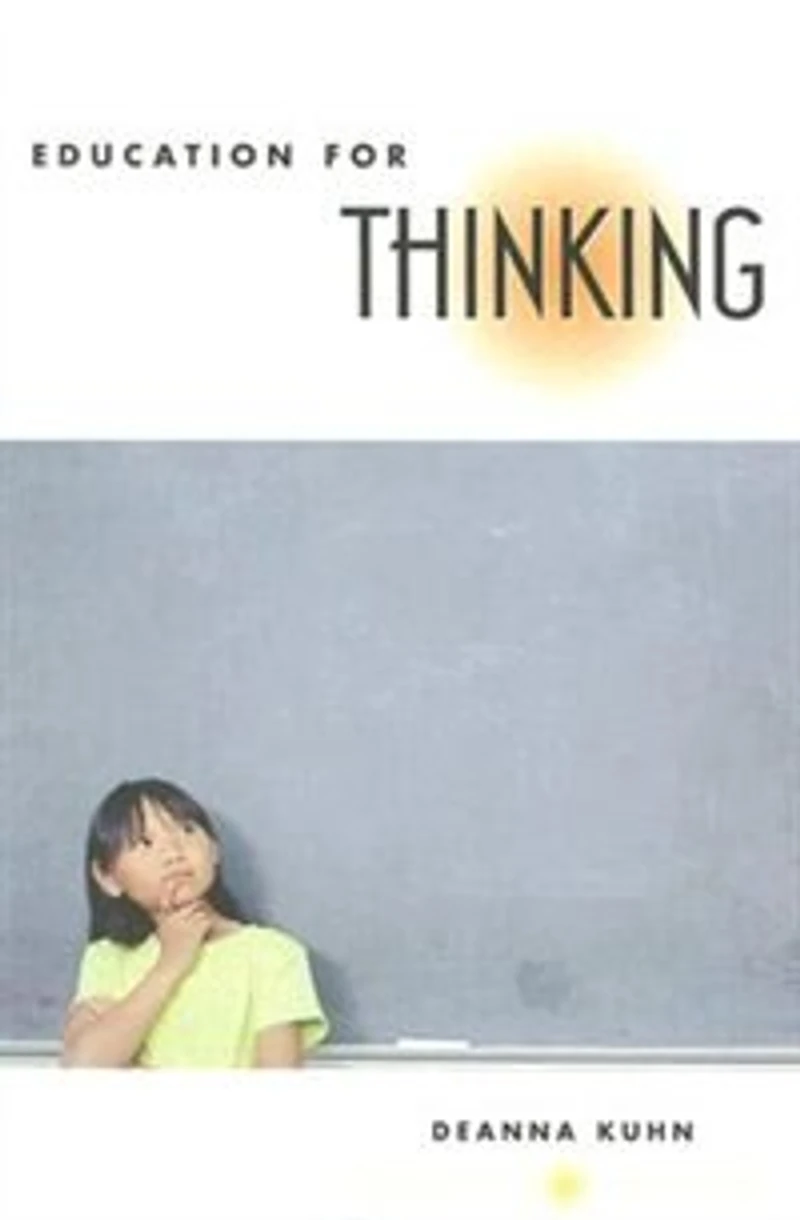
Education for Thinking
Current price: $43.32

Education for Thinking
Current price: $43.32
Loading Inventory...
Size: Paperback
*Product information may vary - to confirm product availability, pricing, shipping and return information please contact Indigo
What do we want schools to accomplish? The only defensible answer, Deanna Kuhn argues, is that they should teach students to use their minds well, in school and beyond.
Bringing insights from research in developmental psychology to pedagogy, Kuhn maintains that inquiry and argument should be at the center of a “thinking curriculum”—a curriculum that makes sense to students as well as to teachers and develops the skills and values needed for lifelong learning. We have only a brief window of opportunity in children’s lives to gain (or lose) their trust that the things we ask them to do in school are worth doing. Activities centered on inquiry and argument—such as identifying features that affect the success of a music club catalog or discussing difficult issues like capital punishment—allow students to appreciate their power and utility as they engage in them.
Most of what students do in schools today simply does not have this quality. Inquiry and argument do. They are education for life, not simply more school, and they offer a unifying purpose for compulsory schooling as it serves an ever more diverse and challenging population.
What do we want schools to accomplish? The only defensible answer, Deanna Kuhn argues, is that they should teach students to use their minds well, in school and beyond.
Bringing insights from research in developmental psychology to pedagogy, Kuhn maintains that inquiry and argument should be at the center of a “thinking curriculum”—a curriculum that makes sense to students as well as to teachers and develops the skills and values needed for lifelong learning. We have only a brief window of opportunity in children’s lives to gain (or lose) their trust that the things we ask them to do in school are worth doing. Activities centered on inquiry and argument—such as identifying features that affect the success of a music club catalog or discussing difficult issues like capital punishment—allow students to appreciate their power and utility as they engage in them.
Most of what students do in schools today simply does not have this quality. Inquiry and argument do. They are education for life, not simply more school, and they offer a unifying purpose for compulsory schooling as it serves an ever more diverse and challenging population.
You May Also Like










More About Indigo at Erin Mills Town Centre
The largest book retailer in Canada also offers toys, music, home décor, gifts and lifestyle products. What's Inside...Books, Magazines, CD’s and DVD’s, Toys and Gifts, Home Accents, Electronics, Baby’s and Children’s Section, Bath and Body, Kitchen and Bedroom, Stationary Located outside in the exterior plaza.
5015 Glen Erin Dr, Mississauga, ON L5M 0R7, Canada
Find Indigo at Erin Mills Town Centre in Mississauga ON
Visit Indigo at Erin Mills Town Centre in Mississauga ON