

GIVE THE PERFECT GIFT
Erin Mills Town Centre Gift Cards are the perfect choice for your gift giving needs.Purchase gift cards at kiosks near the food court or centre court, at Guest Services, or click below to purchase online.PURCHASE HEREHome
Edward Hopper's New York
Indigo
Loading Inventory...
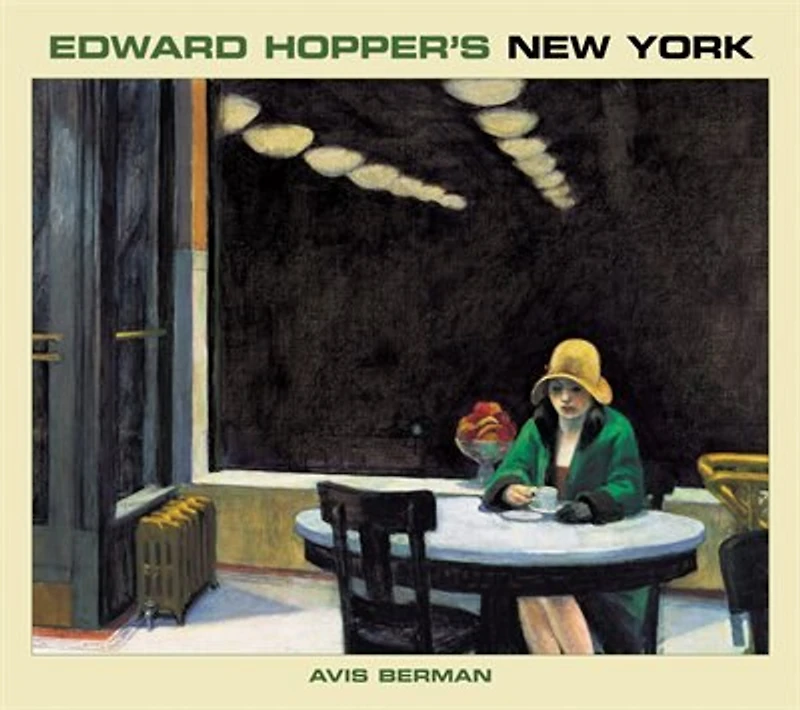
Edward Hopper's New York
Current price: $45.00

Edward Hopper's New York
Current price: $45.00
Loading Inventory...
Size: Hardcover
*Product information may vary - to confirm product availability, pricing, shipping and return information please contact Indigo
Edward Hopper resided in the Washington Square area of New York City from 1905 until his death in 1967, pursuing the visual essence of Gotham in various media and taking the measure of ordinary city dwellers. He embraced the architecture of the great city, revealing its solidity and bulk in "convincing three dimensional pictorial space." Today his most evocative canvases resonate with a contemporary power. Whether in oils and watercolors such as Automat, Nighthawks, or New York Pavements or in etchings like The El Station and Night Shadows, Hopper gave us stark yet intimate interpretation of urban existence that are touchstones of American art.Avis Berman's essay explores how Hopper and his work illuminate each other by analyzing what his New York is--and is not. The artist preferred nondescript vernacular buildings, eschewing the new, the gigantic, the technologically exciting. He truly made emptiness full, silence articulate, plainness mysterious, and tawdriness noble.
Edward Hopper resided in the Washington Square area of New York City from 1905 until his death in 1967, pursuing the visual essence of Gotham in various media and taking the measure of ordinary city dwellers. He embraced the architecture of the great city, revealing its solidity and bulk in "convincing three dimensional pictorial space." Today his most evocative canvases resonate with a contemporary power. Whether in oils and watercolors such as Automat, Nighthawks, or New York Pavements or in etchings like The El Station and Night Shadows, Hopper gave us stark yet intimate interpretation of urban existence that are touchstones of American art.Avis Berman's essay explores how Hopper and his work illuminate each other by analyzing what his New York is--and is not. The artist preferred nondescript vernacular buildings, eschewing the new, the gigantic, the technologically exciting. He truly made emptiness full, silence articulate, plainness mysterious, and tawdriness noble.
You May Also Like








More About Indigo at Erin Mills Town Centre
The largest book retailer in Canada also offers toys, music, home décor, gifts and lifestyle products. What's Inside...Books, Magazines, CD’s and DVD’s, Toys and Gifts, Home Accents, Electronics, Baby’s and Children’s Section, Bath and Body, Kitchen and Bedroom, Stationary Located outside in the exterior plaza.
5015 Glen Erin Dr, Mississauga, ON L5M 0R7, Canada
Find Indigo at Erin Mills Town Centre in Mississauga ON
Visit Indigo at Erin Mills Town Centre in Mississauga ON