

GIVE THE PERFECT GIFT
Erin Mills Town Centre Gift Cards are the perfect choice for your gift giving needs.Purchase gift cards at kiosks near the food court or centre court, at Guest Services, or click below to purchase online.PURCHASE HEREHome
Electromagnetic And Photonic Simulation For The Beginner: Finite-difference Frequency-domain In Matlab
Indigo
Loading Inventory...
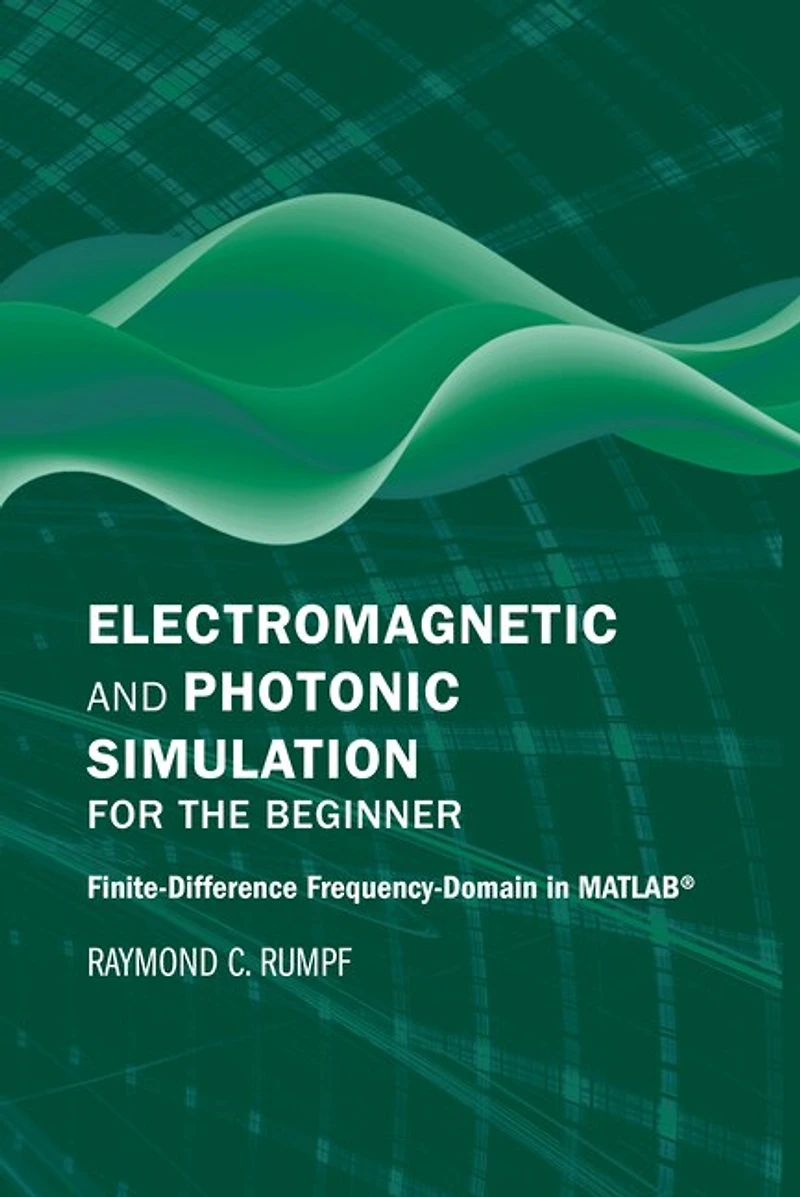
Electromagnetic And Photonic Simulation For The Beginner: Finite-difference Frequency-domain In Matlab
Current price: $275.95

Electromagnetic And Photonic Simulation For The Beginner: Finite-difference Frequency-domain In Matlab
Current price: $275.95
Loading Inventory...
Size: Hardcover
*Product information may vary - to confirm product availability, pricing, shipping and return information please contact Indigo
This forward-thinking book presents the finite-difference frequency-domain (FDFD) method. FDFD is the frequency-domain relative of the finite-difference time-domain (FDTD) method used for simulating electromagnetic and photonic devices. Special techniques in MATLAB are presented that will allow readers to write their own FDFD programs, as well as review key concepts in electromagnetics. Guided modes in waveguides, photonic band diagrams, and isofrequency contours of periodic structures are explored. Readers learn how to simulate waves through diffraction gratings, beams through photonic crystals, and optical integrated circuits, as well as how to modify FDFD to easily perform parameter sweeps, such as plotting reflection and transmission through a device as a function of frequency. The book includes all of the required MATLAB codes and a detailed explanation of the programs to explain how to simulate devices in the real world.
This forward-thinking book presents the finite-difference frequency-domain (FDFD) method. FDFD is the frequency-domain relative of the finite-difference time-domain (FDTD) method used for simulating electromagnetic and photonic devices. Special techniques in MATLAB are presented that will allow readers to write their own FDFD programs, as well as review key concepts in electromagnetics. Guided modes in waveguides, photonic band diagrams, and isofrequency contours of periodic structures are explored. Readers learn how to simulate waves through diffraction gratings, beams through photonic crystals, and optical integrated circuits, as well as how to modify FDFD to easily perform parameter sweeps, such as plotting reflection and transmission through a device as a function of frequency. The book includes all of the required MATLAB codes and a detailed explanation of the programs to explain how to simulate devices in the real world.
You May Also Like










More About Indigo at Erin Mills Town Centre
The largest book retailer in Canada also offers toys, music, home décor, gifts and lifestyle products. What's Inside...Books, Magazines, CD’s and DVD’s, Toys and Gifts, Home Accents, Electronics, Baby’s and Children’s Section, Bath and Body, Kitchen and Bedroom, Stationary Located outside in the exterior plaza.
5015 Glen Erin Dr, Mississauga, ON L5M 0R7, Canada
Find Indigo at Erin Mills Town Centre in Mississauga ON
Visit Indigo at Erin Mills Town Centre in Mississauga ON