

GIVE THE PERFECT GIFT
Erin Mills Town Centre Gift Cards are the perfect choice for your gift giving needs.Purchase gift cards at kiosks near the food court or centre court, at Guest Services, or click below to purchase online.PURCHASE HEREHome
Electromagnetic Vibration Energy Harvesting Devices: Architectures, Design, Modeling and Optimization
Indigo
Loading Inventory...
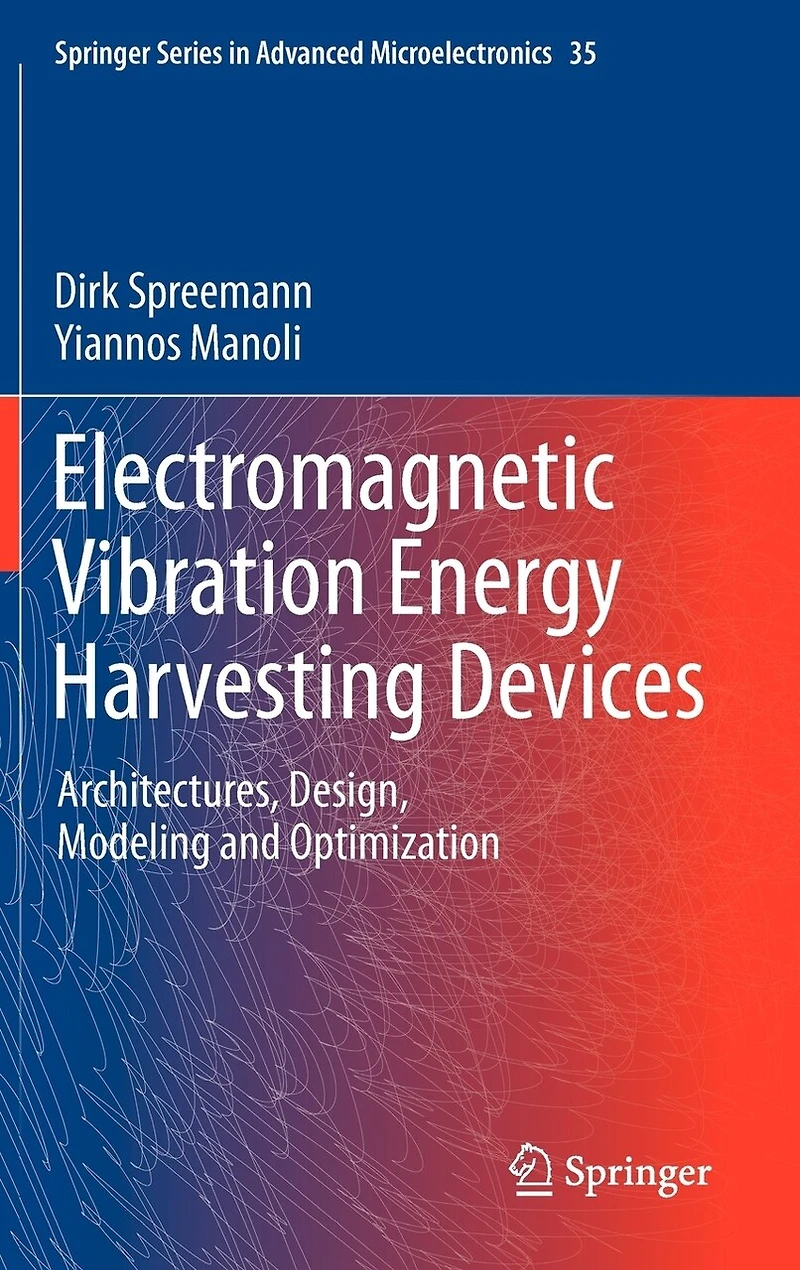
Electromagnetic Vibration Energy Harvesting Devices: Architectures, Design, Modeling and Optimization
Current price: $160.95

Electromagnetic Vibration Energy Harvesting Devices: Architectures, Design, Modeling and Optimization
Current price: $160.95
Loading Inventory...
Size: Hardcover
*Product information may vary - to confirm product availability, pricing, shipping and return information please contact Indigo
Electromagnetic vibration transducers are seen as an effective way of harvesting ambient energy for the supply of sensor monitoring systems. Different electromagnetic coupling architectures have been employed but no comprehensive comparison with respect to their output performance has been carried out up to now. Electromagnetic Vibration Energy Harvesting Devices introduces an optimization approach which is applied to determine optimal dimensions of the components (magnet, coil and back iron). Eight different commonly applied coupling architectures are investigated. The results show that correct dimensions are of great significance for maximizing the efficiency of the energy conversion. A comparison yields the architectures with the best output performance capability which should be preferably employed in applications. A prototype development is used to demonstrate how the optimization calculations can be integrated into the design-flow. Electromagnetic Vibration Energy Harvesting Devices targets the designer of electromagnetic vibration transducers who wishes to have a greater in-depth understanding for maximizing the output performance.
Electromagnetic vibration transducers are seen as an effective way of harvesting ambient energy for the supply of sensor monitoring systems. Different electromagnetic coupling architectures have been employed but no comprehensive comparison with respect to their output performance has been carried out up to now. Electromagnetic Vibration Energy Harvesting Devices introduces an optimization approach which is applied to determine optimal dimensions of the components (magnet, coil and back iron). Eight different commonly applied coupling architectures are investigated. The results show that correct dimensions are of great significance for maximizing the efficiency of the energy conversion. A comparison yields the architectures with the best output performance capability which should be preferably employed in applications. A prototype development is used to demonstrate how the optimization calculations can be integrated into the design-flow. Electromagnetic Vibration Energy Harvesting Devices targets the designer of electromagnetic vibration transducers who wishes to have a greater in-depth understanding for maximizing the output performance.
You May Also Like











More About Indigo at Erin Mills Town Centre
The largest book retailer in Canada also offers toys, music, home décor, gifts and lifestyle products. What's Inside...Books, Magazines, CD’s and DVD’s, Toys and Gifts, Home Accents, Electronics, Baby’s and Children’s Section, Bath and Body, Kitchen and Bedroom, Stationary Located outside in the exterior plaza.
5015 Glen Erin Dr, Mississauga, ON L5M 0R7, Canada
Find Indigo at Erin Mills Town Centre in Mississauga ON
Visit Indigo at Erin Mills Town Centre in Mississauga ON