

GIVE THE PERFECT GIFT
Erin Mills Town Centre Gift Cards are the perfect choice for your gift giving needs.Purchase gift cards at kiosks near the food court or centre court, at Guest Services, or click below to purchase online.PURCHASE HEREHome
Engines of War: Or, Historical and Experimental Observations on Ancient Modern Warlike Machines Implements,
Indigo
Loading Inventory...
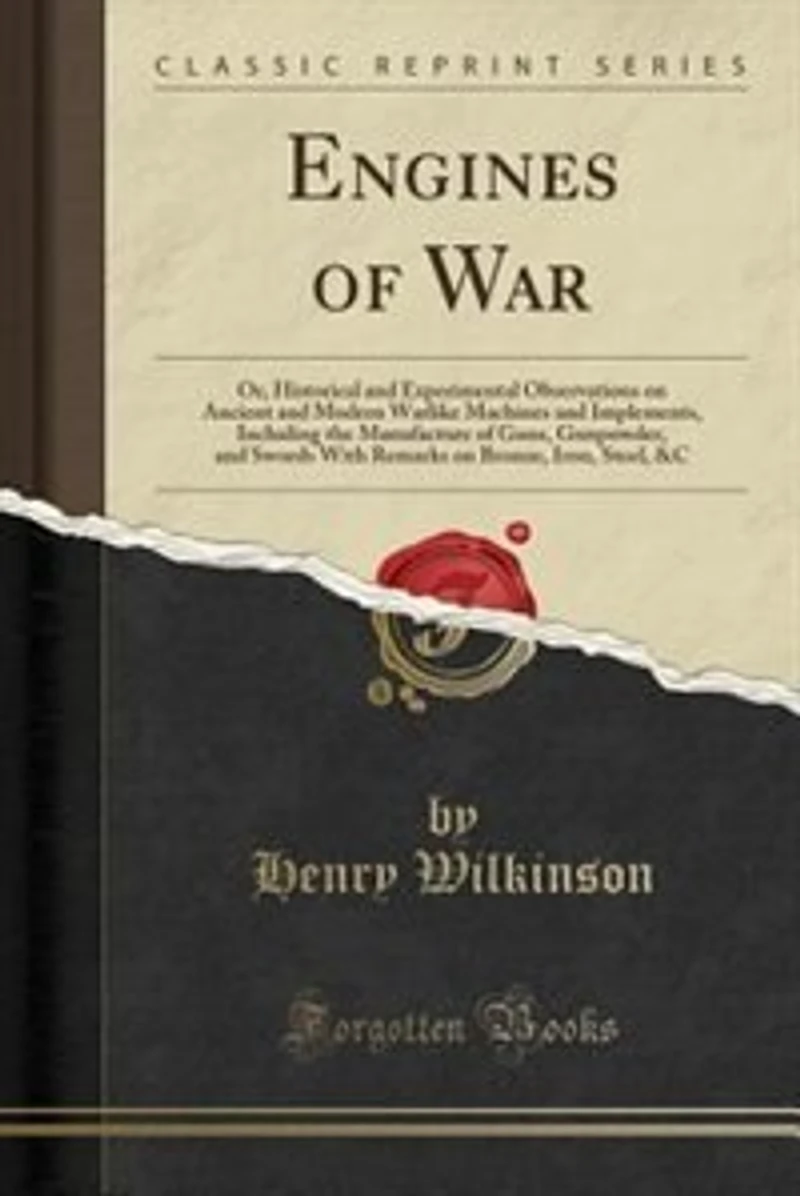
Engines of War: Or, Historical and Experimental Observations on Ancient Modern Warlike Machines Implements,
Current price: $37.95

Engines of War: Or, Historical and Experimental Observations on Ancient Modern Warlike Machines Implements,
Current price: $37.95
Loading Inventory...
Size: Hardcover (2015)
*Product information may vary - to confirm product availability, pricing, shipping and return information please contact Indigo
Excerpt from Engines of War: Or, Historical and Experimental Observations on Ancient and Modern Warlike Machines and Implements, Including the Manufacture of Guns, Gunpowder, and Swords With Remarks on Bronze, Iron, Steel, &C The Laplanders, who subsist almost entirely by hunting, form their bows of two pieces of tough wood, united together with a very strong glue made from the scales of perch, and these pieces never separate. This method has been adopted in England, and bows thus fonned possess much greater force and elasticity than can be obtained from one piece of wood only. In England, the use of the how was once carried to a degree of perfection, that has never been rivalled.' Our ancestors used it in peace for their amusement, and in war for the destruction of their enemies. The anglo-saxons and the Danes were well se quainted with it from a very early period, as the Scandinavian Scalds when praising the heroes of their country enumerate among their acquire ments a superiority of Skill in handling the bow. Amongst them, however, it appears to have been only employed for obtaining food, or for pastime; and we are, perhaps, indebted to the Norman Conquest for its introduction as a military weapon, although the Normans at the battle of Hastings are said to have used the arbalest or cross-bow, as well as the long-bow. Grose, Hist. Eng. Army, vol. I. P. 140. 2 Celebrated bards, or poets. About the Publisher Forgotten Books publishes hundreds of thousands of rare and classic books. Find more at www.forgottenbooks.com This book is a reproduction of an important historical work. Forgotten Books uses state-of-the-art technology to digitally reconstruct the work, preserving the original format whilst repairing imperfections present in the aged copy. In rare cases, an imperfection in the original, such as a blemish or missing page, may be replicated in our edition. We do, however, repair the vast majority of imperfections successfully; any imperfections that remain are intentionally left to preserve the state of such historical works.
Excerpt from Engines of War: Or, Historical and Experimental Observations on Ancient and Modern Warlike Machines and Implements, Including the Manufacture of Guns, Gunpowder, and Swords With Remarks on Bronze, Iron, Steel, &C The Laplanders, who subsist almost entirely by hunting, form their bows of two pieces of tough wood, united together with a very strong glue made from the scales of perch, and these pieces never separate. This method has been adopted in England, and bows thus fonned possess much greater force and elasticity than can be obtained from one piece of wood only. In England, the use of the how was once carried to a degree of perfection, that has never been rivalled.' Our ancestors used it in peace for their amusement, and in war for the destruction of their enemies. The anglo-saxons and the Danes were well se quainted with it from a very early period, as the Scandinavian Scalds when praising the heroes of their country enumerate among their acquire ments a superiority of Skill in handling the bow. Amongst them, however, it appears to have been only employed for obtaining food, or for pastime; and we are, perhaps, indebted to the Norman Conquest for its introduction as a military weapon, although the Normans at the battle of Hastings are said to have used the arbalest or cross-bow, as well as the long-bow. Grose, Hist. Eng. Army, vol. I. P. 140. 2 Celebrated bards, or poets. About the Publisher Forgotten Books publishes hundreds of thousands of rare and classic books. Find more at www.forgottenbooks.com This book is a reproduction of an important historical work. Forgotten Books uses state-of-the-art technology to digitally reconstruct the work, preserving the original format whilst repairing imperfections present in the aged copy. In rare cases, an imperfection in the original, such as a blemish or missing page, may be replicated in our edition. We do, however, repair the vast majority of imperfections successfully; any imperfections that remain are intentionally left to preserve the state of such historical works.
You May Also Like








More About Indigo at Erin Mills Town Centre
The largest book retailer in Canada also offers toys, music, home décor, gifts and lifestyle products. What's Inside...Books, Magazines, CD’s and DVD’s, Toys and Gifts, Home Accents, Electronics, Baby’s and Children’s Section, Bath and Body, Kitchen and Bedroom, Stationary Located outside in the exterior plaza.
5015 Glen Erin Dr, Mississauga, ON L5M 0R7, Canada
Find Indigo at Erin Mills Town Centre in Mississauga ON
Visit Indigo at Erin Mills Town Centre in Mississauga ON