

GIVE THE PERFECT GIFT
Erin Mills Town Centre Gift Cards are the perfect choice for your gift giving needs.Purchase gift cards at kiosks near the food court or centre court, at Guest Services, or click below to purchase online.PURCHASE HEREHome
Epiphanius’ Alogi and the Johannine Controversy: A Reassessment of Early Ecclesial Opposition to the Johannine Corpus
Indigo
Loading Inventory...
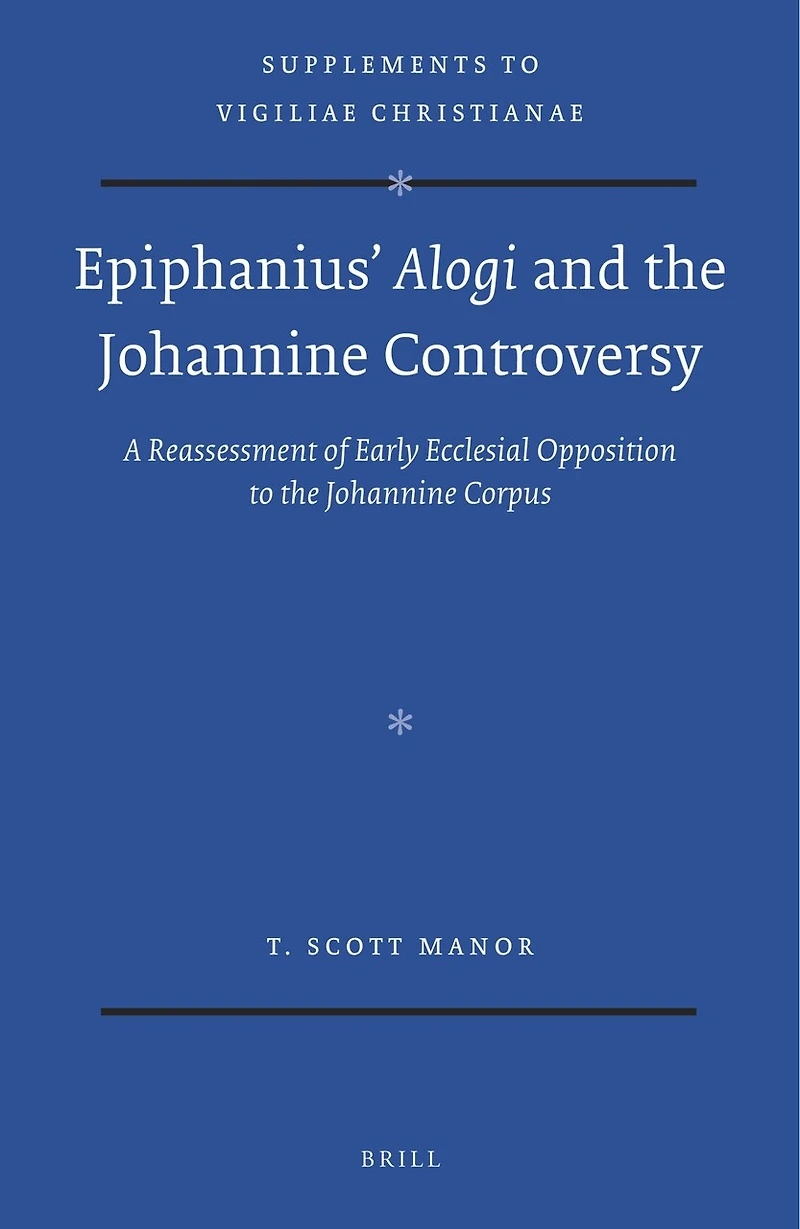
Epiphanius’ Alogi and the Johannine Controversy: A Reassessment of Early Ecclesial Opposition to the Johannine Corpus
Current price: $211.99

Epiphanius’ Alogi and the Johannine Controversy: A Reassessment of Early Ecclesial Opposition to the Johannine Corpus
Current price: $211.99
Loading Inventory...
Size: Hardcover
*Product information may vary - to confirm product availability, pricing, shipping and return information please contact Indigo
In this work T. Scott Manor provides a new perspective on a common view, known as the ‘Johannine Controversy’, which maintains that the early church once tried to jettison the Gospel and Apocalypse of John as heretical forgeries.
Primary evidence comes from Epiphanius of Salamis, who mentions a heretical group with such views, the Alogi . This along with with other evidence from sources including Irenaeus, Hippolytus, Origen, Eusebius, Photius, Dionysius bar Salibi, Ebed-Jesu and others has led to the conclusion that a certain Gaius of Rome led the Alogi in this anti-Johannine campaign. By carefully examining Epiphanius’ account in relation to these other sources, Manor arrives at very different conclusions that question whether any such controversy ever existed at all.
In this work T. Scott Manor provides a new perspective on a common view, known as the ‘Johannine Controversy’, which maintains that the early church once tried to jettison the Gospel and Apocalypse of John as heretical forgeries.
Primary evidence comes from Epiphanius of Salamis, who mentions a heretical group with such views, the Alogi . This along with with other evidence from sources including Irenaeus, Hippolytus, Origen, Eusebius, Photius, Dionysius bar Salibi, Ebed-Jesu and others has led to the conclusion that a certain Gaius of Rome led the Alogi in this anti-Johannine campaign. By carefully examining Epiphanius’ account in relation to these other sources, Manor arrives at very different conclusions that question whether any such controversy ever existed at all.









More About Indigo at Erin Mills Town Centre
The largest book retailer in Canada also offers toys, music, home décor, gifts and lifestyle products. What's Inside...Books, Magazines, CD’s and DVD’s, Toys and Gifts, Home Accents, Electronics, Baby’s and Children’s Section, Bath and Body, Kitchen and Bedroom, Stationary Located outside in the exterior plaza.
5015 Glen Erin Dr, Mississauga, ON L5M 0R7, Canada
Find Indigo at Erin Mills Town Centre in Mississauga ON
Visit Indigo at Erin Mills Town Centre in Mississauga ON