

GIVE THE PERFECT GIFT
Erin Mills Town Centre Gift Cards are the perfect choice for your gift giving needs.Purchase gift cards at kiosks near the food court or centre court, at Guest Services, or click below to purchase online.PURCHASE HEREHome
Episode 5: The Man on the Coal Heap: Last Seen Casefile Anomalies, #5
Indigo
Loading Inventory...
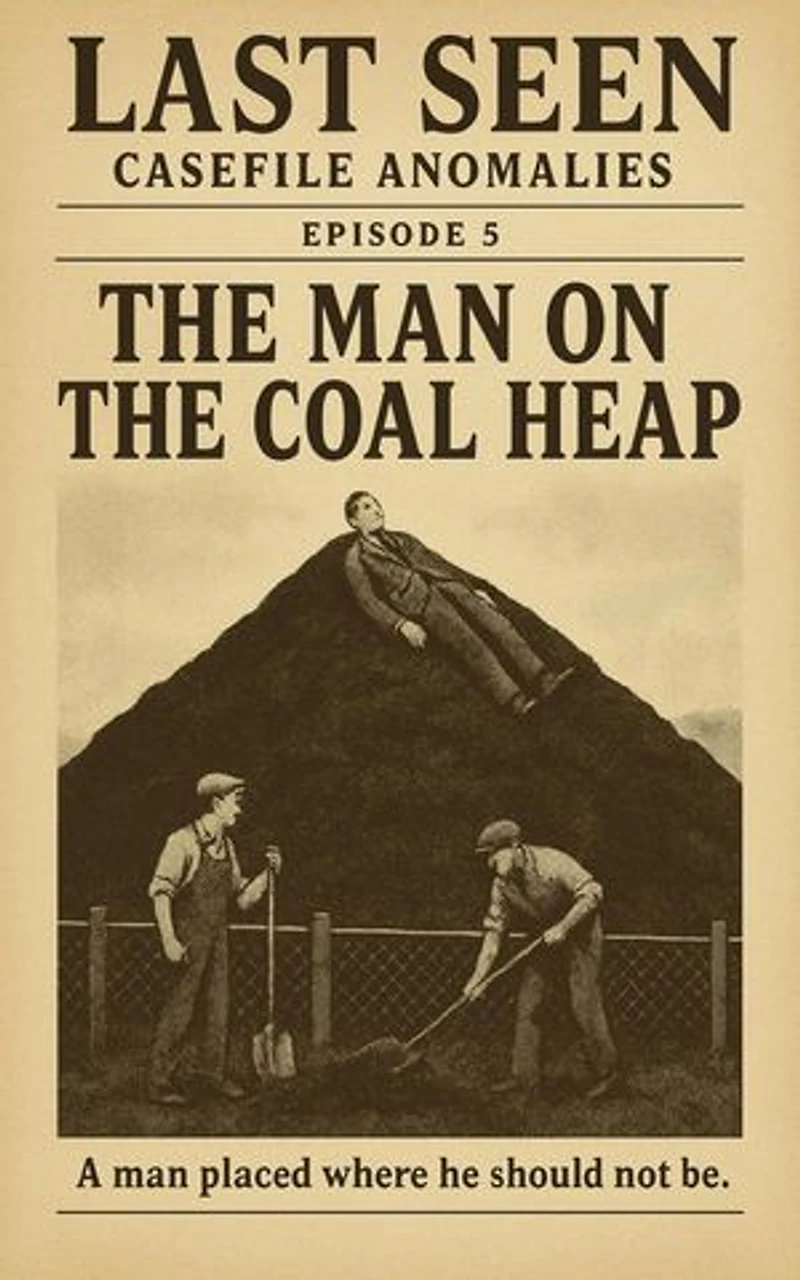
Episode 5: The Man on the Coal Heap: Last Seen Casefile Anomalies, #5
Current price: $4.99

Episode 5: The Man on the Coal Heap: Last Seen Casefile Anomalies, #5
Current price: $4.99
Loading Inventory...
Size: Kobo eBook
*Product information may vary - to confirm product availability, pricing, shipping and return information please contact Indigo
Todmorden, England. June 1980.
Five days after disappearing from his home, Zigmund Adamski is found lying on the summit of a coal heap in a secured industrial yard.
There are no tracks leading up the slope.
No sign of a climb.
No indication of how he was placed there.
His clothing is clean in ways the environment should have prevented. His body shows burns that were treated days before his death with a substance that cannot be identified. His heart had failed—but the circumstances surrounding his final placement remain unresolved.
The yard itself offers no answer.
No witnesses. No machinery logs that support movement. No disturbance patterns that match a carried body.
The Man on the Coal Heap reconstructs the case through physical evidence, terrain mechanics, forensic findings, and timeline analysis. It separates confirmed facts from later speculation, focusing on what can be measured rather than what can be imagined.
The result is a case defined not by theory, but by contradiction.
A man missing for days.
A body placed where it should not be.
And a gap in explanation that remains intact.
Todmorden, England. June 1980.
Five days after disappearing from his home, Zigmund Adamski is found lying on the summit of a coal heap in a secured industrial yard.
There are no tracks leading up the slope.
No sign of a climb.
No indication of how he was placed there.
His clothing is clean in ways the environment should have prevented. His body shows burns that were treated days before his death with a substance that cannot be identified. His heart had failed—but the circumstances surrounding his final placement remain unresolved.
The yard itself offers no answer.
No witnesses. No machinery logs that support movement. No disturbance patterns that match a carried body.
The Man on the Coal Heap reconstructs the case through physical evidence, terrain mechanics, forensic findings, and timeline analysis. It separates confirmed facts from later speculation, focusing on what can be measured rather than what can be imagined.
The result is a case defined not by theory, but by contradiction.
A man missing for days.
A body placed where it should not be.
And a gap in explanation that remains intact.
You May Also Like

















More About Indigo at Erin Mills Town Centre
The largest book retailer in Canada also offers toys, music, home décor, gifts and lifestyle products. What's Inside...Books, Magazines, CD’s and DVD’s, Toys and Gifts, Home Accents, Electronics, Baby’s and Children’s Section, Bath and Body, Kitchen and Bedroom, Stationary Located outside in the exterior plaza.
5015 Glen Erin Dr, Mississauga, ON L5M 0R7, Canada
Find Indigo at Erin Mills Town Centre in Mississauga ON
Visit Indigo at Erin Mills Town Centre in Mississauga ON