

GIVE THE PERFECT GIFT
Erin Mills Town Centre Gift Cards are the perfect choice for your gift giving needs.Purchase gift cards at kiosks near the food court or centre court, at Guest Services, or click below to purchase online.PURCHASE HEREHome
Etymological Dictionary of Grasses
Indigo
Loading Inventory...
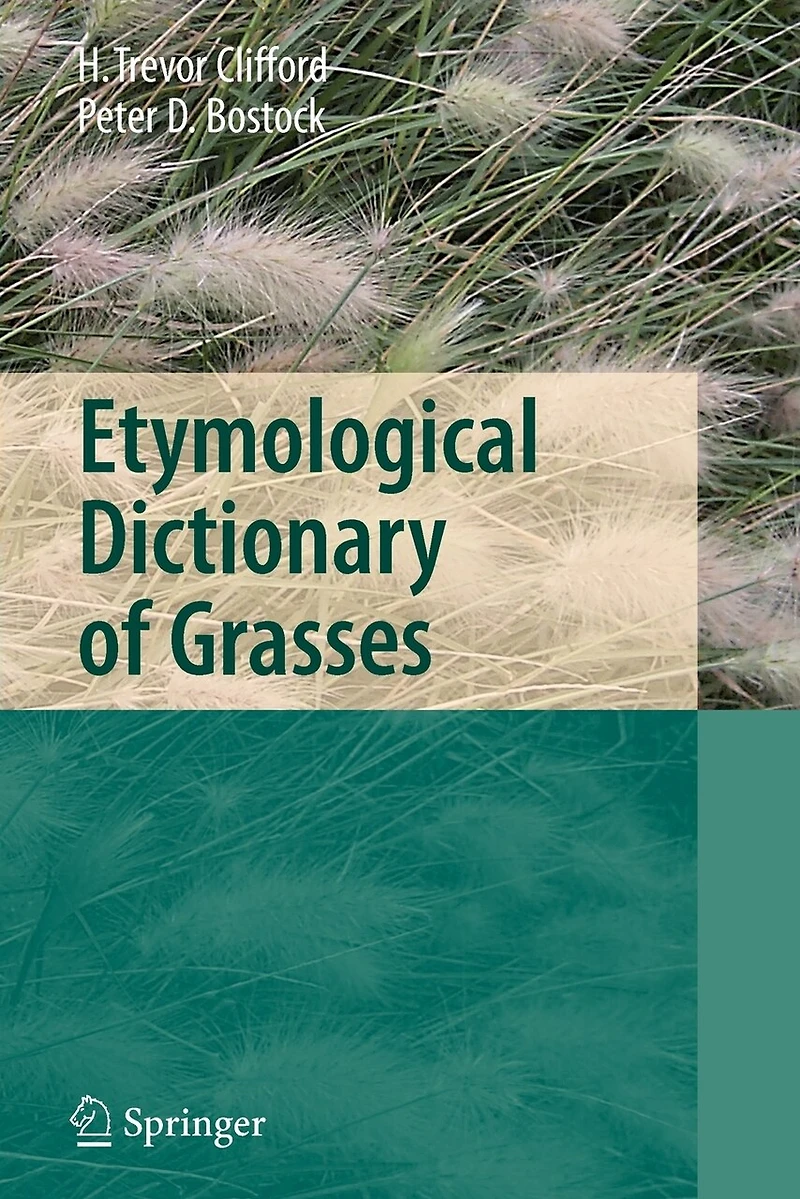
Etymological Dictionary of Grasses
Current price: $248.50

Etymological Dictionary of Grasses
Current price: $248.50
Loading Inventory...
Size: Paperback
*Product information may vary - to confirm product availability, pricing, shipping and return information please contact Indigo
As employed here the term grass applies only to species included in the Poaceae, one of the largest families of flowering plants. However, the word is often applied to any herbaceous plant with long, narrow leaves. A similar view was adopted by the Ancients. The Greeks applied the words poa, poe and agrostis to herbaceous plants in general and the Romans employed the words gramen and herba in a similar sense. In both cultures, unique names were applied to species of economic or special s- nificance. As a major source of cereals, pasture plants and even timber, the Poaceae are one of the most important economic plant families. Many have acquired vernacular names but these vary from place to place and so are of limited value for technical purposes. For ease of professional communication vernacular names are replaced with bino- als whose use is controlled by an International body. Initially the binomials were derived mainly from words of Classical Greek or Latin, but the practice was never strictly enforced. Today taxonomists often employ words from their own language or resort to naming grasses after places, people, ships, uses, acronyms to name but a few sources. In the process the names are often Latinized making it difficult for readers, especially those whose language has not been inf- enced by the European Classics, to recognize their sources and to determine their meanings.
As employed here the term grass applies only to species included in the Poaceae, one of the largest families of flowering plants. However, the word is often applied to any herbaceous plant with long, narrow leaves. A similar view was adopted by the Ancients. The Greeks applied the words poa, poe and agrostis to herbaceous plants in general and the Romans employed the words gramen and herba in a similar sense. In both cultures, unique names were applied to species of economic or special s- nificance. As a major source of cereals, pasture plants and even timber, the Poaceae are one of the most important economic plant families. Many have acquired vernacular names but these vary from place to place and so are of limited value for technical purposes. For ease of professional communication vernacular names are replaced with bino- als whose use is controlled by an International body. Initially the binomials were derived mainly from words of Classical Greek or Latin, but the practice was never strictly enforced. Today taxonomists often employ words from their own language or resort to naming grasses after places, people, ships, uses, acronyms to name but a few sources. In the process the names are often Latinized making it difficult for readers, especially those whose language has not been inf- enced by the European Classics, to recognize their sources and to determine their meanings.
You May Also Like







More About Indigo at Erin Mills Town Centre
The largest book retailer in Canada also offers toys, music, home décor, gifts and lifestyle products. What's Inside...Books, Magazines, CD’s and DVD’s, Toys and Gifts, Home Accents, Electronics, Baby’s and Children’s Section, Bath and Body, Kitchen and Bedroom, Stationary Located outside in the exterior plaza.
5015 Glen Erin Dr, Mississauga, ON L5M 0R7, Canada
Find Indigo at Erin Mills Town Centre in Mississauga ON
Visit Indigo at Erin Mills Town Centre in Mississauga ON