

GIVE THE PERFECT GIFT
Erin Mills Town Centre Gift Cards are the perfect choice for your gift giving needs.Purchase gift cards at kiosks near the food court or centre court, at Guest Services, or click below to purchase online.PURCHASE HEREHome
Euripides and Alcestis: Speculations, Simulations, Stories of Love the Athenian Culture
Indigo
Loading Inventory...
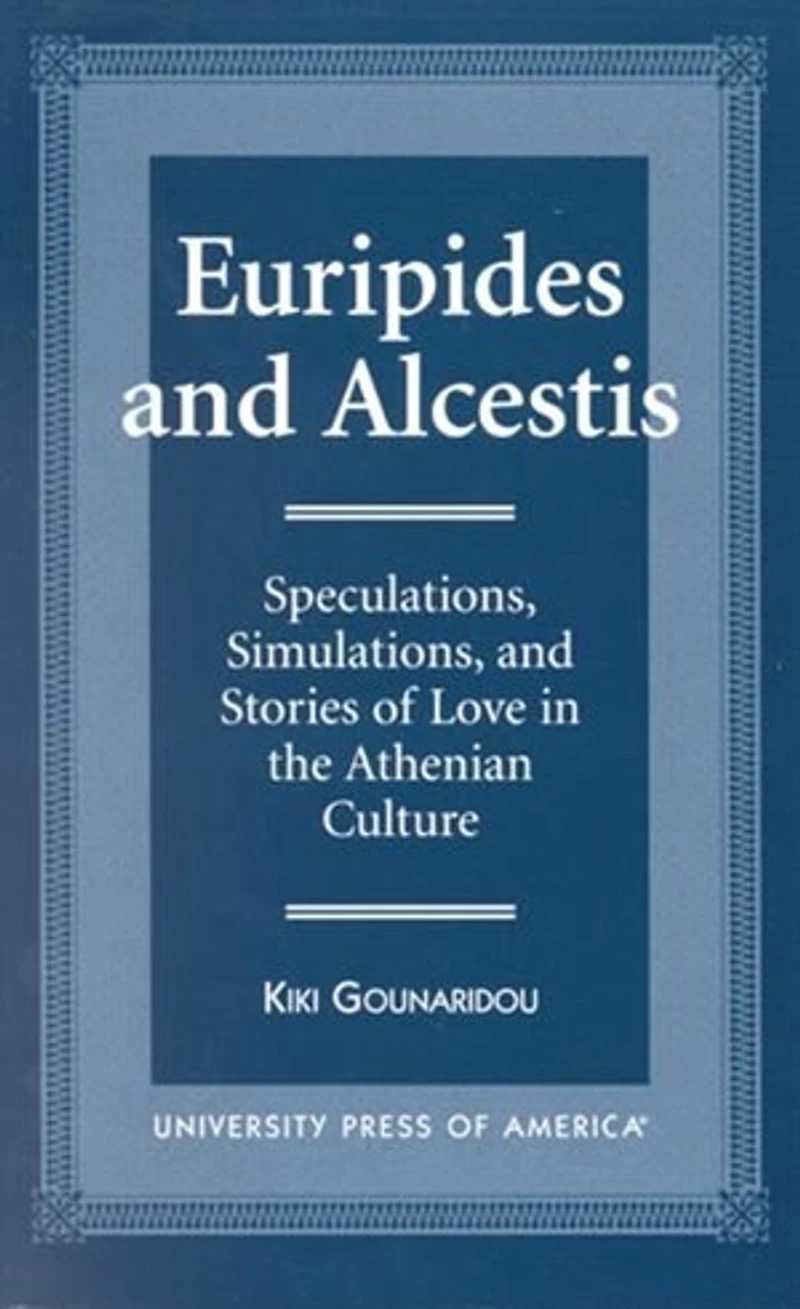
Euripides and Alcestis: Speculations, Simulations, Stories of Love the Athenian Culture
Current price: $118.00

Euripides and Alcestis: Speculations, Simulations, Stories of Love the Athenian Culture
Current price: $118.00
Loading Inventory...
Size: Hardcover
*Product information may vary - to confirm product availability, pricing, shipping and return information please contact Indigo
Euripides and Alcestis demonstrates the inherent presence of indeterminacy in Euripides' play, Alcestis. The author uses about eighty of the scholarly attempts to establish a determinate meaning of the play to exhibit the difficulty and lack of success in previous attempts at interpretation. She recognizes that the meaning of the play is surrounded by ambiguity and indeterminacy and provides an interpretation based on this knowledge. As an interpretation, the author focuses on Admetus' desire in relation to Alcestis' statue and his nature as a fifth century Athenian man while exposing Alcestis as a nonidentity. She also analyzes the issues of representation and spectatorship, showing that the theatrical performance is constructed in order to function as vehicles for the satisfaction of a dominant position-that of Admetus and the spectator of the performance.
Euripides and Alcestis demonstrates the inherent presence of indeterminacy in Euripides' play, Alcestis. The author uses about eighty of the scholarly attempts to establish a determinate meaning of the play to exhibit the difficulty and lack of success in previous attempts at interpretation. She recognizes that the meaning of the play is surrounded by ambiguity and indeterminacy and provides an interpretation based on this knowledge. As an interpretation, the author focuses on Admetus' desire in relation to Alcestis' statue and his nature as a fifth century Athenian man while exposing Alcestis as a nonidentity. She also analyzes the issues of representation and spectatorship, showing that the theatrical performance is constructed in order to function as vehicles for the satisfaction of a dominant position-that of Admetus and the spectator of the performance.
You May Also Like









More About Indigo at Erin Mills Town Centre
The largest book retailer in Canada also offers toys, music, home décor, gifts and lifestyle products. What's Inside...Books, Magazines, CD’s and DVD’s, Toys and Gifts, Home Accents, Electronics, Baby’s and Children’s Section, Bath and Body, Kitchen and Bedroom, Stationary Located outside in the exterior plaza.
5015 Glen Erin Dr, Mississauga, ON L5M 0R7, Canada
Find Indigo at Erin Mills Town Centre in Mississauga ON
Visit Indigo at Erin Mills Town Centre in Mississauga ON