

GIVE THE PERFECT GIFT
Erin Mills Town Centre Gift Cards are the perfect choice for your gift giving needs.Purchase gift cards at kiosks near the food court or centre court, at Guest Services, or click below to purchase online.PURCHASE HEREHome
Exiled in Modernity: Delacroix, Civilization, and Barbarism
Indigo
Loading Inventory...
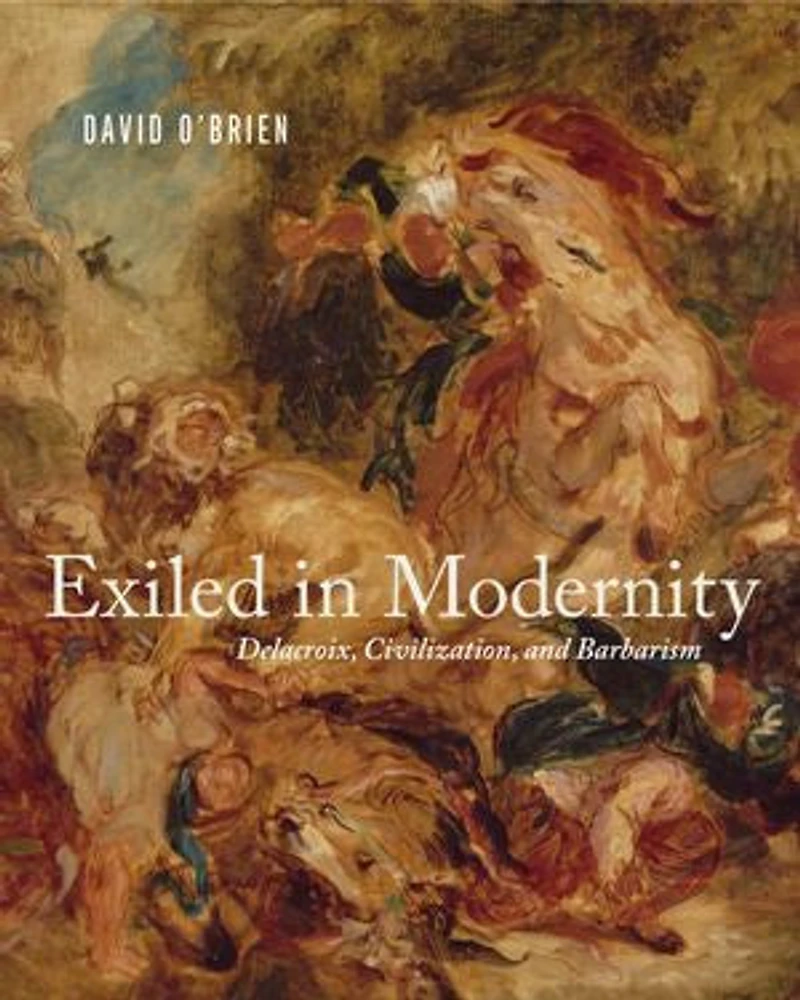
Exiled in Modernity: Delacroix, Civilization, and Barbarism
Current price: $103.99
Original price: $129.99

Exiled in Modernity: Delacroix, Civilization, and Barbarism
Current price: $103.99
Original price: $129.99
Loading Inventory...
Size: Kobo eBook
*Product information may vary - to confirm product availability, pricing, shipping and return information please contact Indigo
Notions of civilization and barbarism were intrinsic to Eugène Delacroix’s artistic practice: he wrote regularly about these concepts in his journal, and the tensions between the two were the subject of numerous paintings, including his most ambitious mural project, the ceiling of the Library of the Chamber of Deputies in the Palais Bourbon. Exiled in Modernity delves deeply into these themes, revealing why Delacroix’s disillusionment with modernity increasingly led him to seek spiritual release or epiphany in the sensual qualities of painting.
While civilization implied a degree of control and the constraint of natural impulses for Delacroix, barbarism evoked something uncontrolled and impulsive. Seeing himself as part of a grand tradition extending back to ancient Greece, Delacroix was profoundly aware of the wealth and power that set nineteenth-century Europe apart from the rest of the world. Yet he was fascinated by civilization’s chaotic underbelly. In analyzing Delacroix’s art and prose, David O’Brien illuminates the artist’s effort to reconcile the erudite, tradition-bound aspects of painting with a desire to reach viewers in a more direct, unrestrained manner. Focusing chiefly on Delacroix’s musings about civilization in his famous journal, his major mural projects on the theme of civilization, and the place of civilization in his paintings of North Africa and of animals, O’Brien links Delacroix’s increasingly pessimistic view of modernity to his desire to use his art to provide access to a more fulfilling experience.
With more than one hundred illustrations, this original, astute analysis of Delacroix and his work explains why he became an inspiration for modernist painters over the half-century following his death. Art historians and scholars of modernism especially will find great value in O’Brien’s work.
Notions of civilization and barbarism were intrinsic to Eugène Delacroix’s artistic practice: he wrote regularly about these concepts in his journal, and the tensions between the two were the subject of numerous paintings, including his most ambitious mural project, the ceiling of the Library of the Chamber of Deputies in the Palais Bourbon. Exiled in Modernity delves deeply into these themes, revealing why Delacroix’s disillusionment with modernity increasingly led him to seek spiritual release or epiphany in the sensual qualities of painting.
While civilization implied a degree of control and the constraint of natural impulses for Delacroix, barbarism evoked something uncontrolled and impulsive. Seeing himself as part of a grand tradition extending back to ancient Greece, Delacroix was profoundly aware of the wealth and power that set nineteenth-century Europe apart from the rest of the world. Yet he was fascinated by civilization’s chaotic underbelly. In analyzing Delacroix’s art and prose, David O’Brien illuminates the artist’s effort to reconcile the erudite, tradition-bound aspects of painting with a desire to reach viewers in a more direct, unrestrained manner. Focusing chiefly on Delacroix’s musings about civilization in his famous journal, his major mural projects on the theme of civilization, and the place of civilization in his paintings of North Africa and of animals, O’Brien links Delacroix’s increasingly pessimistic view of modernity to his desire to use his art to provide access to a more fulfilling experience.
With more than one hundred illustrations, this original, astute analysis of Delacroix and his work explains why he became an inspiration for modernist painters over the half-century following his death. Art historians and scholars of modernism especially will find great value in O’Brien’s work.
You May Also Like










More About Indigo at Erin Mills Town Centre
The largest book retailer in Canada also offers toys, music, home décor, gifts and lifestyle products. What's Inside...Books, Magazines, CD’s and DVD’s, Toys and Gifts, Home Accents, Electronics, Baby’s and Children’s Section, Bath and Body, Kitchen and Bedroom, Stationary Located outside in the exterior plaza.
5015 Glen Erin Dr, Mississauga, ON L5M 0R7, Canada
Find Indigo at Erin Mills Town Centre in Mississauga ON
Visit Indigo at Erin Mills Town Centre in Mississauga ON