

GIVE THE PERFECT GIFT
Erin Mills Town Centre Gift Cards are the perfect choice for your gift giving needs.Purchase gift cards at kiosks near the food court or centre court, at Guest Services, or click below to purchase online.PURCHASE HEREHome
Fabrication et utilisation de l'outillage en matières osseuses du Néolithique de Chypre: Khirokitia et Cap Andreas-Kastros
Indigo
Loading Inventory...
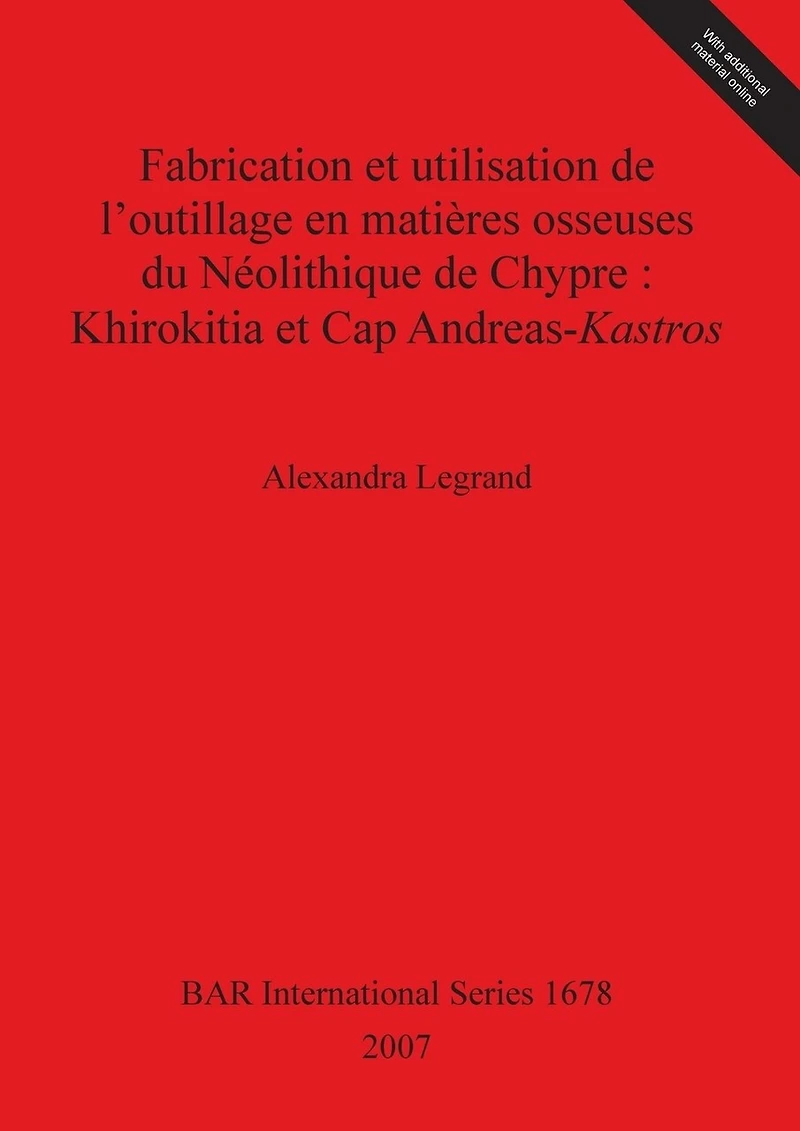
Fabrication et utilisation de l'outillage en matières osseuses du Néolithique de Chypre: Khirokitia et Cap Andreas-Kastros
Current price: $64.00

Fabrication et utilisation de l'outillage en matières osseuses du Néolithique de Chypre: Khirokitia et Cap Andreas-Kastros
Current price: $64.00
Loading Inventory...
Size: Paperback
*Product information may vary - to confirm product availability, pricing, shipping and return information please contact Indigo
Between the emergence of insular characters and Middle-Eastern traditional reminiscences, the Khirokitian Culture (Late Aceramic Neolithic period; from the 7th millennium to the middle of the 6th millennium cal. BC), which forms the core of this study, can be considered as the result of a colonizing process which started in Cyprus at the end of the 9th millennium cal. BC. The study of the bone industries of Khirokitia, in the south of the island, and of Cap Andreas-Kastros, at its eastern extremity which yielded a total of 2451 artefacts, allowed the author to follow two principal aims. Firstly, it was advisable to measure the part Middle-Eastern tradition played in these productions and to uncover their original character. In addition the island provided the possibility of studying sedentary agro-pastoral communities in an insular context where development occurred in a certain isolation, without a regular relationship with the mainland. The study therefore centred on the question of understanding and measuring the effect of this isolation on the nature of the relationships between these communities and their environment, and on the formation of the bone industry.
Between the emergence of insular characters and Middle-Eastern traditional reminiscences, the Khirokitian Culture (Late Aceramic Neolithic period; from the 7th millennium to the middle of the 6th millennium cal. BC), which forms the core of this study, can be considered as the result of a colonizing process which started in Cyprus at the end of the 9th millennium cal. BC. The study of the bone industries of Khirokitia, in the south of the island, and of Cap Andreas-Kastros, at its eastern extremity which yielded a total of 2451 artefacts, allowed the author to follow two principal aims. Firstly, it was advisable to measure the part Middle-Eastern tradition played in these productions and to uncover their original character. In addition the island provided the possibility of studying sedentary agro-pastoral communities in an insular context where development occurred in a certain isolation, without a regular relationship with the mainland. The study therefore centred on the question of understanding and measuring the effect of this isolation on the nature of the relationships between these communities and their environment, and on the formation of the bone industry.
You May Also Like











More About Indigo at Erin Mills Town Centre
The largest book retailer in Canada also offers toys, music, home décor, gifts and lifestyle products. What's Inside...Books, Magazines, CD’s and DVD’s, Toys and Gifts, Home Accents, Electronics, Baby’s and Children’s Section, Bath and Body, Kitchen and Bedroom, Stationary Located outside in the exterior plaza.
5015 Glen Erin Dr, Mississauga, ON L5M 0R7, Canada
Find Indigo at Erin Mills Town Centre in Mississauga ON
Visit Indigo at Erin Mills Town Centre in Mississauga ON