

GIVE THE PERFECT GIFT
Erin Mills Town Centre Gift Cards are the perfect choice for your gift giving needs.Purchase gift cards at kiosks near the food court or centre court, at Guest Services, or click below to purchase online.PURCHASE HEREHome
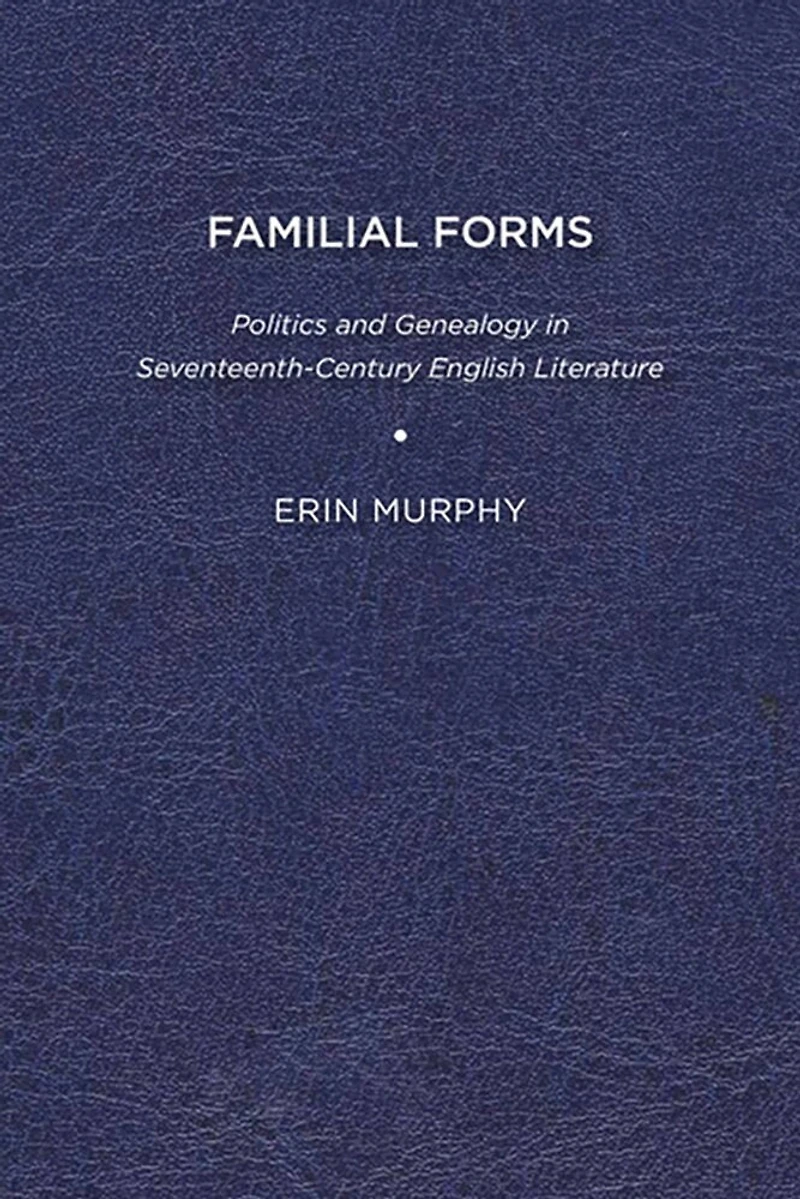
Familial Forms: Politics And Genealogy Seventeenth-century English Literature
Indigo
Loading Inventory...
Familial Forms: Politics And Genealogy Seventeenth-century English Literature
Current price: $188.00

Familial Forms: Politics And Genealogy Seventeenth-century English Literature
Current price: $188.00
Loading Inventory...
Size: Hardcover
*Product information may vary - to confirm product availability, pricing, shipping and return information please contact Indigo
Familial Forms is the first full-length study to examine how literary writers engaged the politics of genealogy that helped define the "century of revolution." By demonstrating how conflicts over the family-state analogy intersected with the period's battles over succession, including: the ascent of James I, the execution of Charles I, disputes over the terms of the Interregnum government, the Restoration of Charles II, the Exclusion Crisis, the deposition of James II, the ascent of William and Mary, and Anne's failure to produce a surviving heir, this study provides a new map of the seventeenth-century politics of family in England. Beginning with a reconsideration of Jacobean patriarchalism, Familial Forms focuses on the work of John Milton, Lucy Hutchinson, John Dryden, and Mary Astell. From their contrasting political and gendered positions, these authors contemplated and contested the relevance of marriage and kinship to government. Their writing illuminates two crucial elements of England's conflicts. First, the formal qualities of poems and prose tracts reveal that not only was there a competition among different versions of the family-state analogy, but also a competition over its very status as an analogy. Second, through their negotiations of linear and nonlinear forms, Milton, Hutchinson, Dryden, and Astell demonstrate the centrality of temporality to the period's political battles.
Through close textual analysis of poetry, political tracts, parliamentary records, and nonliterary genealogies, Familial Forms offers a fresh understanding of the seventeenth-century politics of genealogy. It also provides new answers to long-standing critical questions about the poetic form of canonical works, such as Paradise Lost and Absalom and Achitophel , and illuminates the political significance of newly-canonical works by women writers, including Aemilia Lanyer's Salve Deus Rex Judaeoreum , Hutchinson's Order and Disorder , and Astell's A Serious Proposal to the Ladies . Published by University of Delaware Press. Distributed worldwide by Rutgers University Press.
Familial Forms is the first full-length study to examine how literary writers engaged the politics of genealogy that helped define the "century of revolution." By demonstrating how conflicts over the family-state analogy intersected with the period's battles over succession, including: the ascent of James I, the execution of Charles I, disputes over the terms of the Interregnum government, the Restoration of Charles II, the Exclusion Crisis, the deposition of James II, the ascent of William and Mary, and Anne's failure to produce a surviving heir, this study provides a new map of the seventeenth-century politics of family in England. Beginning with a reconsideration of Jacobean patriarchalism, Familial Forms focuses on the work of John Milton, Lucy Hutchinson, John Dryden, and Mary Astell. From their contrasting political and gendered positions, these authors contemplated and contested the relevance of marriage and kinship to government. Their writing illuminates two crucial elements of England's conflicts. First, the formal qualities of poems and prose tracts reveal that not only was there a competition among different versions of the family-state analogy, but also a competition over its very status as an analogy. Second, through their negotiations of linear and nonlinear forms, Milton, Hutchinson, Dryden, and Astell demonstrate the centrality of temporality to the period's political battles.
Through close textual analysis of poetry, political tracts, parliamentary records, and nonliterary genealogies, Familial Forms offers a fresh understanding of the seventeenth-century politics of genealogy. It also provides new answers to long-standing critical questions about the poetic form of canonical works, such as Paradise Lost and Absalom and Achitophel , and illuminates the political significance of newly-canonical works by women writers, including Aemilia Lanyer's Salve Deus Rex Judaeoreum , Hutchinson's Order and Disorder , and Astell's A Serious Proposal to the Ladies . Published by University of Delaware Press. Distributed worldwide by Rutgers University Press.
You May Also Like







More About Indigo at Erin Mills Town Centre
The largest book retailer in Canada also offers toys, music, home décor, gifts and lifestyle products. What's Inside...Books, Magazines, CD’s and DVD’s, Toys and Gifts, Home Accents, Electronics, Baby’s and Children’s Section, Bath and Body, Kitchen and Bedroom, Stationary Located outside in the exterior plaza.
5015 Glen Erin Dr, Mississauga, ON L5M 0R7, Canada
Find Indigo at Erin Mills Town Centre in Mississauga ON
Visit Indigo at Erin Mills Town Centre in Mississauga ON