

GIVE THE PERFECT GIFT
Erin Mills Town Centre Gift Cards are the perfect choice for your gift giving needs.Purchase gift cards at kiosks near the food court or centre court, at Guest Services, or click below to purchase online.PURCHASE HEREHome
Faulkner and the Politics of Reading
Indigo
Loading Inventory...
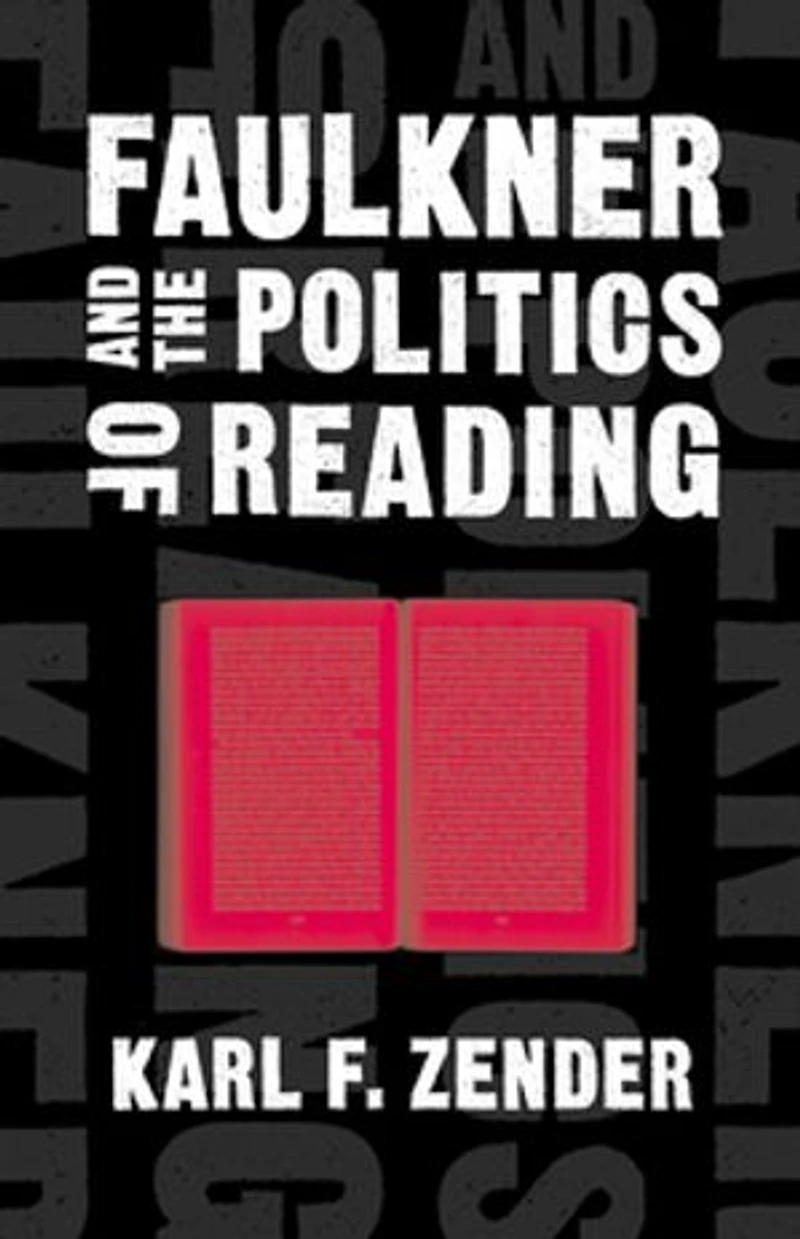
Faulkner and the Politics of Reading
Current price: $21.69
Original price: $27.08

Faulkner and the Politics of Reading
Current price: $21.69
Original price: $27.08
Loading Inventory...
Size: Kobo eBook
*Product information may vary - to confirm product availability, pricing, shipping and return information please contact Indigo
With this study Karl F. Zender offers fresh readings of individual novels, themes, and motifs while also assessing the impact of recent politicized interpretations on our understanding of Faulkner’s achievement. Sympathetically acknowledging the need to decenter the canon, Zender’s searching interrogation of current theory clears a breathing space for Faulkner and his readers between the fustier remnants of New Criticism and the excesses of post-structuralism.
Each chapter opens with a balanced presentation of the genuine gifts contemporary theory has bestowed on our comprehension of a particular novel or problem in Faulkner criticism and then proceeds with a groundbreaking reading. “The Politics of Incest” challenges older psychoanalytic interpretations of Faulkner’s use of the incest motif, and “Faulkner’s Privacy” defends the novelist’s difficulty or “reticence” as an aesthetic resistance against the rude candor of deregionalized and depersonalized culture. Subsequent chapters take up the volatile issues of Faulkner’s representations of women and of African Americans, and a close reading of the classic “Barn Burning” critiques the current tendency to blur the concepts of patriarchy and paternity.
The elegiac final chapter, “Where is Yoknapatawpha County?” draws on a comparison with John Updike’s Pennsylvania fiction and a reading of Joan Williams’s The Wintering to explore Faulkner’s disinclination to represent the quotidian realities of southern life in his later novels. Zender shows that Faulkner’s stylistic withdrawal attempts to “transform into beauty” his alienation from the postwar world and his fear of aging. That Faulkner and the Politics of Reading itself recovers and gives new luster to Faulkner’s beauty will surely please, in the author’s words, “those readers . . . for whom literature is less a mechanism of social change than a source of pleasure.” The originality of its critical vision will inspire Faulkner scholars, students of American literature, and general readers.
With this study Karl F. Zender offers fresh readings of individual novels, themes, and motifs while also assessing the impact of recent politicized interpretations on our understanding of Faulkner’s achievement. Sympathetically acknowledging the need to decenter the canon, Zender’s searching interrogation of current theory clears a breathing space for Faulkner and his readers between the fustier remnants of New Criticism and the excesses of post-structuralism.
Each chapter opens with a balanced presentation of the genuine gifts contemporary theory has bestowed on our comprehension of a particular novel or problem in Faulkner criticism and then proceeds with a groundbreaking reading. “The Politics of Incest” challenges older psychoanalytic interpretations of Faulkner’s use of the incest motif, and “Faulkner’s Privacy” defends the novelist’s difficulty or “reticence” as an aesthetic resistance against the rude candor of deregionalized and depersonalized culture. Subsequent chapters take up the volatile issues of Faulkner’s representations of women and of African Americans, and a close reading of the classic “Barn Burning” critiques the current tendency to blur the concepts of patriarchy and paternity.
The elegiac final chapter, “Where is Yoknapatawpha County?” draws on a comparison with John Updike’s Pennsylvania fiction and a reading of Joan Williams’s The Wintering to explore Faulkner’s disinclination to represent the quotidian realities of southern life in his later novels. Zender shows that Faulkner’s stylistic withdrawal attempts to “transform into beauty” his alienation from the postwar world and his fear of aging. That Faulkner and the Politics of Reading itself recovers and gives new luster to Faulkner’s beauty will surely please, in the author’s words, “those readers . . . for whom literature is less a mechanism of social change than a source of pleasure.” The originality of its critical vision will inspire Faulkner scholars, students of American literature, and general readers.
You May Also Like












More About Indigo at Erin Mills Town Centre
The largest book retailer in Canada also offers toys, music, home décor, gifts and lifestyle products. What's Inside...Books, Magazines, CD’s and DVD’s, Toys and Gifts, Home Accents, Electronics, Baby’s and Children’s Section, Bath and Body, Kitchen and Bedroom, Stationary Located outside in the exterior plaza.
5015 Glen Erin Dr, Mississauga, ON L5M 0R7, Canada
Find Indigo at Erin Mills Town Centre in Mississauga ON
Visit Indigo at Erin Mills Town Centre in Mississauga ON