

GIVE THE PERFECT GIFT
Erin Mills Town Centre Gift Cards are the perfect choice for your gift giving needs.Purchase gift cards at kiosks near the food court or centre court, at Guest Services, or click below to purchase online.PURCHASE HEREHome
Financial Stabilization Meiji Japan: the Impact of Matsukata Reform
Indigo
Loading Inventory...
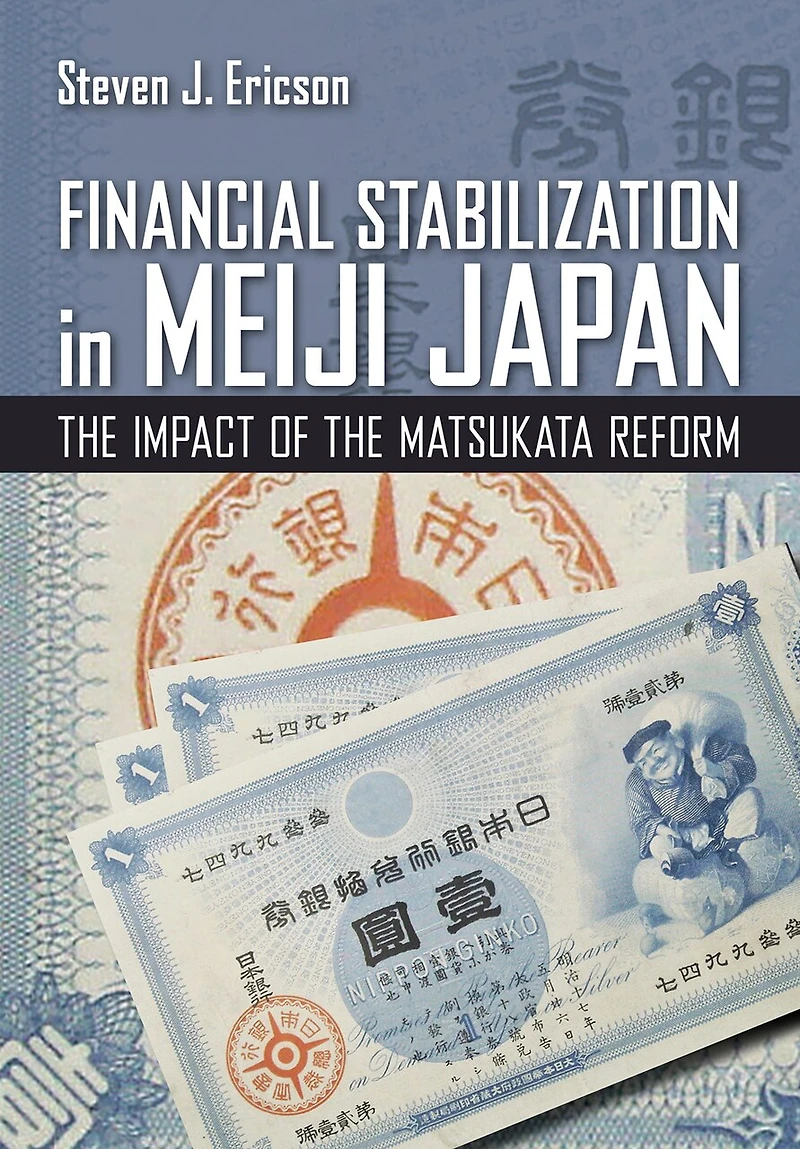
Financial Stabilization Meiji Japan: the Impact of Matsukata Reform
Current price: $78.95

Financial Stabilization Meiji Japan: the Impact of Matsukata Reform
Current price: $78.95
Loading Inventory...
Size: Hardcover
*Product information may vary - to confirm product availability, pricing, shipping and return information please contact Indigo
With a new look at the 1880s financial reforms in Japan, Steven J. Ericson's Financial Stabilization in Meiji Japan overturns widely held views of the program carried out by Finance Minister Matsukata Masayoshi. As Ericson shows, rather than constituting an orthodox financial-stabilization program—a sort of precursor of the "neoliberal" reforms promoted by the IMF in the 1980s and 1990s—Matsukata's policies differed in significant ways from both classical economic liberalism and neoliberal orthodoxy. The Matsukata financial reform has become famous largely for the wrong reasons, and Ericson sets the record straight. He shows that Matsukata intended to pursue fiscal retrenchment and budget-balancing when he became finance minister in late 1881. Various exigencies, including foreign military crises and a worsening domestic depression, compelled him instead to increase spending by running deficits and floating public bonds. Though he drastically reduced the money supply, he combined the positive and contractionary policies of his immediate predecessors to pull off a program of "expansionary austerity" paralleling state responses to financial crisis elsewhere in the world both then and now. Through a new and much-needed recalibration of this pivotal financial reform, Financial Stabilization in Meiji Japan demonstrates that, in several ways, ranging from state-led export promotion to the creation of a government-controlled central bank, Matsukata advanced policies that were more in line with a nationalist, developmentalist approach than with a liberal economic one. Ericson shows that Matsukata Masayoshi was far from a rigid adherent of classical economic liberalism.
With a new look at the 1880s financial reforms in Japan, Steven J. Ericson's Financial Stabilization in Meiji Japan overturns widely held views of the program carried out by Finance Minister Matsukata Masayoshi. As Ericson shows, rather than constituting an orthodox financial-stabilization program—a sort of precursor of the "neoliberal" reforms promoted by the IMF in the 1980s and 1990s—Matsukata's policies differed in significant ways from both classical economic liberalism and neoliberal orthodoxy. The Matsukata financial reform has become famous largely for the wrong reasons, and Ericson sets the record straight. He shows that Matsukata intended to pursue fiscal retrenchment and budget-balancing when he became finance minister in late 1881. Various exigencies, including foreign military crises and a worsening domestic depression, compelled him instead to increase spending by running deficits and floating public bonds. Though he drastically reduced the money supply, he combined the positive and contractionary policies of his immediate predecessors to pull off a program of "expansionary austerity" paralleling state responses to financial crisis elsewhere in the world both then and now. Through a new and much-needed recalibration of this pivotal financial reform, Financial Stabilization in Meiji Japan demonstrates that, in several ways, ranging from state-led export promotion to the creation of a government-controlled central bank, Matsukata advanced policies that were more in line with a nationalist, developmentalist approach than with a liberal economic one. Ericson shows that Matsukata Masayoshi was far from a rigid adherent of classical economic liberalism.
You May Also Like










More About Indigo at Erin Mills Town Centre
The largest book retailer in Canada also offers toys, music, home décor, gifts and lifestyle products. What's Inside...Books, Magazines, CD’s and DVD’s, Toys and Gifts, Home Accents, Electronics, Baby’s and Children’s Section, Bath and Body, Kitchen and Bedroom, Stationary Located outside in the exterior plaza.
5015 Glen Erin Dr, Mississauga, ON L5M 0R7, Canada
Find Indigo at Erin Mills Town Centre in Mississauga ON
Visit Indigo at Erin Mills Town Centre in Mississauga ON