

GIVE THE PERFECT GIFT
Erin Mills Town Centre Gift Cards are the perfect choice for your gift giving needs.Purchase gift cards at kiosks near the food court or centre court, at Guest Services, or click below to purchase online.PURCHASE HEREHome
Financing Cotton: British Industrial Growth And Decline, 1780-2000
Indigo
Loading Inventory...
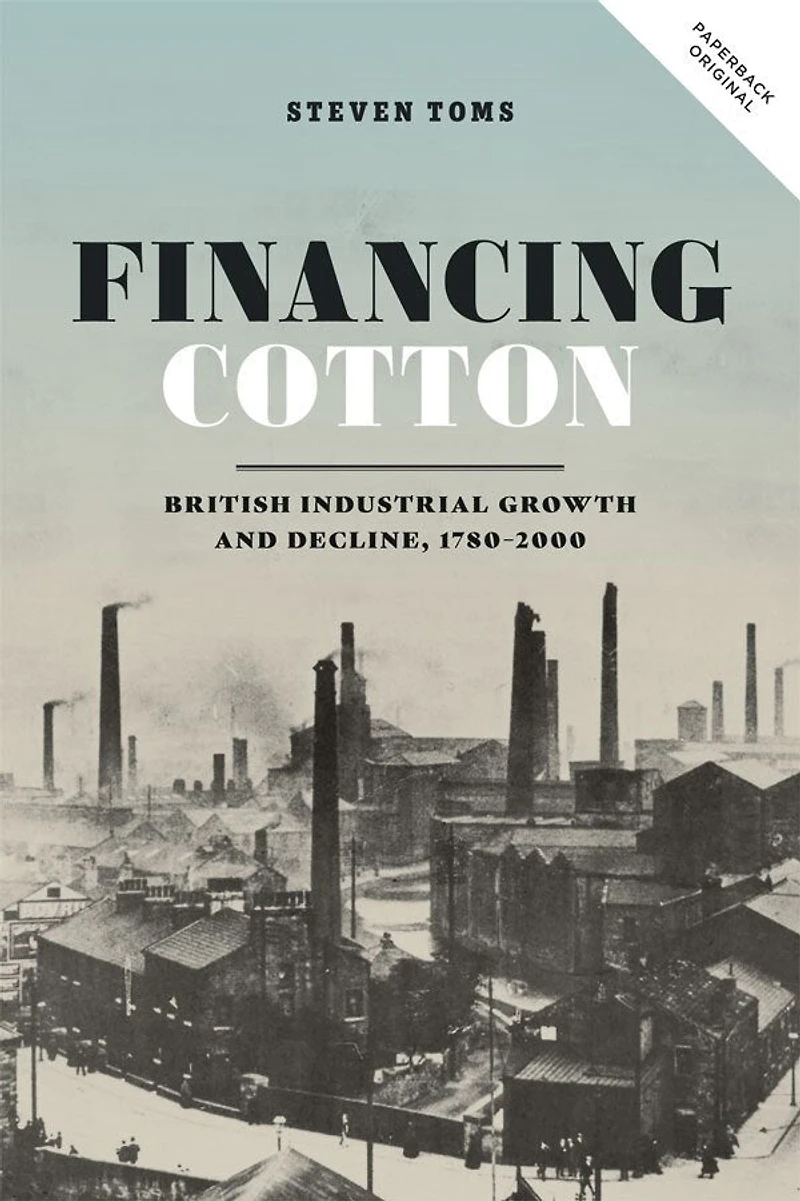
Financing Cotton: British Industrial Growth And Decline, 1780-2000
Current price: $48.40

Financing Cotton: British Industrial Growth And Decline, 1780-2000
Current price: $48.40
Loading Inventory...
Size: Paperback
*Product information may vary - to confirm product availability, pricing, shipping and return information please contact Indigo
This book links the world of finance directly to the fate of the cotton and textile industry, long a metaphor for the rise and fall of Britain as a manufacturing economy, for the first time.
The cotton and textile industry, at the centre of the industrial revolution, has long been a metaphor for the rise and fall of Britain as a manufacturing economy. This book links the world of finance directly to the fate of the cotton and textile industry for the first time. Using a unique underlying data-set drawn from financial business records of over 100 cotton and textile-manufacturing firms based in Lancashire, and ranging from the late eighteenth to the twenty-first century, Financing Cotton analyses the dynamics of industrial capitalism by uncovering the interaction between financial systems and technological development and innovation. It offers new perspectives on business practices and their evolution, as well as decisions taken by entrepreneurs, managers and employees. The book broadly investigates five questions: how and why were individual firms profitable and what happened to these profits; how did the firms' financial structure and performance influence their attitudes to employment regulation; what were the effects of financial networks and institutions on the characteristics of the first and second phase of industrialisation; how did the financial system enable or stifle entrepreneurship and investment in new technology and, finally, why did consolidation and industrial restructuring offer survival options for some firms, but not for others?
This book links the world of finance directly to the fate of the cotton and textile industry, long a metaphor for the rise and fall of Britain as a manufacturing economy, for the first time.
The cotton and textile industry, at the centre of the industrial revolution, has long been a metaphor for the rise and fall of Britain as a manufacturing economy. This book links the world of finance directly to the fate of the cotton and textile industry for the first time. Using a unique underlying data-set drawn from financial business records of over 100 cotton and textile-manufacturing firms based in Lancashire, and ranging from the late eighteenth to the twenty-first century, Financing Cotton analyses the dynamics of industrial capitalism by uncovering the interaction between financial systems and technological development and innovation. It offers new perspectives on business practices and their evolution, as well as decisions taken by entrepreneurs, managers and employees. The book broadly investigates five questions: how and why were individual firms profitable and what happened to these profits; how did the firms' financial structure and performance influence their attitudes to employment regulation; what were the effects of financial networks and institutions on the characteristics of the first and second phase of industrialisation; how did the financial system enable or stifle entrepreneurship and investment in new technology and, finally, why did consolidation and industrial restructuring offer survival options for some firms, but not for others?
You May Also Like













More About Indigo at Erin Mills Town Centre
The largest book retailer in Canada also offers toys, music, home décor, gifts and lifestyle products. What's Inside...Books, Magazines, CD’s and DVD’s, Toys and Gifts, Home Accents, Electronics, Baby’s and Children’s Section, Bath and Body, Kitchen and Bedroom, Stationary Located outside in the exterior plaza.
5015 Glen Erin Dr, Mississauga, ON L5M 0R7, Canada
Find Indigo at Erin Mills Town Centre in Mississauga ON
Visit Indigo at Erin Mills Town Centre in Mississauga ON