

GIVE THE PERFECT GIFT
Erin Mills Town Centre Gift Cards are the perfect choice for your gift giving needs.Purchase gift cards at kiosks near the food court or centre court, at Guest Services, or click below to purchase online.PURCHASE HEREHome
Fortune's Theater: Financial Risk and the Future Renaissance Italy
Indigo
Loading Inventory...
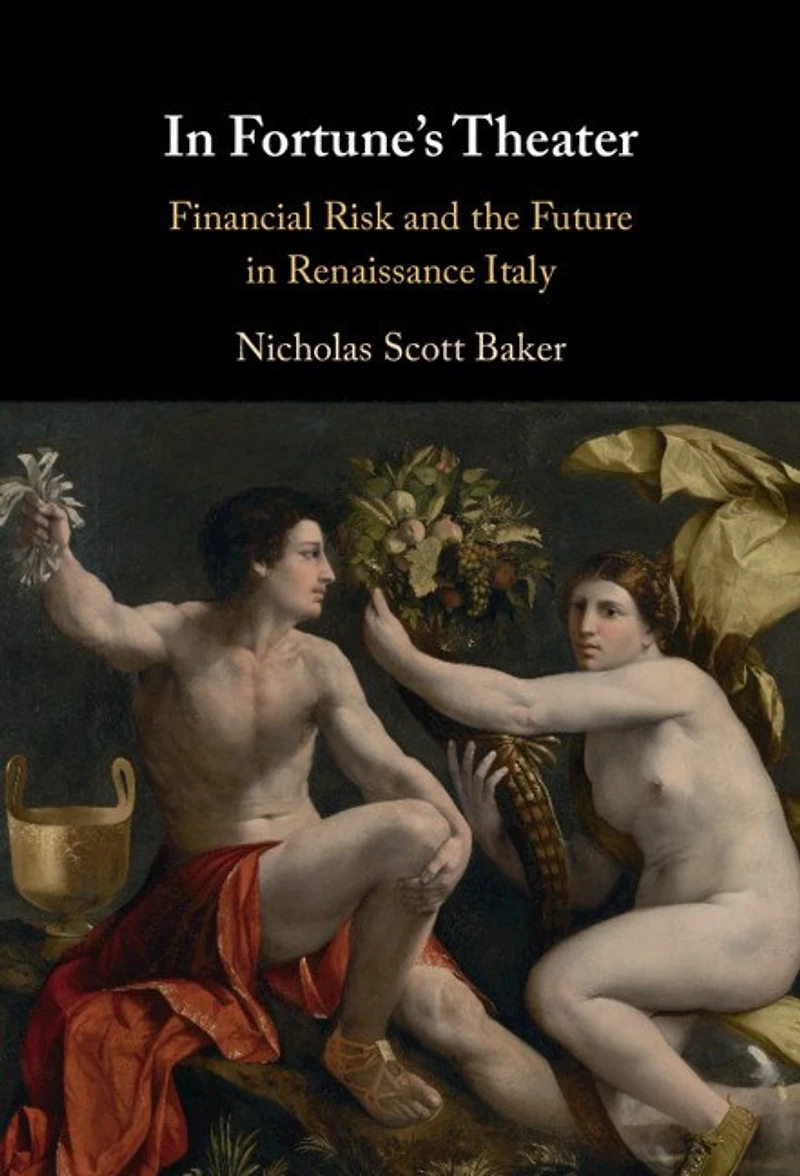
Fortune's Theater: Financial Risk and the Future Renaissance Italy
Current price: $127.95

Fortune's Theater: Financial Risk and the Future Renaissance Italy
Current price: $127.95
Loading Inventory...
Size: Hardcover
*Product information may vary - to confirm product availability, pricing, shipping and return information please contact Indigo
This innovative cultural history of financial risk-taking in Renaissance Italy argues that a new concept of the future as unknown and unknowable emerged in Italian society between the mid-fifteenth and mid-sixteenth centuries. Exploring the rich interchanges between mercantile and intellectual cultures underpinning this development in four major cities - Florence, Genoa, Venice, and Milan - Nicholas Scott Baker examines how merchants and gamblers, the futurologists of the pre-modern world, understood and experienced their own risk taking and that of others. Drawing on extensive archival research, this study demonstrates that while the Renaissance did not create the modern sense of time, it constructed the foundations on which it could develop. The new conceptions of the past and the future that developed in the Renaissance provided the pattern for the later construction a single narrative beginning in classical antiquity stretching to the now. This book thus makes an important contribution toward laying bare the historical contingency of a sense of time that continues to structure our world in profound ways.
This innovative cultural history of financial risk-taking in Renaissance Italy argues that a new concept of the future as unknown and unknowable emerged in Italian society between the mid-fifteenth and mid-sixteenth centuries. Exploring the rich interchanges between mercantile and intellectual cultures underpinning this development in four major cities - Florence, Genoa, Venice, and Milan - Nicholas Scott Baker examines how merchants and gamblers, the futurologists of the pre-modern world, understood and experienced their own risk taking and that of others. Drawing on extensive archival research, this study demonstrates that while the Renaissance did not create the modern sense of time, it constructed the foundations on which it could develop. The new conceptions of the past and the future that developed in the Renaissance provided the pattern for the later construction a single narrative beginning in classical antiquity stretching to the now. This book thus makes an important contribution toward laying bare the historical contingency of a sense of time that continues to structure our world in profound ways.
You May Also Like








More About Indigo at Erin Mills Town Centre
The largest book retailer in Canada also offers toys, music, home décor, gifts and lifestyle products. What's Inside...Books, Magazines, CD’s and DVD’s, Toys and Gifts, Home Accents, Electronics, Baby’s and Children’s Section, Bath and Body, Kitchen and Bedroom, Stationary Located outside in the exterior plaza.
5015 Glen Erin Dr, Mississauga, ON L5M 0R7, Canada
Find Indigo at Erin Mills Town Centre in Mississauga ON
Visit Indigo at Erin Mills Town Centre in Mississauga ON