

GIVE THE PERFECT GIFT
Erin Mills Town Centre Gift Cards are the perfect choice for your gift giving needs.Purchase gift cards at kiosks near the food court or centre court, at Guest Services, or click below to purchase online.PURCHASE HEREHome
Fragmentation in Semi-Arid and Arid Landscapes: Consequences for Human and Natural Systems
Indigo
Loading Inventory...
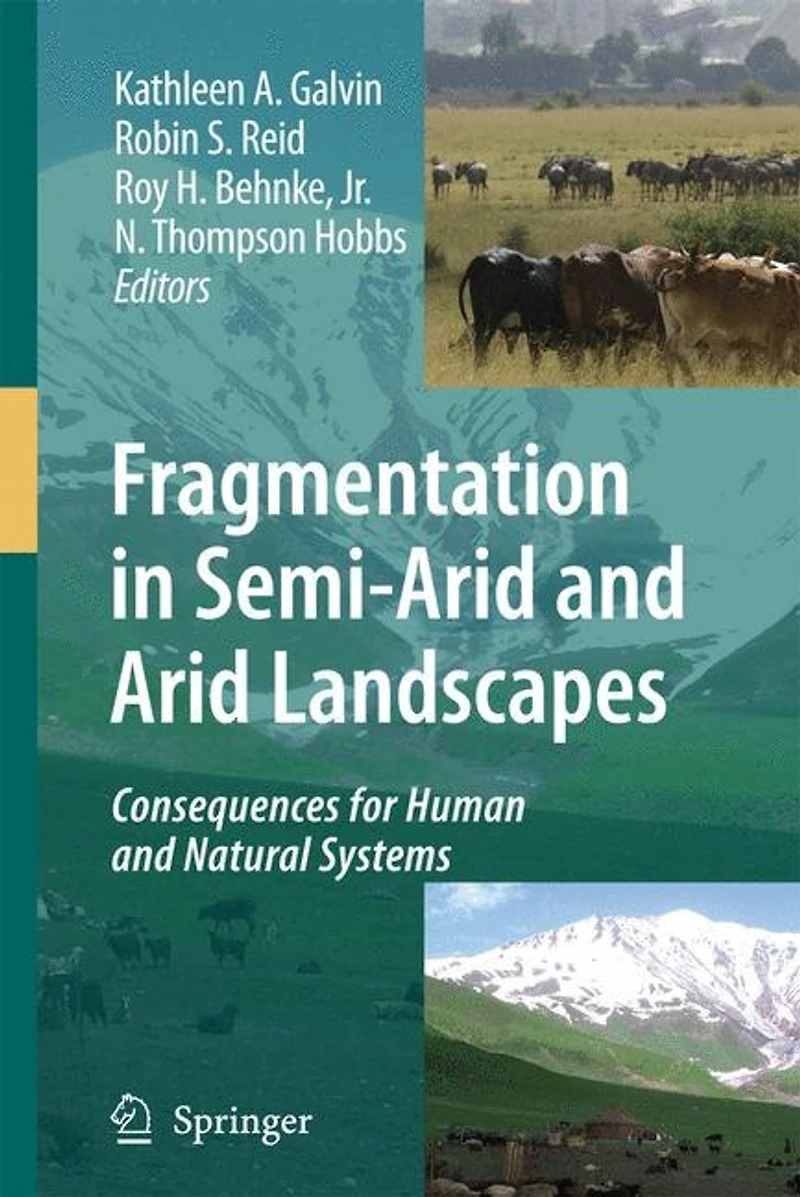
Fragmentation in Semi-Arid and Arid Landscapes: Consequences for Human and Natural Systems
Current price: $248.50

Fragmentation in Semi-Arid and Arid Landscapes: Consequences for Human and Natural Systems
Current price: $248.50
Loading Inventory...
Size: Paperback
*Product information may vary - to confirm product availability, pricing, shipping and return information please contact Indigo
Casual readers of the title of this book might be forgiven for thinking that it is a little esoteric, far-removed from the pressing day-to-day concerns of humans and wildlife in the drylands of the world. But they could not be more wrong. It addresses an issue of the utmost practical importance in the world today, yet does so on the basis of exciting new theory about how the world operates. Of the billion or so human beings who now live in the world's arid and semi-arid lands, a majority depend on natural resources for their livelihoods. These natural resources include livestock and their forage, as well as the wild biota that creates opportunities for tourism or subsistence harvesting. Arid and semi-arid lands are spread over a third of the world's land surface, from Colorado to the Kalahari, the Sahel to the Simpson, the Altai Steppe to Amboseli. Notwithstanding their diversity, these lands are broadly cha- cterised by low productivity, management at large scales, and great climate variability - in short, by high spatial and temporal heterogeneity. This book is about the implications of that high spatial and temporal heterogeneity for life, management and policy in arid and semi-arid lands.
Casual readers of the title of this book might be forgiven for thinking that it is a little esoteric, far-removed from the pressing day-to-day concerns of humans and wildlife in the drylands of the world. But they could not be more wrong. It addresses an issue of the utmost practical importance in the world today, yet does so on the basis of exciting new theory about how the world operates. Of the billion or so human beings who now live in the world's arid and semi-arid lands, a majority depend on natural resources for their livelihoods. These natural resources include livestock and their forage, as well as the wild biota that creates opportunities for tourism or subsistence harvesting. Arid and semi-arid lands are spread over a third of the world's land surface, from Colorado to the Kalahari, the Sahel to the Simpson, the Altai Steppe to Amboseli. Notwithstanding their diversity, these lands are broadly cha- cterised by low productivity, management at large scales, and great climate variability - in short, by high spatial and temporal heterogeneity. This book is about the implications of that high spatial and temporal heterogeneity for life, management and policy in arid and semi-arid lands.
You May Also Like







More About Indigo at Erin Mills Town Centre
The largest book retailer in Canada also offers toys, music, home décor, gifts and lifestyle products. What's Inside...Books, Magazines, CD’s and DVD’s, Toys and Gifts, Home Accents, Electronics, Baby’s and Children’s Section, Bath and Body, Kitchen and Bedroom, Stationary Located outside in the exterior plaza.
5015 Glen Erin Dr, Mississauga, ON L5M 0R7, Canada
Find Indigo at Erin Mills Town Centre in Mississauga ON
Visit Indigo at Erin Mills Town Centre in Mississauga ON