

GIVE THE PERFECT GIFT
Erin Mills Town Centre Gift Cards are the perfect choice for your gift giving needs.Purchase gift cards at kiosks near the food court or centre court, at Guest Services, or click below to purchase online.PURCHASE HEREHome
From the Democratic Deficit to a Surplus: Constructing Administrative Democracy Europe
Indigo
Loading Inventory...
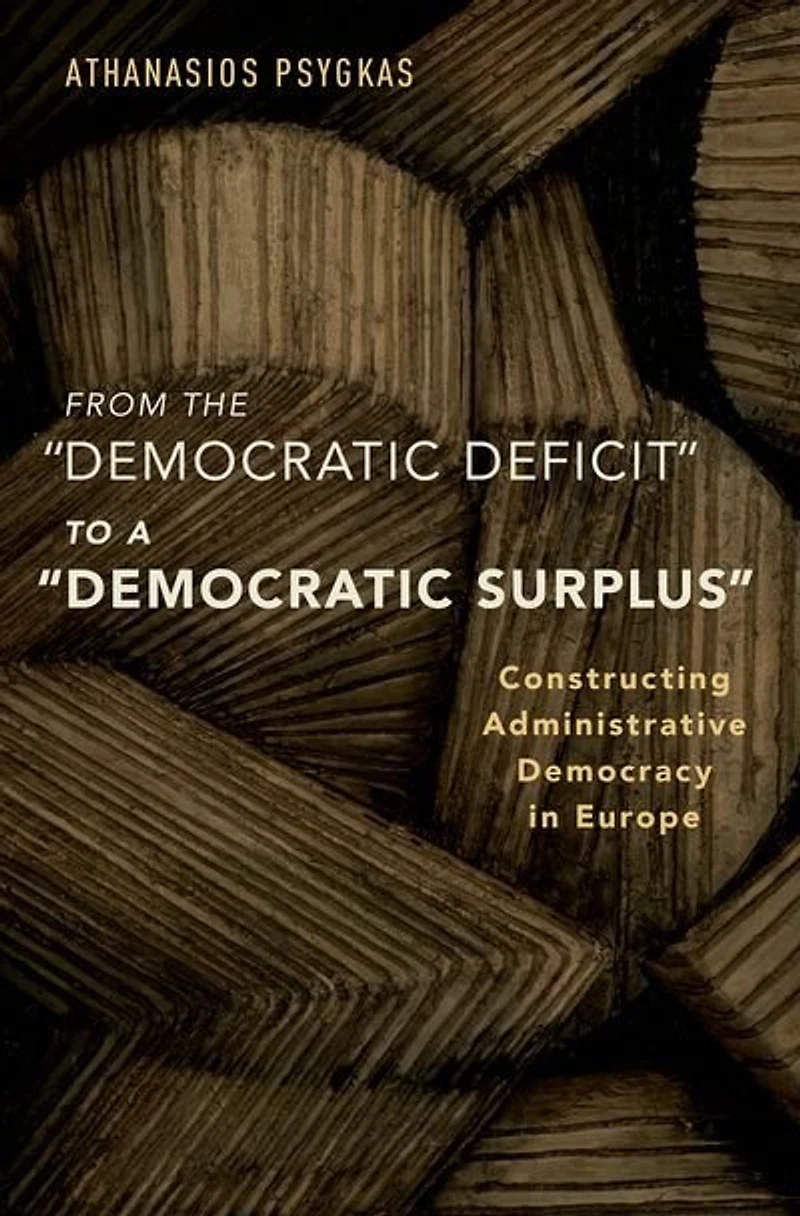
From the Democratic Deficit to a Surplus: Constructing Administrative Democracy Europe
Current price: $109.00

From the Democratic Deficit to a Surplus: Constructing Administrative Democracy Europe
Current price: $109.00
Loading Inventory...
Size: Hardcover
*Product information may vary - to confirm product availability, pricing, shipping and return information please contact Indigo
Challenging the conventional narrative that the European Union suffers from a "democratic deficit," Athanasios Psygkas argues that EU mandates have enhanced the democratic accountability of national regulatory agencies. This is because EU law has created entry points for stakeholder participation in the operation of national regulators; these avenues for public participation were formerly either not open or not institutionalized to this degree.
By focusing on how the EU formally adopted procedural mandates to advance the substantive goal of creating an internal market in electronic communications, Psygkas demonstrates that EU requirements have had significant implications for the nature of administrative governance in the member states. Drawing on theoretical arguments in favor of decentralization traditionally applied to substantive policy-making, this book provides insight into regulatory processes to show how the decentralized EU structure may transform national regulatory authorities into individual loci of experimentation that might in turn develop innovative results. It thus contributes to debates about federalism, governance and public policy, as well as about deliberative and participatory democracy in the United States and Europe.
This book informs current understandings of regulatory agency operations and institutional design by drawing on an original dataset of public consultations and interviews with agency officials, industry and consumer group representatives in Paris, Athens, Brussels, and London. The on-the-ground original research provides a strong foundation for the directions the case law could take and small- and larger-scale institutional reforms that balance the goals of democracy, accountability, and efficiency.
Challenging the conventional narrative that the European Union suffers from a "democratic deficit," Athanasios Psygkas argues that EU mandates have enhanced the democratic accountability of national regulatory agencies. This is because EU law has created entry points for stakeholder participation in the operation of national regulators; these avenues for public participation were formerly either not open or not institutionalized to this degree.
By focusing on how the EU formally adopted procedural mandates to advance the substantive goal of creating an internal market in electronic communications, Psygkas demonstrates that EU requirements have had significant implications for the nature of administrative governance in the member states. Drawing on theoretical arguments in favor of decentralization traditionally applied to substantive policy-making, this book provides insight into regulatory processes to show how the decentralized EU structure may transform national regulatory authorities into individual loci of experimentation that might in turn develop innovative results. It thus contributes to debates about federalism, governance and public policy, as well as about deliberative and participatory democracy in the United States and Europe.
This book informs current understandings of regulatory agency operations and institutional design by drawing on an original dataset of public consultations and interviews with agency officials, industry and consumer group representatives in Paris, Athens, Brussels, and London. The on-the-ground original research provides a strong foundation for the directions the case law could take and small- and larger-scale institutional reforms that balance the goals of democracy, accountability, and efficiency.
You May Also Like
















More About Indigo at Erin Mills Town Centre
The largest book retailer in Canada also offers toys, music, home décor, gifts and lifestyle products. What's Inside...Books, Magazines, CD’s and DVD’s, Toys and Gifts, Home Accents, Electronics, Baby’s and Children’s Section, Bath and Body, Kitchen and Bedroom, Stationary Located outside in the exterior plaza.
5015 Glen Erin Dr, Mississauga, ON L5M 0R7, Canada
Find Indigo at Erin Mills Town Centre in Mississauga ON
Visit Indigo at Erin Mills Town Centre in Mississauga ON