

GIVE THE PERFECT GIFT
Erin Mills Town Centre Gift Cards are the perfect choice for your gift giving needs.Purchase gift cards at kiosks near the food court or centre court, at Guest Services, or click below to purchase online.PURCHASE HEREHome
Frontier Socialism: Self-Organisation and Anti-Capitalism
Indigo
Loading Inventory...
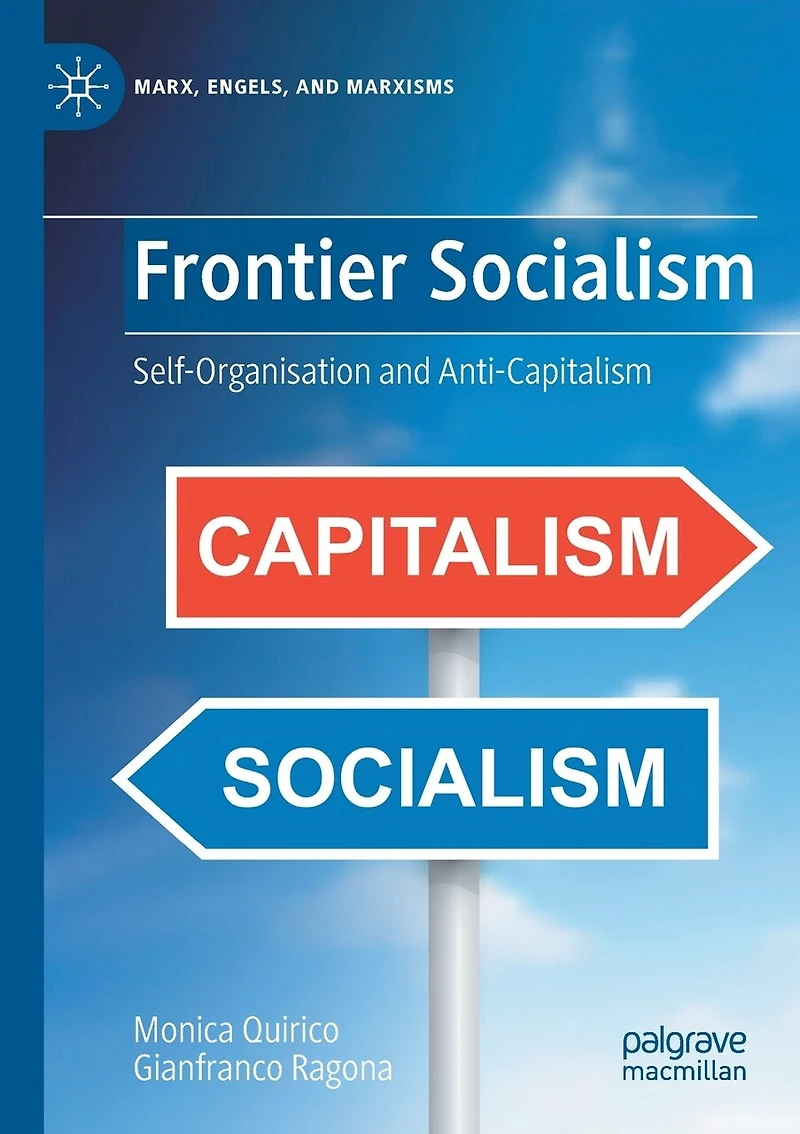
Frontier Socialism: Self-Organisation and Anti-Capitalism
Current price: $233.95

Frontier Socialism: Self-Organisation and Anti-Capitalism
Current price: $233.95
Loading Inventory...
Size: Paperback
*Product information may vary - to confirm product availability, pricing, shipping and return information please contact Indigo
Considering the history of workers' and socialist movements in Europe, Frontier Socialism focuses on unconventional forms of anti-capitalist thought, particularly by examining several militant-intellectuals whose legacy is of particular interest for those aiming for a radical critique of capitalism. Following on the work of Michael Löwy, Quirico & Ragona identify relationships of "elective affinity" between figures who might appear different and dissimilar, at least at first glance: the German Anarchist Gustav Landauer, the Bolshevik Alexandra Kollontai, the German communist Paul Mattick, the Italian Socialist Raniero Panzieri, the Greek-born French euro-communist Nikos Poulantzas, the German-born Swedish Social Democrat Rudolf Meidner, and the French social scientist Alain Bihr as well as two historical struggle experiences, the Spanish Republic and the Italian revolutionary group "Lotta continua". Frontier Socialism then analyzes these thinkers' and experiences' respective paths to socialism based on and achieved through self-organization and self-government, not to build a new tradition but to suggest a path forward for both research and political activism.
Considering the history of workers' and socialist movements in Europe, Frontier Socialism focuses on unconventional forms of anti-capitalist thought, particularly by examining several militant-intellectuals whose legacy is of particular interest for those aiming for a radical critique of capitalism. Following on the work of Michael Löwy, Quirico & Ragona identify relationships of "elective affinity" between figures who might appear different and dissimilar, at least at first glance: the German Anarchist Gustav Landauer, the Bolshevik Alexandra Kollontai, the German communist Paul Mattick, the Italian Socialist Raniero Panzieri, the Greek-born French euro-communist Nikos Poulantzas, the German-born Swedish Social Democrat Rudolf Meidner, and the French social scientist Alain Bihr as well as two historical struggle experiences, the Spanish Republic and the Italian revolutionary group "Lotta continua". Frontier Socialism then analyzes these thinkers' and experiences' respective paths to socialism based on and achieved through self-organization and self-government, not to build a new tradition but to suggest a path forward for both research and political activism.
You May Also Like












More About Indigo at Erin Mills Town Centre
The largest book retailer in Canada also offers toys, music, home décor, gifts and lifestyle products. What's Inside...Books, Magazines, CD’s and DVD’s, Toys and Gifts, Home Accents, Electronics, Baby’s and Children’s Section, Bath and Body, Kitchen and Bedroom, Stationary Located outside in the exterior plaza.
5015 Glen Erin Dr, Mississauga, ON L5M 0R7, Canada
Find Indigo at Erin Mills Town Centre in Mississauga ON
Visit Indigo at Erin Mills Town Centre in Mississauga ON