

GIVE THE PERFECT GIFT
Erin Mills Town Centre Gift Cards are the perfect choice for your gift giving needs.Purchase gift cards at kiosks near the food court or centre court, at Guest Services, or click below to purchase online.PURCHASE HEREHome
Frontiers in Invertebrate Physiology A Collection of Reviews: 3-volume set
Indigo
Loading Inventory...
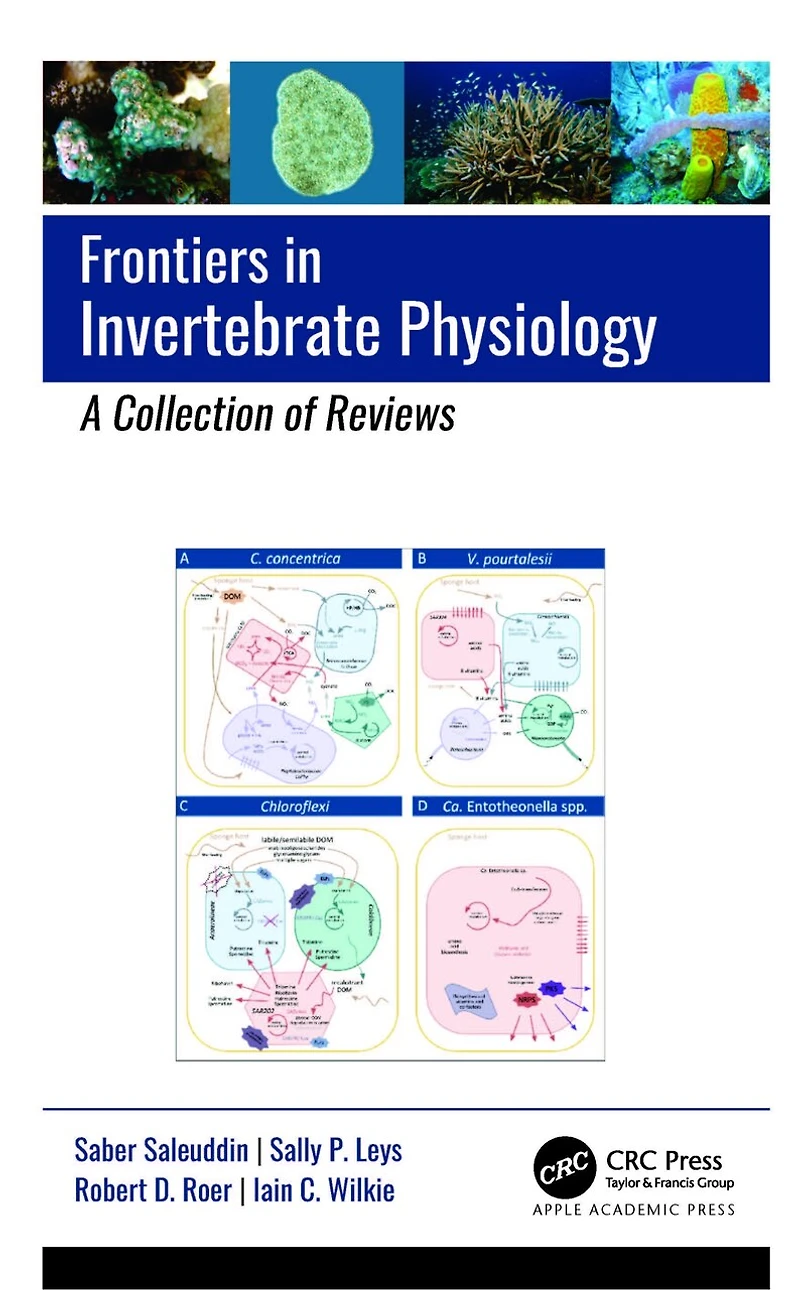
Frontiers in Invertebrate Physiology A Collection of Reviews: 3-volume set
Current price: $880.95

Frontiers in Invertebrate Physiology A Collection of Reviews: 3-volume set
Current price: $880.95
Loading Inventory...
Size: Hardcover
*Product information may vary - to confirm product availability, pricing, shipping and return information please contact Indigo
This new 3-volume set provides informative reviews on the physiology of sponges, cnidarians, round and flat worms, annelids, echinoderms, and crustaceans, advancing our knowledge of the physiology of these major invertebrate groups (Phyla). Invertebrates exhibit the largest number of species and occupy virtually every conceivable ecological niche. They are economically important in food chains, they recycle organic waste, and they are crucial pollinators of plants and sources of food. They are also medically important as parasites that cause major diseases of both humans and livestock. Volume 1 focuses on non-bilaterian phyla; Volume 2 looks at crustacea; and Volume 3 discusses annelida and echinodermata. Volume 1 looks at non-bilaterian (sponges, cnidarians, placozoans). The focus on sponge biology has recently been on symbiosis, nutrient uptake, and sensory biology. The research on cnidarians primarily has been on biomineralization, the nervous system, and development as well as neuropeptide biology of placozoans involved in feeding and neuropeptides in cnidarians. Chapters on crustacean physiology are grouped in Volume 2 and cover diverse physiological topics ranging from moulting, respiration, water balance, biomineralization, bioreceptors, and temperature regulation to the land adaptation of terrestrial crustaceans. The chapters are comprehensive and add new knowledge to crustacean biology. Echinoderm and annelid are covered in Volume 3. The volume looks at temporary adhesion and regeneration as two important areas in echinoderm biology. It includes an important review of juxtaligamental cells, which may regulate the mechanical properties of connective tissue. Annelid physiology is discussed (neurobiology of locomotion in leeches, regeneration, reproduction) as is neuro-endocrine-immune response. The information provided here will advance the knowledge of invertebrate physiology and will serve as an important resource for advanced undergraduate students, graduate students, and researchers/professionals.
This new 3-volume set provides informative reviews on the physiology of sponges, cnidarians, round and flat worms, annelids, echinoderms, and crustaceans, advancing our knowledge of the physiology of these major invertebrate groups (Phyla). Invertebrates exhibit the largest number of species and occupy virtually every conceivable ecological niche. They are economically important in food chains, they recycle organic waste, and they are crucial pollinators of plants and sources of food. They are also medically important as parasites that cause major diseases of both humans and livestock. Volume 1 focuses on non-bilaterian phyla; Volume 2 looks at crustacea; and Volume 3 discusses annelida and echinodermata. Volume 1 looks at non-bilaterian (sponges, cnidarians, placozoans). The focus on sponge biology has recently been on symbiosis, nutrient uptake, and sensory biology. The research on cnidarians primarily has been on biomineralization, the nervous system, and development as well as neuropeptide biology of placozoans involved in feeding and neuropeptides in cnidarians. Chapters on crustacean physiology are grouped in Volume 2 and cover diverse physiological topics ranging from moulting, respiration, water balance, biomineralization, bioreceptors, and temperature regulation to the land adaptation of terrestrial crustaceans. The chapters are comprehensive and add new knowledge to crustacean biology. Echinoderm and annelid are covered in Volume 3. The volume looks at temporary adhesion and regeneration as two important areas in echinoderm biology. It includes an important review of juxtaligamental cells, which may regulate the mechanical properties of connective tissue. Annelid physiology is discussed (neurobiology of locomotion in leeches, regeneration, reproduction) as is neuro-endocrine-immune response. The information provided here will advance the knowledge of invertebrate physiology and will serve as an important resource for advanced undergraduate students, graduate students, and researchers/professionals.
You May Also Like








![An Annotated Catalog of the Edward C. Atwater Collection of American Popular Medicine and Health Reform [3 volume set]: Volumes I, II, and III](https://cdn.mall.adeptmind.ai/https%253A%252F%252Fcdn.shopify.com%252Fs%252Ffiles%252F1%252F0655%252F8980%252F5233%252Ffiles%252F1_a8ba7fe7-4ecc-43b5-ab93-2586b8f3a9f3.jpg_medium.webp)







More About Indigo at Erin Mills Town Centre
The largest book retailer in Canada also offers toys, music, home décor, gifts and lifestyle products. What's Inside...Books, Magazines, CD’s and DVD’s, Toys and Gifts, Home Accents, Electronics, Baby’s and Children’s Section, Bath and Body, Kitchen and Bedroom, Stationary Located outside in the exterior plaza.
5015 Glen Erin Dr, Mississauga, ON L5M 0R7, Canada
Find Indigo at Erin Mills Town Centre in Mississauga ON
Visit Indigo at Erin Mills Town Centre in Mississauga ON