

GIVE THE PERFECT GIFT
Erin Mills Town Centre Gift Cards are the perfect choice for your gift giving needs.Purchase gift cards at kiosks near the food court or centre court, at Guest Services, or click below to purchase online.PURCHASE HEREHome
Galen, De diebus decretoriis, from Greek into Arabic: A Critical Edition, with Translation and Commentary, of Hunayn ibn Ishaq, Kitab ayyam al-buhran
Indigo
Loading Inventory...
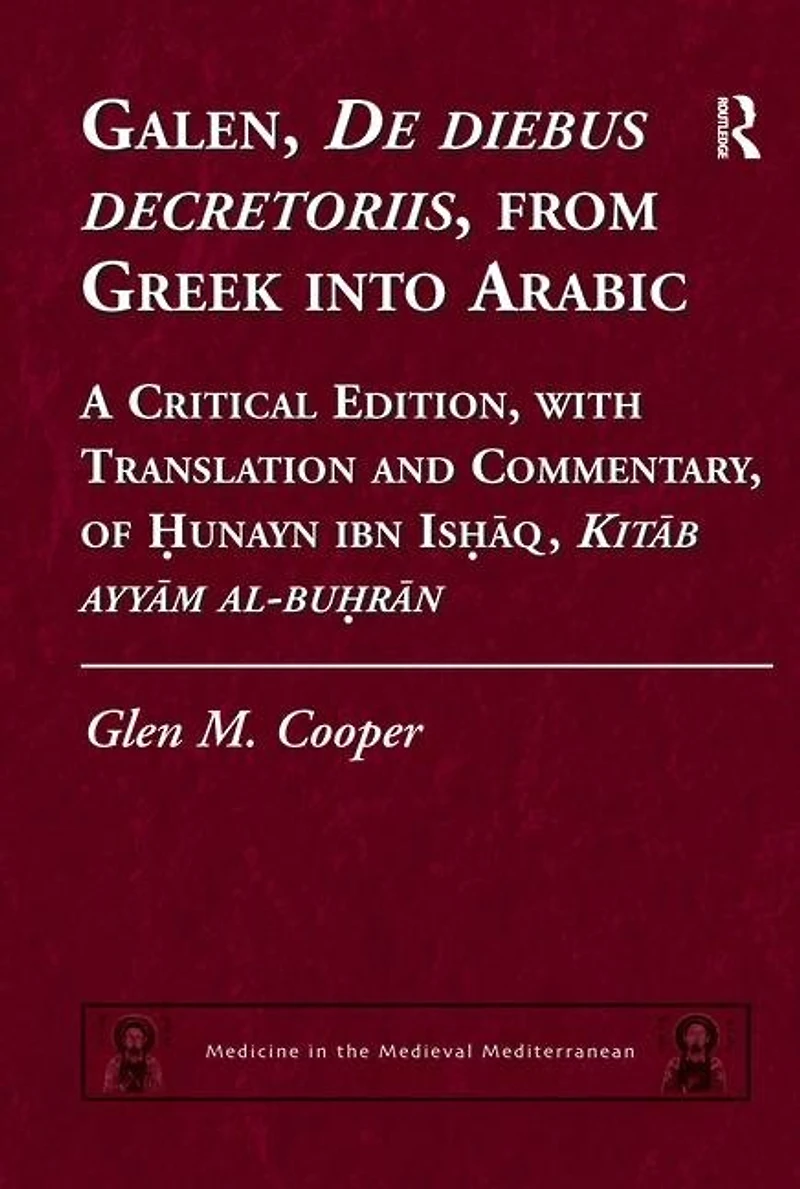
Galen, De diebus decretoriis, from Greek into Arabic: A Critical Edition, with Translation and Commentary, of Hunayn ibn Ishaq, Kitab ayyam al-buhran
Current price: $280.00

Galen, De diebus decretoriis, from Greek into Arabic: A Critical Edition, with Translation and Commentary, of Hunayn ibn Ishaq, Kitab ayyam al-buhran
Current price: $280.00
Loading Inventory...
Size: Hardcover
*Product information may vary - to confirm product availability, pricing, shipping and return information please contact Indigo
This volume presents the first edition of the Arabic translation, by Hunayn ibn Ishaq, of Galen's Critical Days (De diebus decretoriis), together with the first translation of the text into a modern language. The substantial introduction contextualizes the treatise within the Greek and Arabic traditions. Galen's Critical Days was a founding text of astrological medicine. In febrile illnesses, the critical days are the days on which an especially severe pattern of symptoms, a crisis, was likely to occur. The crisis was thought to expel the disease-producing substances from the body. If its precise timing were known, the physician could prepare the patient so that the crisis would be most beneficial. After identifying the critical days based on empirical data and showing how to use them in therapy, Galen explains the critical days via the moon's influence. In the historical introduction Glen Cooper discusses the translation of the Critical Days in Arabic, and adumbrates its possible significance in the intellectual debates and political rivalries among the 9th-century Baghdad elite. It is argued that Galen originally composed the Critical Days both to confound the Skeptics of his own day and to refute a purely mathematical, rationalist approach to science. These features made the text useful in the rivalries between Baghdad scholars. Al-Kindi (d.c. 866) famously propounded a mathematical approach to science akin to the latter. The scholar-bureaucrat responsible for funding this translation, Muhammad ibn Musa (d. 873), al-Kindi's nemesis, may have found the treatise useful in refuting that approach. The commentary and notes to the facing page translation address issues of translation, as well as important concepts.
This volume presents the first edition of the Arabic translation, by Hunayn ibn Ishaq, of Galen's Critical Days (De diebus decretoriis), together with the first translation of the text into a modern language. The substantial introduction contextualizes the treatise within the Greek and Arabic traditions. Galen's Critical Days was a founding text of astrological medicine. In febrile illnesses, the critical days are the days on which an especially severe pattern of symptoms, a crisis, was likely to occur. The crisis was thought to expel the disease-producing substances from the body. If its precise timing were known, the physician could prepare the patient so that the crisis would be most beneficial. After identifying the critical days based on empirical data and showing how to use them in therapy, Galen explains the critical days via the moon's influence. In the historical introduction Glen Cooper discusses the translation of the Critical Days in Arabic, and adumbrates its possible significance in the intellectual debates and political rivalries among the 9th-century Baghdad elite. It is argued that Galen originally composed the Critical Days both to confound the Skeptics of his own day and to refute a purely mathematical, rationalist approach to science. These features made the text useful in the rivalries between Baghdad scholars. Al-Kindi (d.c. 866) famously propounded a mathematical approach to science akin to the latter. The scholar-bureaucrat responsible for funding this translation, Muhammad ibn Musa (d. 873), al-Kindi's nemesis, may have found the treatise useful in refuting that approach. The commentary and notes to the facing page translation address issues of translation, as well as important concepts.
You May Also Like








More About Indigo at Erin Mills Town Centre
The largest book retailer in Canada also offers toys, music, home décor, gifts and lifestyle products. What's Inside...Books, Magazines, CD’s and DVD’s, Toys and Gifts, Home Accents, Electronics, Baby’s and Children’s Section, Bath and Body, Kitchen and Bedroom, Stationary Located outside in the exterior plaza.
5015 Glen Erin Dr, Mississauga, ON L5M 0R7, Canada
Find Indigo at Erin Mills Town Centre in Mississauga ON
Visit Indigo at Erin Mills Town Centre in Mississauga ON