

GIVE THE PERFECT GIFT
Erin Mills Town Centre Gift Cards are the perfect choice for your gift giving needs.Purchase gift cards at kiosks near the food court or centre court, at Guest Services, or click below to purchase online.PURCHASE HEREHome
Game Theory in Biology: concepts and frontiers
Indigo
Loading Inventory...
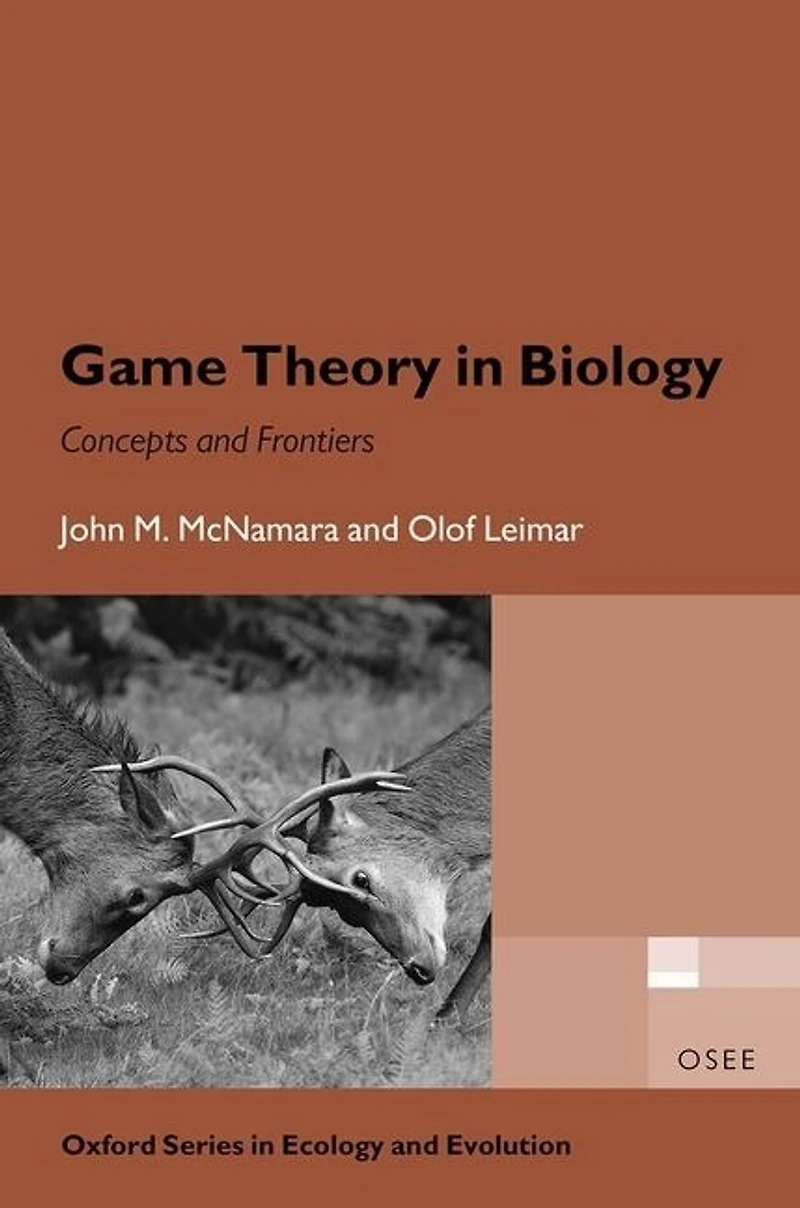
Game Theory in Biology: concepts and frontiers
Current price: $104.50

Game Theory in Biology: concepts and frontiers
Current price: $104.50
Loading Inventory...
Size: Hardcover
*Product information may vary - to confirm product availability, pricing, shipping and return information please contact Indigo
The principles of game theory apply to a wide range of topics in biology. This book presents the central concepts in evolutionary game theory and provides an authoritative and up-to-date account. The focus is on concepts that are important for biologists in their attempts to explain observations. This strong connection between concepts and applications is a recurrent theme throughout the book which incorporates recent and traditional ideas from animal psychology, neuroscience, and machine learning that provide a mechanistic basis for behaviours shown by players of a game. The approaches taken to modelling games often rest on idealized and unrealistic assumptions whose limitations and consequences are not always appreciated. The authors provide a novel reassessment of the field, highlighting how to overcome limitations and identifying future directions.
Game Theory in Biology is an advanced textbook suitable for graduate level students as well as professional researchers (both empiricists and theoreticians) in the fields of behavioural ecology and evolutionary biology. It will also be of relevance to a broader interdisciplinary audience including psychologists and neuroscientists.
The principles of game theory apply to a wide range of topics in biology. This book presents the central concepts in evolutionary game theory and provides an authoritative and up-to-date account. The focus is on concepts that are important for biologists in their attempts to explain observations. This strong connection between concepts and applications is a recurrent theme throughout the book which incorporates recent and traditional ideas from animal psychology, neuroscience, and machine learning that provide a mechanistic basis for behaviours shown by players of a game. The approaches taken to modelling games often rest on idealized and unrealistic assumptions whose limitations and consequences are not always appreciated. The authors provide a novel reassessment of the field, highlighting how to overcome limitations and identifying future directions.
Game Theory in Biology is an advanced textbook suitable for graduate level students as well as professional researchers (both empiricists and theoreticians) in the fields of behavioural ecology and evolutionary biology. It will also be of relevance to a broader interdisciplinary audience including psychologists and neuroscientists.
You May Also Like








More About Indigo at Erin Mills Town Centre
The largest book retailer in Canada also offers toys, music, home décor, gifts and lifestyle products. What's Inside...Books, Magazines, CD’s and DVD’s, Toys and Gifts, Home Accents, Electronics, Baby’s and Children’s Section, Bath and Body, Kitchen and Bedroom, Stationary Located outside in the exterior plaza.
5015 Glen Erin Dr, Mississauga, ON L5M 0R7, Canada
Find Indigo at Erin Mills Town Centre in Mississauga ON
Visit Indigo at Erin Mills Town Centre in Mississauga ON