

GIVE THE PERFECT GIFT
Erin Mills Town Centre Gift Cards are the perfect choice for your gift giving needs.Purchase gift cards at kiosks near the food court or centre court, at Guest Services, or click below to purchase online.PURCHASE HEREHome
Georg Lukacs and His Generation 1900-1918 by Mary Gluck, Paperback | Indigo Chapters
Indigo
Loading Inventory...
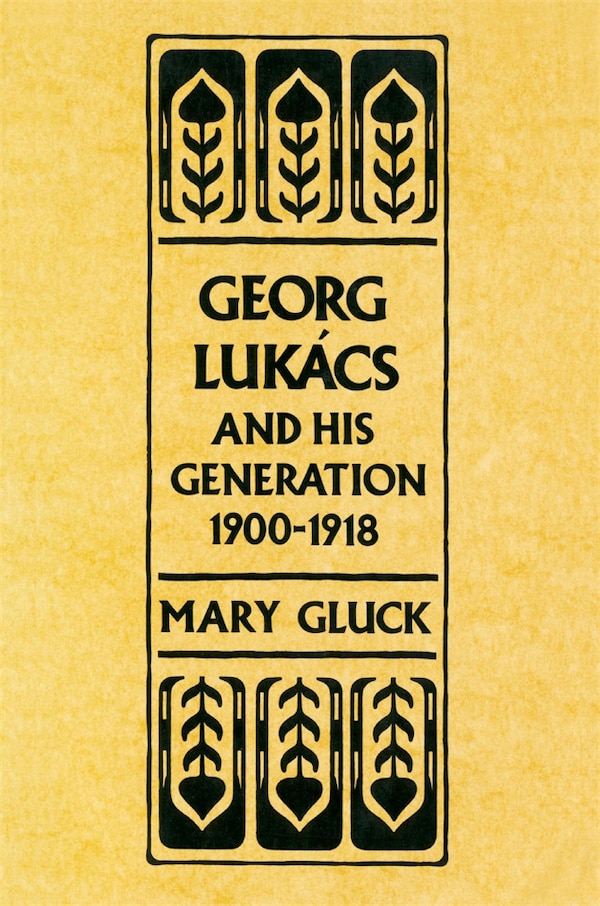
Georg Lukacs and His Generation 1900-1918 by Mary Gluck, Paperback | Indigo Chapters
By Mary Gluck
Current price: $55.00

By Mary Gluck
Georg Lukacs and His Generation 1900-1918 by Mary Gluck, Paperback | Indigo Chapters
Current price: $55.00
Loading Inventory...
Size: 1 x 1 x 0.8125
*Product information may vary - to confirm product availability, pricing, shipping and return information please contact Indigo
Mary Gluck introduces us to a Lukács we have never met. Here is Lukács among his friends, lovers, and peers in those important years before 1918, when he converted to Communism and Marxism at the age of thirty-nine. Georg Lukács claimed in later life that his early achievements lacked genuine coherence, being expressions of a vague romantic anticapitalism that only found resolution in his conversion to Marxism. By integrating Lukács with his early generational grouping and making expert use of a new treasure trove of documents from his early years, Gluck demonstrates that revolutionary socialism was not the inevitable outcome of Lukács' early cultural radicalism, but only one of several possible options in the fragmented ideological climate of postwar Europe. From this new perspective, his pre-Marxist career takes on a cultural consistency that parallels and illuminates the inner strivings of the early modernists before the outbreak of World War I. Lukács emerges in this generational portrait not only as dramatic and psychologically complex but also as a representative figure whose inner dilemmas were echoed in the lives of many other radical intellectuals who came of age during the fin de siêcle period. Gluck situates Lukács within a fascinating network of friends and associates, the so-called Sunday Circle, which included such people as Karl Mannheim, Arnold Hauser, Bela Balázs, and Anna Lesznai. She adeptly anchors this group within the context of social and economic transformations in Hungary that brought new conservative, antisemitic movements to the fore and that marginalized the assimilated Jewish middle classes to which Lukács and most of his friends belonged. Retracing their collective hopes and values helps to clarify the far-ranging cultural crisis associated with the decline of nineteenth-century liberal culture and the emergence of the modernist sensibility. | Georg Lukacs and His Generation 1900-1918 by Mary Gluck, Paperback | Indigo Chapters
Mary Gluck introduces us to a Lukács we have never met. Here is Lukács among his friends, lovers, and peers in those important years before 1918, when he converted to Communism and Marxism at the age of thirty-nine. Georg Lukács claimed in later life that his early achievements lacked genuine coherence, being expressions of a vague romantic anticapitalism that only found resolution in his conversion to Marxism. By integrating Lukács with his early generational grouping and making expert use of a new treasure trove of documents from his early years, Gluck demonstrates that revolutionary socialism was not the inevitable outcome of Lukács' early cultural radicalism, but only one of several possible options in the fragmented ideological climate of postwar Europe. From this new perspective, his pre-Marxist career takes on a cultural consistency that parallels and illuminates the inner strivings of the early modernists before the outbreak of World War I. Lukács emerges in this generational portrait not only as dramatic and psychologically complex but also as a representative figure whose inner dilemmas were echoed in the lives of many other radical intellectuals who came of age during the fin de siêcle period. Gluck situates Lukács within a fascinating network of friends and associates, the so-called Sunday Circle, which included such people as Karl Mannheim, Arnold Hauser, Bela Balázs, and Anna Lesznai. She adeptly anchors this group within the context of social and economic transformations in Hungary that brought new conservative, antisemitic movements to the fore and that marginalized the assimilated Jewish middle classes to which Lukács and most of his friends belonged. Retracing their collective hopes and values helps to clarify the far-ranging cultural crisis associated with the decline of nineteenth-century liberal culture and the emergence of the modernist sensibility. | Georg Lukacs and His Generation 1900-1918 by Mary Gluck, Paperback | Indigo Chapters
You May Also Like








More About Indigo at Erin Mills Town Centre
The largest book retailer in Canada also offers toys, music, home décor, gifts and lifestyle products. What's Inside...Books, Magazines, CD’s and DVD’s, Toys and Gifts, Home Accents, Electronics, Baby’s and Children’s Section, Bath and Body, Kitchen and Bedroom, Stationary Located outside in the exterior plaza.
5015 Glen Erin Dr, Mississauga, ON L5M 0R7, Canada
Find Indigo at Erin Mills Town Centre in Mississauga ON
Visit Indigo at Erin Mills Town Centre in Mississauga ON