

GIVE THE PERFECT GIFT
Erin Mills Town Centre Gift Cards are the perfect choice for your gift giving needs.Purchase gift cards at kiosks near the food court or centre court, at Guest Services, or click below to purchase online.PURCHASE HEREHome
Global Financial Development Report 2014: Inclusion
Indigo
Loading Inventory...
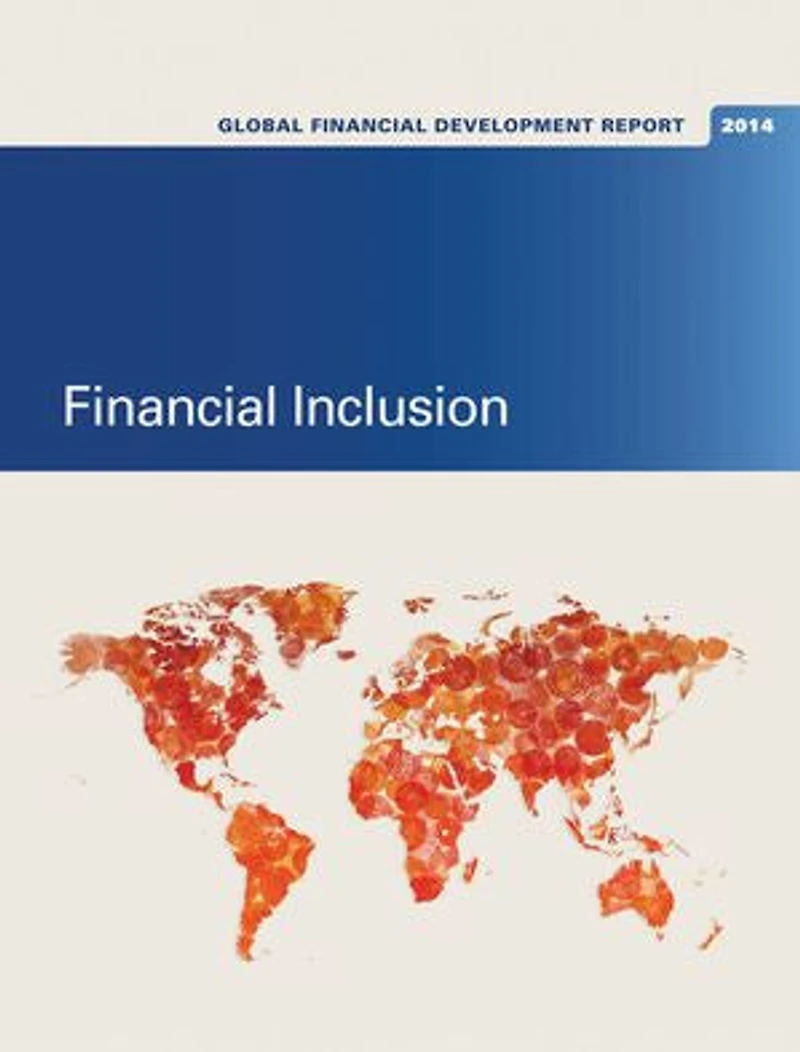
Global Financial Development Report 2014: Inclusion
Current price: $27.19
Original price: $33.92

Global Financial Development Report 2014: Inclusion
Current price: $27.19
Original price: $33.92
Loading Inventory...
Size: Kobo eBook (2013 A)
*Product information may vary - to confirm product availability, pricing, shipping and return information please contact Indigo
Financial inclusion has become a major subject of interest among policymakers, researchers, and other financial sector stakeholders. Many countries, for example, have recently adopted explicit financial inclusion strategies with targets for financial inclusion. The interest reflects an increased recognition that financial inclusion can be a driver of economic growth and poverty alleviation, and that many individuals and firms are excluded unnecessarily from even basic financial services. About half of the world s adult population- more than 2.5 billion people-have no bank account is one powerful example. Barriers such as cost, travel distance, and amount of paperwork and requirements play an important role. Many of these barriers can be addressed by better policies. Despite the high interest, there are still important gaps in knowledge about financial inclusion, what drives it, and what policies affect it. And while recent years have seen some increases in financial inclusion, there is still much scope to reduce barriers to access. However, one of the challenges is that efforts to increase inclusion, if not implemented well, can backfire. Deeply ingrained social problems cannot be resolved purely with an infusion of debt. If not done properly, it can have the opposite effect, making poor borrowers increasingly dependent on debt, and even contributing to financial instability. Global Financial Development Report 2014: Financial Inclusion is a new report from the World Bank Group. It takes a step back and re-examines financial inclusion from the perspective of new global datasets and new evidence. It builds on a critical mass of new research and operational work produced by World Bank Group staff as well as outside researchers and contributors. The report, the second in this series, follows up on the inaugural issue, the Global Financial Development Report 2013: Rethinking the Role of the State in Finance (http://www.worldbank.org/financialdevelopment). Accompanying the Global Financial Development Report 2014 is a vast body of underlying research and data. Among other things, this includes an expanded and updated version of the Global Financial Development Database, a dataset of over 70 financial system characteristics for 203 economies from 1960 to 2011, which is presented in the report s appendix.
Financial inclusion has become a major subject of interest among policymakers, researchers, and other financial sector stakeholders. Many countries, for example, have recently adopted explicit financial inclusion strategies with targets for financial inclusion. The interest reflects an increased recognition that financial inclusion can be a driver of economic growth and poverty alleviation, and that many individuals and firms are excluded unnecessarily from even basic financial services. About half of the world s adult population- more than 2.5 billion people-have no bank account is one powerful example. Barriers such as cost, travel distance, and amount of paperwork and requirements play an important role. Many of these barriers can be addressed by better policies. Despite the high interest, there are still important gaps in knowledge about financial inclusion, what drives it, and what policies affect it. And while recent years have seen some increases in financial inclusion, there is still much scope to reduce barriers to access. However, one of the challenges is that efforts to increase inclusion, if not implemented well, can backfire. Deeply ingrained social problems cannot be resolved purely with an infusion of debt. If not done properly, it can have the opposite effect, making poor borrowers increasingly dependent on debt, and even contributing to financial instability. Global Financial Development Report 2014: Financial Inclusion is a new report from the World Bank Group. It takes a step back and re-examines financial inclusion from the perspective of new global datasets and new evidence. It builds on a critical mass of new research and operational work produced by World Bank Group staff as well as outside researchers and contributors. The report, the second in this series, follows up on the inaugural issue, the Global Financial Development Report 2013: Rethinking the Role of the State in Finance (http://www.worldbank.org/financialdevelopment). Accompanying the Global Financial Development Report 2014 is a vast body of underlying research and data. Among other things, this includes an expanded and updated version of the Global Financial Development Database, a dataset of over 70 financial system characteristics for 203 economies from 1960 to 2011, which is presented in the report s appendix.
You May Also Like









More About Indigo at Erin Mills Town Centre
The largest book retailer in Canada also offers toys, music, home décor, gifts and lifestyle products. What's Inside...Books, Magazines, CD’s and DVD’s, Toys and Gifts, Home Accents, Electronics, Baby’s and Children’s Section, Bath and Body, Kitchen and Bedroom, Stationary Located outside in the exterior plaza.
5015 Glen Erin Dr, Mississauga, ON L5M 0R7, Canada
Find Indigo at Erin Mills Town Centre in Mississauga ON
Visit Indigo at Erin Mills Town Centre in Mississauga ON