

GIVE THE PERFECT GIFT
Erin Mills Town Centre Gift Cards are the perfect choice for your gift giving needs.Purchase gift cards at kiosks near the food court or centre court, at Guest Services, or click below to purchase online.PURCHASE HEREHome
Guide to FPGA Implementation of Arithmetic Functions
Indigo
Loading Inventory...
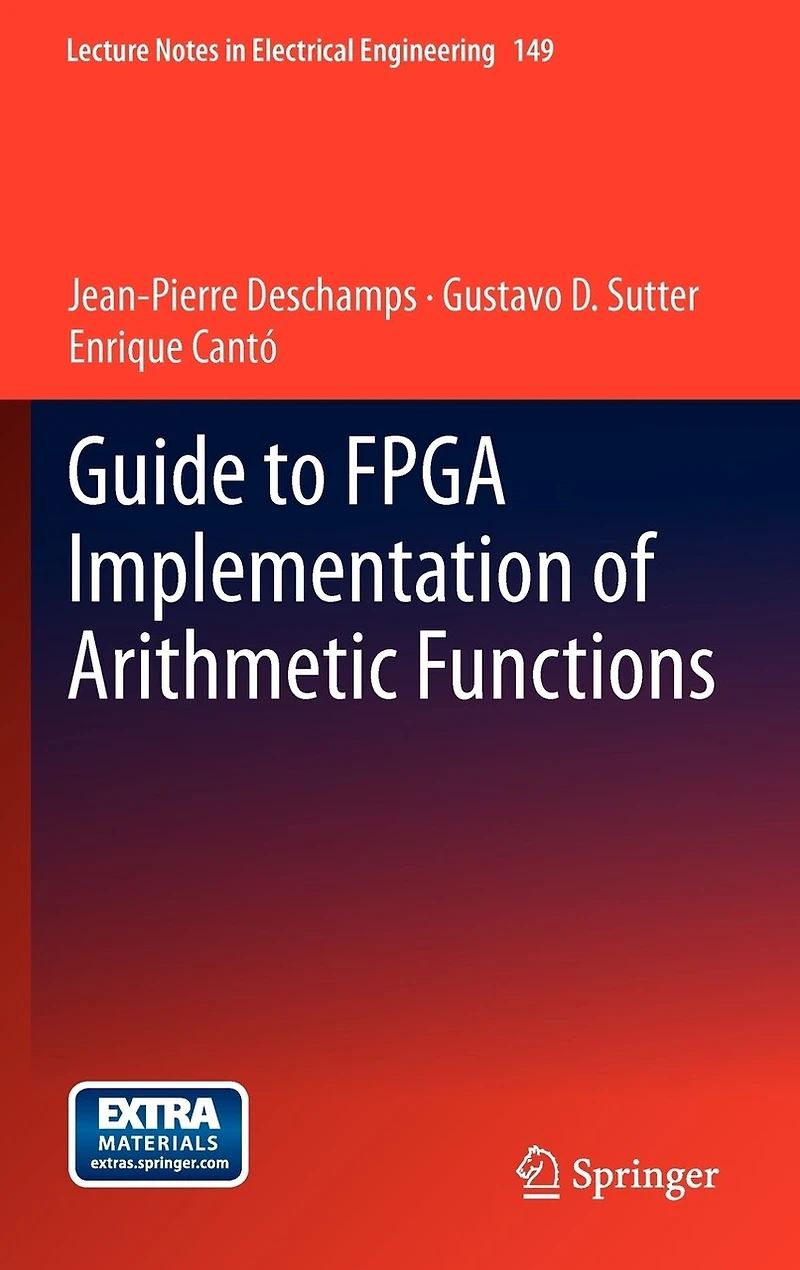
Guide to FPGA Implementation of Arithmetic Functions
Current price: $364.95

Guide to FPGA Implementation of Arithmetic Functions
Current price: $364.95
Loading Inventory...
Size: Hardcover
*Product information may vary - to confirm product availability, pricing, shipping and return information please contact Indigo
This book is designed both for FPGA users interested in developing new, specific components - generally for reducing execution times –and IP core designers interested in extending their catalog of specific components. The main focus is circuit synthesis and the discussion shows, for example, how a given algorithm executing some complex function can be translated to a synthesizable circuit description, as well as which are the best choices the designer can make to reduce the circuit cost, latency, or power consumption. This is not a book on algorithms. It is a book that shows how to translate efficiently an algorithm to a circuit, using techniques such as parallelism, pipeline, loop unrolling, and others. Numerous examples of FPGA implementation are described throughout this book and the circuits are modeled in VHDL. Complete and synthesizable source files are available for download.
This book is designed both for FPGA users interested in developing new, specific components - generally for reducing execution times –and IP core designers interested in extending their catalog of specific components. The main focus is circuit synthesis and the discussion shows, for example, how a given algorithm executing some complex function can be translated to a synthesizable circuit description, as well as which are the best choices the designer can make to reduce the circuit cost, latency, or power consumption. This is not a book on algorithms. It is a book that shows how to translate efficiently an algorithm to a circuit, using techniques such as parallelism, pipeline, loop unrolling, and others. Numerous examples of FPGA implementation are described throughout this book and the circuits are modeled in VHDL. Complete and synthesizable source files are available for download.
You May Also Like








More About Indigo at Erin Mills Town Centre
The largest book retailer in Canada also offers toys, music, home décor, gifts and lifestyle products. What's Inside...Books, Magazines, CD’s and DVD’s, Toys and Gifts, Home Accents, Electronics, Baby’s and Children’s Section, Bath and Body, Kitchen and Bedroom, Stationary Located outside in the exterior plaza.
5015 Glen Erin Dr, Mississauga, ON L5M 0R7, Canada
Find Indigo at Erin Mills Town Centre in Mississauga ON
Visit Indigo at Erin Mills Town Centre in Mississauga ON