

GIVE THE PERFECT GIFT
Erin Mills Town Centre Gift Cards are the perfect choice for your gift giving needs.Purchase gift cards at kiosks near the food court or centre court, at Guest Services, or click below to purchase online.PURCHASE HEREHome
Halophytes vis-a-vis Saline Agriculture: Perspectives and Opportunities for Food Security
Indigo
Loading Inventory...
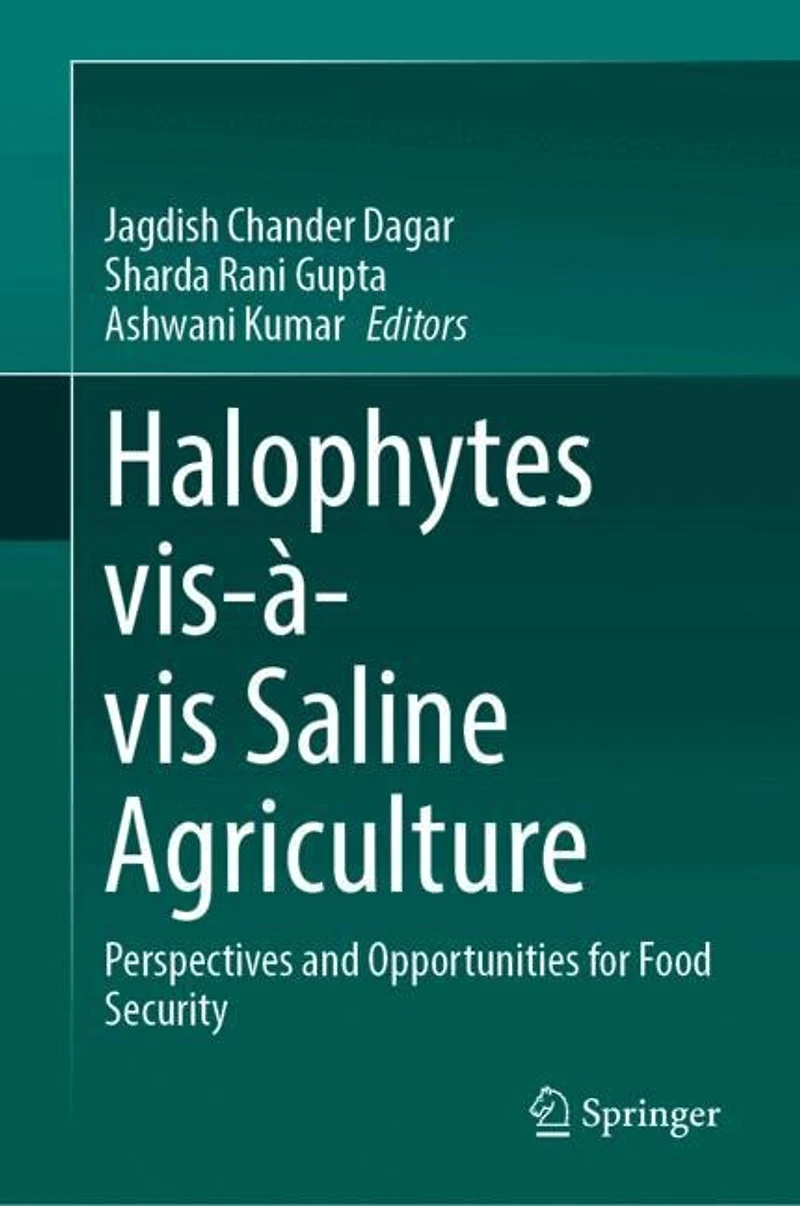
Halophytes vis-a-vis Saline Agriculture: Perspectives and Opportunities for Food Security
Current price: $481.95

Halophytes vis-a-vis Saline Agriculture: Perspectives and Opportunities for Food Security
Current price: $481.95
Loading Inventory...
Size: Hardcover
*Product information may vary - to confirm product availability, pricing, shipping and return information please contact Indigo
This edited book deals with the distribution, classification and diversity of halophytic ecosystems, ecology of mangroves, coastal agroforestry, adaptations and mechanisms of salt tolerance in glycophytes verses halophytes, scope of biosaline agriculture, and potential utilization of halophytes in abiotic stressed environments in arid and semiarid regions and coastal areas. In this era of global population increase and global environmental change, there is need to provide food to the ever-growing population, combating climate change and conserving biodiversity. Keeping in view the rich biodiversity of halophytes, there is wide scope in food industry, phytoremediation, as well as a source of bioactive compounds including modern drugs. The new technologies for the cultivation of halophytes help to utilize saline and arid wastelands and also waterlogged areas sustainably for humans and the livestock. This book creates interest in educationists, researchers, industrialists, investors, soil and climate change scientists, development/extension workers, environmentalists, policy/decision makers, and government and non-government organizations. Also, the book serves as reference material for undergraduate and graduate students of agriculture, ecology, soil science, and environmental sciences. National and international soil and agricultural scientists, ecologists, policy makers will also find this book immensely useful.
This edited book deals with the distribution, classification and diversity of halophytic ecosystems, ecology of mangroves, coastal agroforestry, adaptations and mechanisms of salt tolerance in glycophytes verses halophytes, scope of biosaline agriculture, and potential utilization of halophytes in abiotic stressed environments in arid and semiarid regions and coastal areas. In this era of global population increase and global environmental change, there is need to provide food to the ever-growing population, combating climate change and conserving biodiversity. Keeping in view the rich biodiversity of halophytes, there is wide scope in food industry, phytoremediation, as well as a source of bioactive compounds including modern drugs. The new technologies for the cultivation of halophytes help to utilize saline and arid wastelands and also waterlogged areas sustainably for humans and the livestock. This book creates interest in educationists, researchers, industrialists, investors, soil and climate change scientists, development/extension workers, environmentalists, policy/decision makers, and government and non-government organizations. Also, the book serves as reference material for undergraduate and graduate students of agriculture, ecology, soil science, and environmental sciences. National and international soil and agricultural scientists, ecologists, policy makers will also find this book immensely useful.
You May Also Like















More About Indigo at Erin Mills Town Centre
The largest book retailer in Canada also offers toys, music, home décor, gifts and lifestyle products. What's Inside...Books, Magazines, CD’s and DVD’s, Toys and Gifts, Home Accents, Electronics, Baby’s and Children’s Section, Bath and Body, Kitchen and Bedroom, Stationary Located outside in the exterior plaza.
5015 Glen Erin Dr, Mississauga, ON L5M 0R7, Canada
Find Indigo at Erin Mills Town Centre in Mississauga ON
Visit Indigo at Erin Mills Town Centre in Mississauga ON