

GIVE THE PERFECT GIFT
Erin Mills Town Centre Gift Cards are the perfect choice for your gift giving needs.Purchase gift cards at kiosks near the food court or centre court, at Guest Services, or click below to purchase online.PURCHASE HEREHome
Heteroskedasticity Regression: Detection and Correction
Indigo
Loading Inventory...
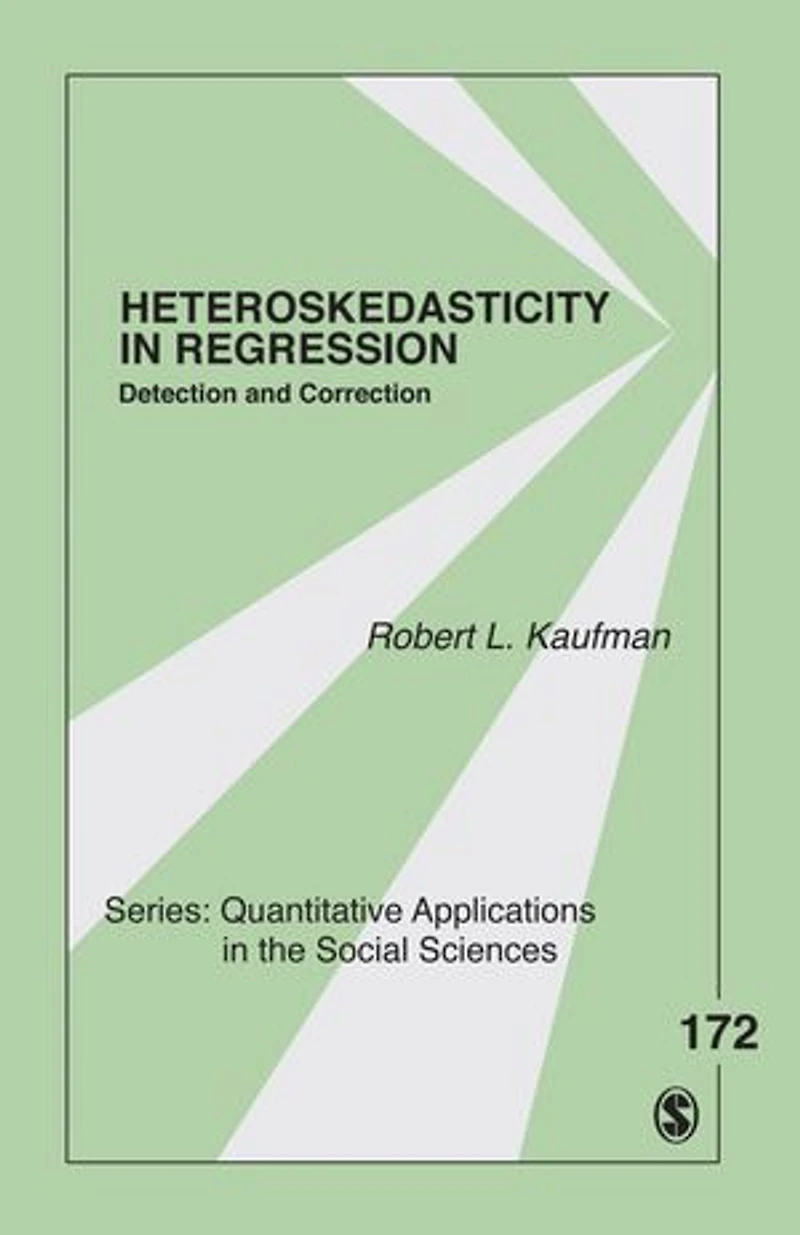
Heteroskedasticity Regression: Detection and Correction
Current price: $45.59
Original price: $57.00

Heteroskedasticity Regression: Detection and Correction
Current price: $45.59
Original price: $57.00
Loading Inventory...
Size: Kobo eBook
*Product information may vary - to confirm product availability, pricing, shipping and return information please contact Indigo
This volume covers the commonly ignored topic of heteroskedasticity (unequal error variances) in regression analyses and provides a practical guide for how to proceed in terms of testing and correction. Emphasizing how to apply diagnostic tests and corrections for heteroskedasticity in actual data analyses, the book offers three approaches for dealing with heteroskedasticity: variance-stabilizing transformations of the dependent variable; calculating robust standard errors, or heteroskedasticity-consistent standard errors; and generalized least squares estimation coefficients and standard errors. The detection and correction of heteroskedasticity is illustrated with three examples that vary in terms of sample size and the types of units analyzed (individuals, households, U.S. states). Intended as a supplementary text for graduate-level courses and a primer for quantitative researchers, the book fills the gap between the limited coverage of heteroskedasticity provided in applied regression textbooks and the more theoretical statistical treatment in advanced econometrics textbooks.
This volume covers the commonly ignored topic of heteroskedasticity (unequal error variances) in regression analyses and provides a practical guide for how to proceed in terms of testing and correction. Emphasizing how to apply diagnostic tests and corrections for heteroskedasticity in actual data analyses, the book offers three approaches for dealing with heteroskedasticity: variance-stabilizing transformations of the dependent variable; calculating robust standard errors, or heteroskedasticity-consistent standard errors; and generalized least squares estimation coefficients and standard errors. The detection and correction of heteroskedasticity is illustrated with three examples that vary in terms of sample size and the types of units analyzed (individuals, households, U.S. states). Intended as a supplementary text for graduate-level courses and a primer for quantitative researchers, the book fills the gap between the limited coverage of heteroskedasticity provided in applied regression textbooks and the more theoretical statistical treatment in advanced econometrics textbooks.
You May Also Like











More About Indigo at Erin Mills Town Centre
The largest book retailer in Canada also offers toys, music, home décor, gifts and lifestyle products. What's Inside...Books, Magazines, CD’s and DVD’s, Toys and Gifts, Home Accents, Electronics, Baby’s and Children’s Section, Bath and Body, Kitchen and Bedroom, Stationary Located outside in the exterior plaza.
5015 Glen Erin Dr, Mississauga, ON L5M 0R7, Canada
Find Indigo at Erin Mills Town Centre in Mississauga ON
Visit Indigo at Erin Mills Town Centre in Mississauga ON