

GIVE THE PERFECT GIFT
Erin Mills Town Centre Gift Cards are the perfect choice for your gift giving needs.Purchase gift cards at kiosks near the food court or centre court, at Guest Services, or click below to purchase online.PURCHASE HEREHome
Hobbes and Galileo: Method, Matter and the Science of Motion
Indigo
Loading Inventory...
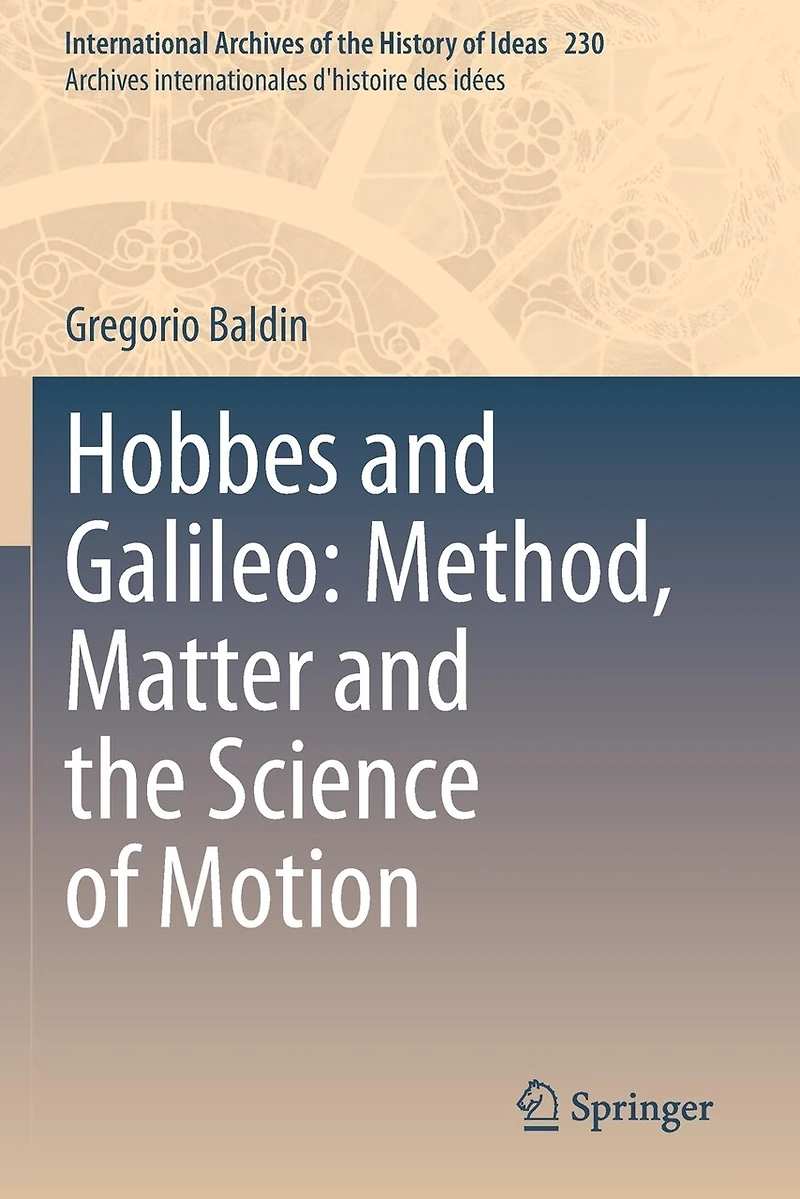
Hobbes and Galileo: Method, Matter and the Science of Motion
Current price: $160.95

Hobbes and Galileo: Method, Matter and the Science of Motion
Current price: $160.95
Loading Inventory...
Size: Paperback
*Product information may vary - to confirm product availability, pricing, shipping and return information please contact Indigo
This book, translated from Italian, discusses the influence of Galileo on Hobbes' natural philosophy. In his De motu, loco et tempore or Anti-White (< 1643), Thomas Hobbes describes Galileo as "the greatest philosopher of all times", and in De Corpore (1655), the Italian scientist is presented as the one who "opened the door of all physics, that is, the nature of motion." The book gives a detailed analysis of Galileo's legacy in Hobbes's philosophy, exploring four main issues: a comparison between Hobbes' and Mersenne's natural philosophies, the Galilean Principles of Hobbes' philosophical system, a comparison between Galileo's momentum and Hobbes's conatus , and Hobbes' and Galileo's theories of matter. The book also analyses the role played by Marin Mersenne, in spreading Galileo's ideas in France, and as a discussant of Hobbes. It highlights the many aspects of Hobbes' relationship with Galileo: the methodological and epistemological elements, but also the conceptual and the lexical analogies in the field of physics, to arrive, finally, at a close comparison on the subject of the matter. From this analysis emerges a shared mechanical conception of the universe open and infinite, that replaces the Aristotelian cosmos, and which is populated by two elements only: matter and motion.
This book, translated from Italian, discusses the influence of Galileo on Hobbes' natural philosophy. In his De motu, loco et tempore or Anti-White (< 1643), Thomas Hobbes describes Galileo as "the greatest philosopher of all times", and in De Corpore (1655), the Italian scientist is presented as the one who "opened the door of all physics, that is, the nature of motion." The book gives a detailed analysis of Galileo's legacy in Hobbes's philosophy, exploring four main issues: a comparison between Hobbes' and Mersenne's natural philosophies, the Galilean Principles of Hobbes' philosophical system, a comparison between Galileo's momentum and Hobbes's conatus , and Hobbes' and Galileo's theories of matter. The book also analyses the role played by Marin Mersenne, in spreading Galileo's ideas in France, and as a discussant of Hobbes. It highlights the many aspects of Hobbes' relationship with Galileo: the methodological and epistemological elements, but also the conceptual and the lexical analogies in the field of physics, to arrive, finally, at a close comparison on the subject of the matter. From this analysis emerges a shared mechanical conception of the universe open and infinite, that replaces the Aristotelian cosmos, and which is populated by two elements only: matter and motion.
You May Also Like







More About Indigo at Erin Mills Town Centre
The largest book retailer in Canada also offers toys, music, home décor, gifts and lifestyle products. What's Inside...Books, Magazines, CD’s and DVD’s, Toys and Gifts, Home Accents, Electronics, Baby’s and Children’s Section, Bath and Body, Kitchen and Bedroom, Stationary Located outside in the exterior plaza.
5015 Glen Erin Dr, Mississauga, ON L5M 0R7, Canada
Find Indigo at Erin Mills Town Centre in Mississauga ON
Visit Indigo at Erin Mills Town Centre in Mississauga ON