

GIVE THE PERFECT GIFT
Erin Mills Town Centre Gift Cards are the perfect choice for your gift giving needs.Purchase gift cards at kiosks near the food court or centre court, at Guest Services, or click below to purchase online.PURCHASE HEREHome
Holding down the Fort: Policing Communities and Community-Oriented Policing in Rural Germany
Indigo
Loading Inventory...
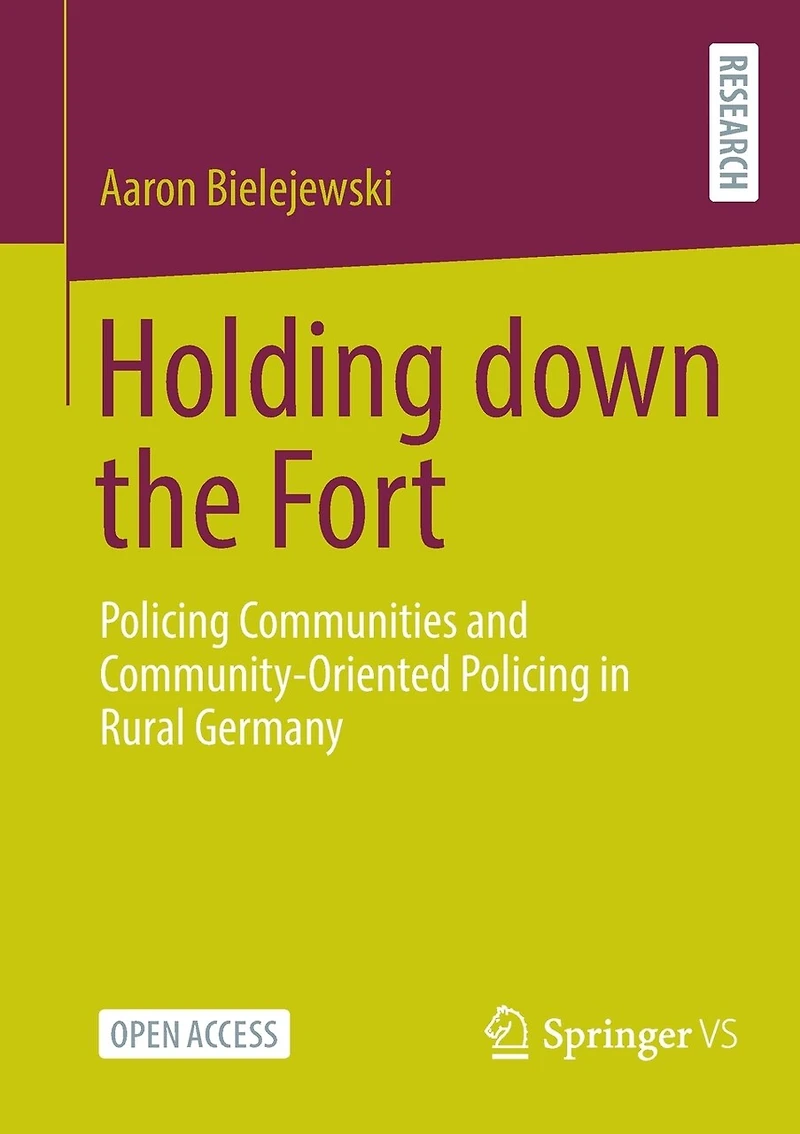
Holding down the Fort: Policing Communities and Community-Oriented Policing in Rural Germany
Current price: $72.95

Holding down the Fort: Policing Communities and Community-Oriented Policing in Rural Germany
Current price: $72.95
Loading Inventory...
Size: Paperback
*Product information may vary - to confirm product availability, pricing, shipping and return information please contact Indigo
This Open-Access-book questions the relationship between institutionalized images and understandings of policing - the monolithic ideas common to most, if not all, Western law enforcement agencies - and contextual, situative, and local interactions where the human representatives of policing - street-level officers - come into contact with residents. The political and theoretical association of specific forms of "Western" policing with democratic society can be illustrated in the case of German integration: narratives of reform and essentially forging new democratic police agencies in the "new German states" stand at odds with much of the experience and statements of officers who continued to serve following (Re)Unification. Officers who present their works primarily in terms of their local responsibilities, expectations and more specifically to their unique and individual relationship and connection to their communities downplay the relevance of high-level policing policy. Based ona two-year ethnographic study of policing in a rural county in the German state of Brandenburg, this book explores the local nature of policing both in terms of how police officers imagine their communities to be and with reference to broader societal expectations and assumptions of what police, essentially, are, can effectively do, and should effectively do.
This Open-Access-book questions the relationship between institutionalized images and understandings of policing - the monolithic ideas common to most, if not all, Western law enforcement agencies - and contextual, situative, and local interactions where the human representatives of policing - street-level officers - come into contact with residents. The political and theoretical association of specific forms of "Western" policing with democratic society can be illustrated in the case of German integration: narratives of reform and essentially forging new democratic police agencies in the "new German states" stand at odds with much of the experience and statements of officers who continued to serve following (Re)Unification. Officers who present their works primarily in terms of their local responsibilities, expectations and more specifically to their unique and individual relationship and connection to their communities downplay the relevance of high-level policing policy. Based ona two-year ethnographic study of policing in a rural county in the German state of Brandenburg, this book explores the local nature of policing both in terms of how police officers imagine their communities to be and with reference to broader societal expectations and assumptions of what police, essentially, are, can effectively do, and should effectively do.
You May Also Like












More About Indigo at Erin Mills Town Centre
The largest book retailer in Canada also offers toys, music, home décor, gifts and lifestyle products. What's Inside...Books, Magazines, CD’s and DVD’s, Toys and Gifts, Home Accents, Electronics, Baby’s and Children’s Section, Bath and Body, Kitchen and Bedroom, Stationary Located outside in the exterior plaza.
5015 Glen Erin Dr, Mississauga, ON L5M 0R7, Canada
Find Indigo at Erin Mills Town Centre in Mississauga ON
Visit Indigo at Erin Mills Town Centre in Mississauga ON