

GIVE THE PERFECT GIFT
Erin Mills Town Centre Gift Cards are the perfect choice for your gift giving needs.Purchase gift cards at kiosks near the food court or centre court, at Guest Services, or click below to purchase online.PURCHASE HEREHome
How Psychiatrists Make Decisions: The Science of Clinical Reasoning
Indigo
Loading Inventory...
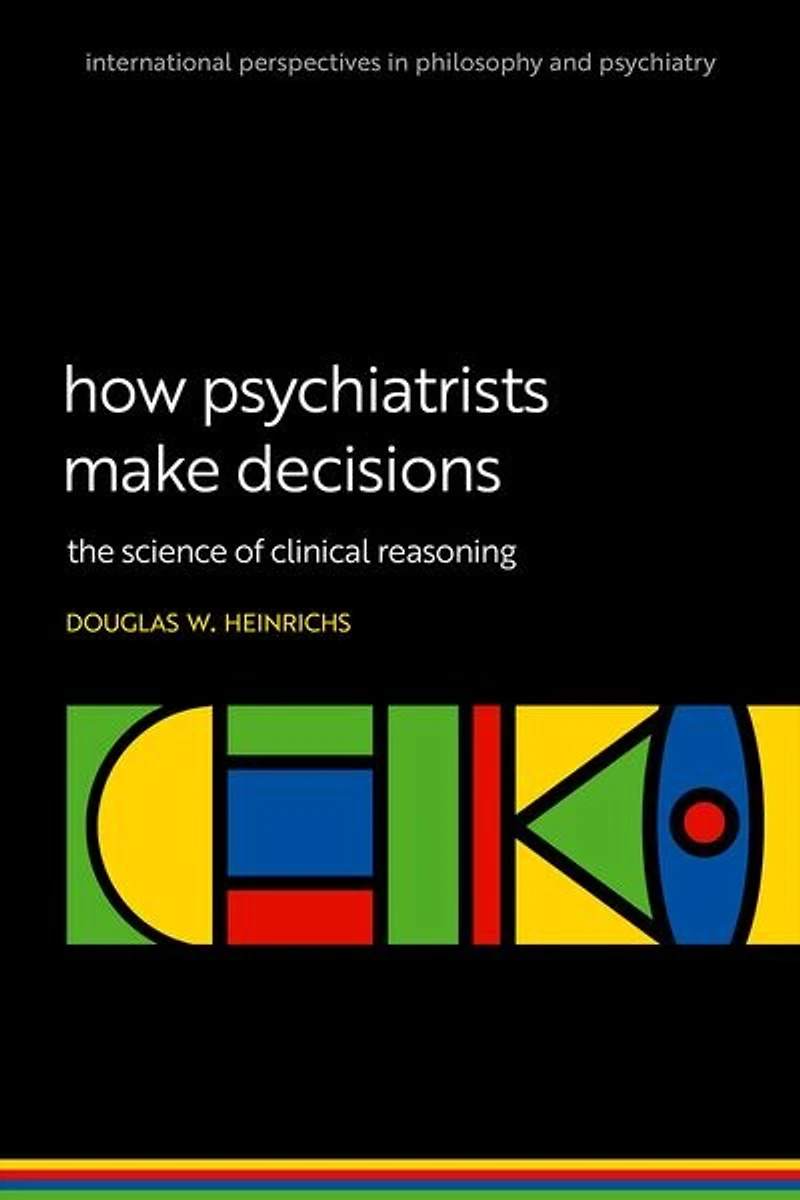
How Psychiatrists Make Decisions: The Science of Clinical Reasoning
Current price: $207.95

How Psychiatrists Make Decisions: The Science of Clinical Reasoning
Current price: $207.95
Loading Inventory...
Size: Hardcover
*Product information may vary - to confirm product availability, pricing, shipping and return information please contact Indigo
In an age of 'scientific psychiatry' and evidenced-based medicine, the judgement of the psychiatric clinician in treating an individual patient has been devalued as the 'art' of medicine as opposed to science, with reduced evidentiary value. The clinician is asked to apply the results of formal research studies of groups of patients, the patient reduced to a token of a type, the latter usually defined by diagnosis. Yet the limits of formal research to guide the treatment of the unique individual requires clinical judgments where there is little formal guidance while the clinician's deliberations are devalued as necessary but of questionable validity. This dilemma has been encouraged by the tacit nature of the way clinicians reach decisions. In this book, Heinrichs makes explicit the underlying methodology of the clinical reasoning of experienced psychiatrists. Starting with a detailed phenomenological examination of specific cases, he argues that this methodology involves constructing models of each individual patient composed of patterns of propensities and their interaction (POP models). From this, rational interventions can be hypothesized and predictions generated and tested. The nature and characteristics of this modelling procedure is described in detail. By making the model explicit, clinicians can more critically assess their work. Such models can also play a valuable role in educating clinical trainees. This is discussed using recent work of cognitive scientists studying how expertise is developed across disciplines where considerable ambiguity and complexity exist. From this, specific recommendations follow for applying POP models in training settings, to help turn novices into experts. Finally, the book challenges the devaluing of clinical judgment about individual patients by examining contemporary developments in the philosophy of science. Problems with the hypothetico-deductive view of science led to a naturalistic exploration of science. Model construction to represent concrete pieces of reality to solve concrete problems has emerged as the fundamental process in science as practiced across all scientific disciplines. POP modelling simply constitutes this process in psychiatry. Hence, when properly understood and rigorous applied, clinical reasoning is a fully scientific process, and merits high epistemological credibility.
In an age of 'scientific psychiatry' and evidenced-based medicine, the judgement of the psychiatric clinician in treating an individual patient has been devalued as the 'art' of medicine as opposed to science, with reduced evidentiary value. The clinician is asked to apply the results of formal research studies of groups of patients, the patient reduced to a token of a type, the latter usually defined by diagnosis. Yet the limits of formal research to guide the treatment of the unique individual requires clinical judgments where there is little formal guidance while the clinician's deliberations are devalued as necessary but of questionable validity. This dilemma has been encouraged by the tacit nature of the way clinicians reach decisions. In this book, Heinrichs makes explicit the underlying methodology of the clinical reasoning of experienced psychiatrists. Starting with a detailed phenomenological examination of specific cases, he argues that this methodology involves constructing models of each individual patient composed of patterns of propensities and their interaction (POP models). From this, rational interventions can be hypothesized and predictions generated and tested. The nature and characteristics of this modelling procedure is described in detail. By making the model explicit, clinicians can more critically assess their work. Such models can also play a valuable role in educating clinical trainees. This is discussed using recent work of cognitive scientists studying how expertise is developed across disciplines where considerable ambiguity and complexity exist. From this, specific recommendations follow for applying POP models in training settings, to help turn novices into experts. Finally, the book challenges the devaluing of clinical judgment about individual patients by examining contemporary developments in the philosophy of science. Problems with the hypothetico-deductive view of science led to a naturalistic exploration of science. Model construction to represent concrete pieces of reality to solve concrete problems has emerged as the fundamental process in science as practiced across all scientific disciplines. POP modelling simply constitutes this process in psychiatry. Hence, when properly understood and rigorous applied, clinical reasoning is a fully scientific process, and merits high epistemological credibility.
You May Also Like










More About Indigo at Erin Mills Town Centre
The largest book retailer in Canada also offers toys, music, home décor, gifts and lifestyle products. What's Inside...Books, Magazines, CD’s and DVD’s, Toys and Gifts, Home Accents, Electronics, Baby’s and Children’s Section, Bath and Body, Kitchen and Bedroom, Stationary Located outside in the exterior plaza.
5015 Glen Erin Dr, Mississauga, ON L5M 0R7, Canada
Find Indigo at Erin Mills Town Centre in Mississauga ON
Visit Indigo at Erin Mills Town Centre in Mississauga ON