

GIVE THE PERFECT GIFT
Erin Mills Town Centre Gift Cards are the perfect choice for your gift giving needs.Purchase gift cards at kiosks near the food court or centre court, at Guest Services, or click below to purchase online.PURCHASE HEREHome
How To Construct Your Intellectual Pedigree: A History Of Mentoring Science
Indigo
Loading Inventory...
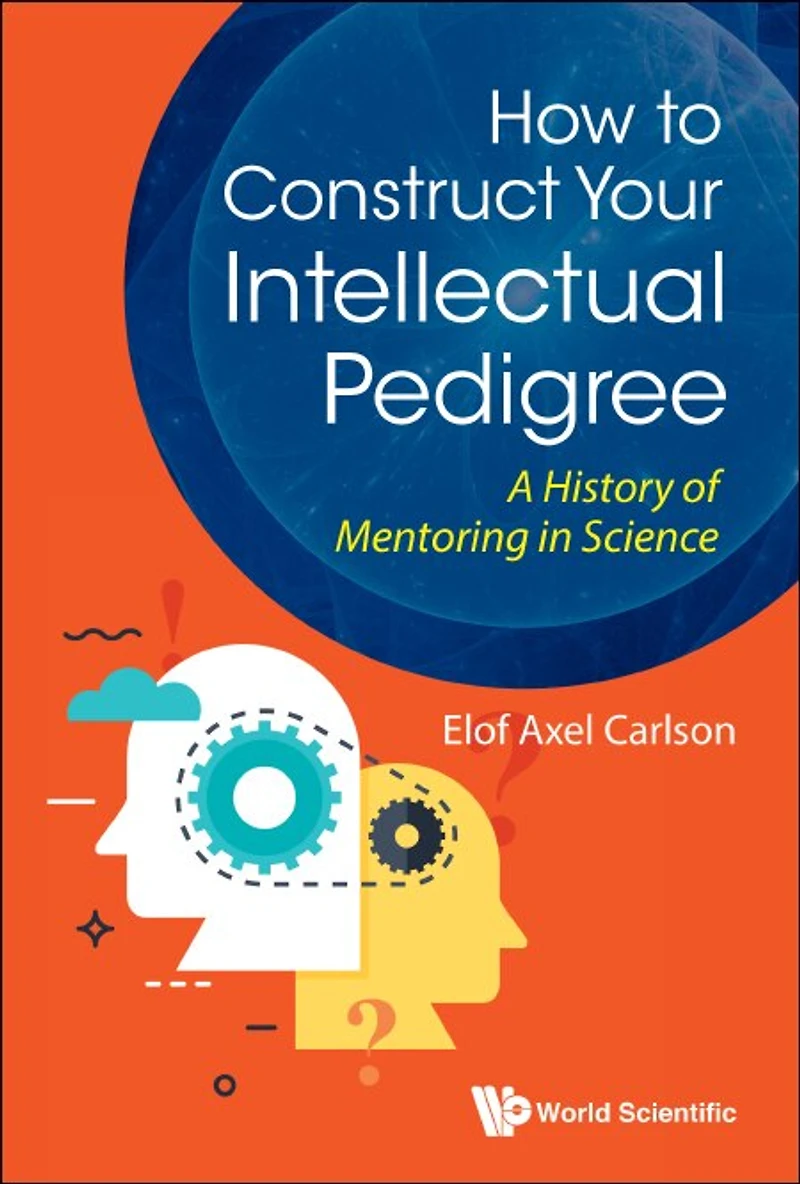
How To Construct Your Intellectual Pedigree: A History Of Mentoring Science
Current price: $143.50

How To Construct Your Intellectual Pedigree: A History Of Mentoring Science
Current price: $143.50
Loading Inventory...
Size: Hardcover
*Product information may vary - to confirm product availability, pricing, shipping and return information please contact Indigo
This is a handbook that shows the reader how to construct an intellectual pedigree. It is also a history of science monograph because the completed intellectual pedigrees can be used individually or collectively to trace the influences of mentoring in the life sciences. The author uses Hermann Joseph Muller (1890-1967) (which includes his own intellectual pedigree) to show how knowledge was shifted from Italy to Germany and England, to France, and then to the American Colonies. Through Muller, the author goes in two directions, one leading to Huxley, Darwin, and Newton. The second leads to Agassiz, Malpighi, Borelli, and Galileo. The author also shows, from comparing 60 additional intellectual pedigrees, that about one third go to Newton, one third to Galileo and the rest to other icons of the past (e.g., Linnaeus, Lavoisier, Gay-Loussac, Leibniz). It shows how small was the pool of available scientists in the universities before the mid-19th century.This book will stimulate graduate students and faculty to construct their own intellectual pedigrees. It will also be of interest to historians and philosophers of science. The book discusses the role of mentoring, dividing this into inputs of intellectual development as well as outputs of development, using timelines arranged as circles. For each mentor, a brief account is given of that person's work and relation to the subject of the pedigree.
This is a handbook that shows the reader how to construct an intellectual pedigree. It is also a history of science monograph because the completed intellectual pedigrees can be used individually or collectively to trace the influences of mentoring in the life sciences. The author uses Hermann Joseph Muller (1890-1967) (which includes his own intellectual pedigree) to show how knowledge was shifted from Italy to Germany and England, to France, and then to the American Colonies. Through Muller, the author goes in two directions, one leading to Huxley, Darwin, and Newton. The second leads to Agassiz, Malpighi, Borelli, and Galileo. The author also shows, from comparing 60 additional intellectual pedigrees, that about one third go to Newton, one third to Galileo and the rest to other icons of the past (e.g., Linnaeus, Lavoisier, Gay-Loussac, Leibniz). It shows how small was the pool of available scientists in the universities before the mid-19th century.This book will stimulate graduate students and faculty to construct their own intellectual pedigrees. It will also be of interest to historians and philosophers of science. The book discusses the role of mentoring, dividing this into inputs of intellectual development as well as outputs of development, using timelines arranged as circles. For each mentor, a brief account is given of that person's work and relation to the subject of the pedigree.
You May Also Like












More About Indigo at Erin Mills Town Centre
The largest book retailer in Canada also offers toys, music, home décor, gifts and lifestyle products. What's Inside...Books, Magazines, CD’s and DVD’s, Toys and Gifts, Home Accents, Electronics, Baby’s and Children’s Section, Bath and Body, Kitchen and Bedroom, Stationary Located outside in the exterior plaza.
5015 Glen Erin Dr, Mississauga, ON L5M 0R7, Canada
Find Indigo at Erin Mills Town Centre in Mississauga ON
Visit Indigo at Erin Mills Town Centre in Mississauga ON