

GIVE THE PERFECT GIFT
Erin Mills Town Centre Gift Cards are the perfect choice for your gift giving needs.Purchase gift cards at kiosks near the food court or centre court, at Guest Services, or click below to purchase online.PURCHASE HEREHome
Human Factors in Privacy Research
Indigo
Loading Inventory...
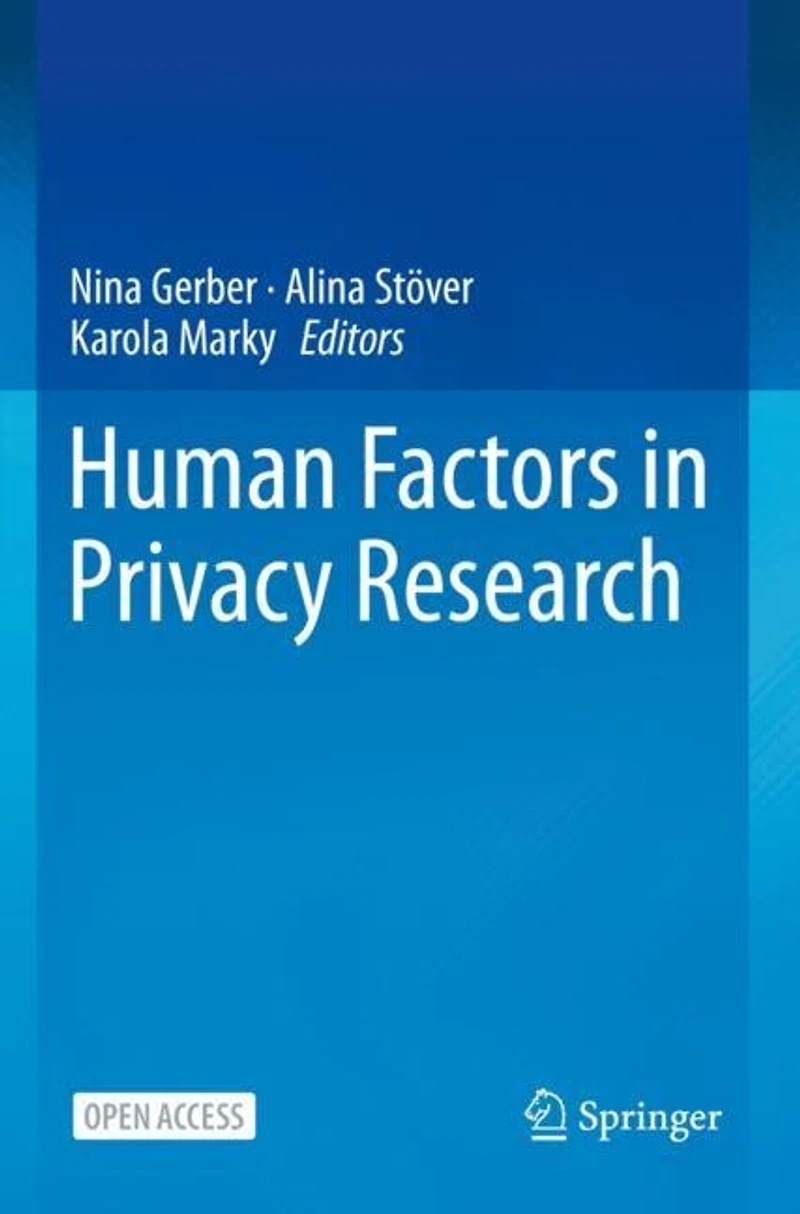
Human Factors in Privacy Research
Current price: $72.95

Human Factors in Privacy Research
Current price: $72.95
Loading Inventory...
Size: Paperback
*Product information may vary - to confirm product availability, pricing, shipping and return information please contact Indigo
This book covers topics needed to be considered in research around usable privacy. The book starts from a psychological perspective and introduces readers to basic behavioral theories and models that can explain end-user privacy behavior (including the "privacy paradox") on a theoretical level. Subsequently, an introduction to different study methods (e.g., experiment, survey, interviews, co-creation) used in usable privacy research is given. Based on this, different methodological aspects, such as identifying appropriate questionnaires, and applying User-Centered Design, will be discussed. Finally, the book describes application areas for privacy research such as dark patterns and presents solutions for privacy protection, e.g., regarding consent-giving and PETs. The book aims to bring together the different research approaches to the topic of usable privacy, which often originate from computer science, psychology, and law, and provide a methodologically sound basis for researchers who want to delve deeper into this topic. This is an open access book.
This book covers topics needed to be considered in research around usable privacy. The book starts from a psychological perspective and introduces readers to basic behavioral theories and models that can explain end-user privacy behavior (including the "privacy paradox") on a theoretical level. Subsequently, an introduction to different study methods (e.g., experiment, survey, interviews, co-creation) used in usable privacy research is given. Based on this, different methodological aspects, such as identifying appropriate questionnaires, and applying User-Centered Design, will be discussed. Finally, the book describes application areas for privacy research such as dark patterns and presents solutions for privacy protection, e.g., regarding consent-giving and PETs. The book aims to bring together the different research approaches to the topic of usable privacy, which often originate from computer science, psychology, and law, and provide a methodologically sound basis for researchers who want to delve deeper into this topic. This is an open access book.
You May Also Like















More About Indigo at Erin Mills Town Centre
The largest book retailer in Canada also offers toys, music, home décor, gifts and lifestyle products. What's Inside...Books, Magazines, CD’s and DVD’s, Toys and Gifts, Home Accents, Electronics, Baby’s and Children’s Section, Bath and Body, Kitchen and Bedroom, Stationary Located outside in the exterior plaza.
5015 Glen Erin Dr, Mississauga, ON L5M 0R7, Canada
Find Indigo at Erin Mills Town Centre in Mississauga ON
Visit Indigo at Erin Mills Town Centre in Mississauga ON