

GIVE THE PERFECT GIFT
Erin Mills Town Centre Gift Cards are the perfect choice for your gift giving needs.Purchase gift cards at kiosks near the food court or centre court, at Guest Services, or click below to purchase online.PURCHASE HEREHome
Humanesis: Sound And Technological Posthumanism
Indigo
Loading Inventory...
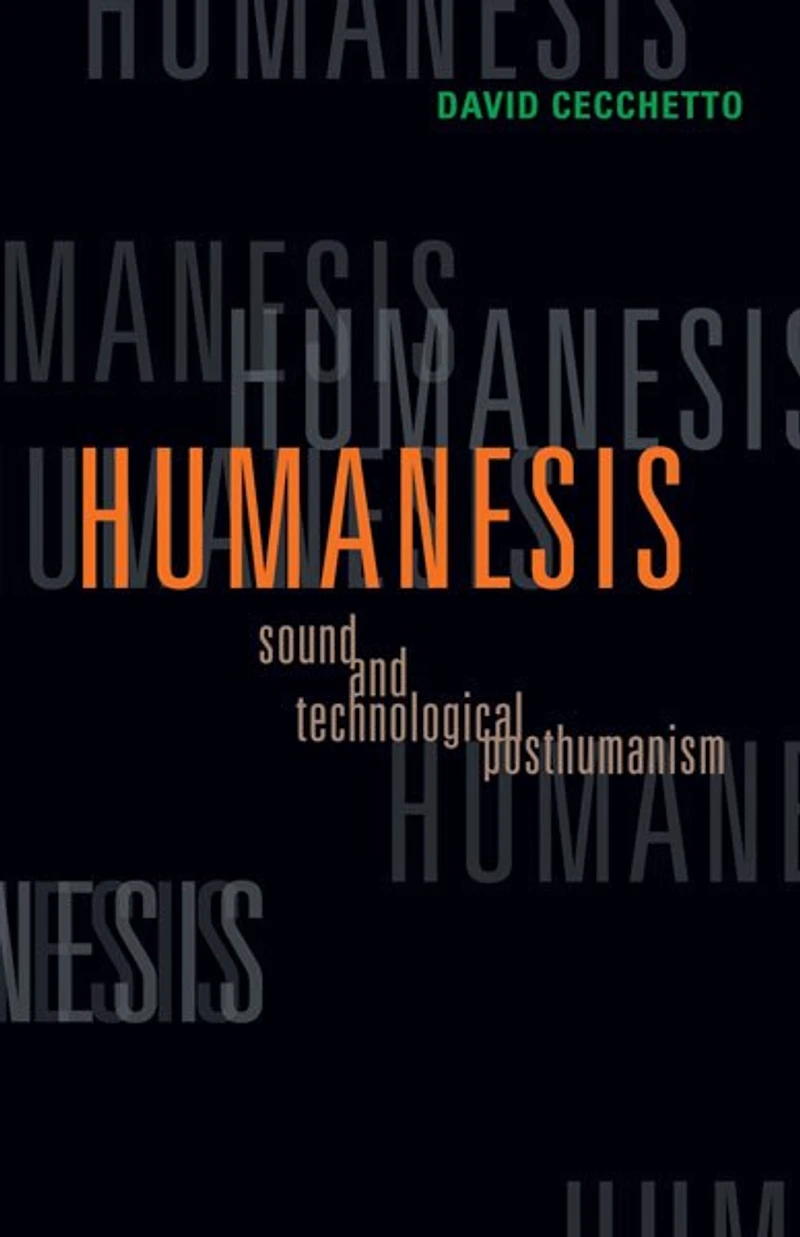
Humanesis: Sound And Technological Posthumanism
Current price: $97.50

Humanesis: Sound And Technological Posthumanism
Current price: $97.50
Loading Inventory...
Size: Hardcover
*Product information may vary - to confirm product availability, pricing, shipping and return information please contact Indigo
Humanesis critically examines central strains of posthumanism, searching out biases in the ways that human–technology coupling is explained. Specifically, it interrogates three approaches taken by posthumanist discourse: scientific, humanist, and organismic. David Cecchetto’s investigations reveal how each perspective continues to hold on to elements of the humanist tradition that it is ostensibly mobilized against. His study frontally desublimates the previously unseen presumptions that underlie each of the three thought lines and offers incisive appraisals of the work of three prominent thinkers: Ollivier Dyens, Katherine Hayles, and Mark Hansen.
To materially ground the problematic of posthumanism, Humanesis interweaves its theoretical chapters with discussions of artworks. These highlight the topos of sound, demonstrating how aurality might produce new insights in a field that has been dominated by visualization. Cecchetto, a media artist, scrutinizes his own collaborative artistic practice in which he elucidates the variegated causal chains that compose human–technological coupling.
Humanesis advances the posthumanist conversation in several important ways. It proposes the term “technological posthumanism” to focus on the discourse as it relates to technology without neglecting its other disciplinary histories. It suggests that deconstruction remains relevant to the enterprise, especially with respect to the performative dimension of language. It analyzes artworks not yet considered in the light of posthumanism, with a particular emphasis on the role of aurality. And the form of the text introduces a reflexive component that exemplifies how the dialogue of posthumanism might progress without resorting to the types of unilateral narratives that the book critiques.
Humanesis critically examines central strains of posthumanism, searching out biases in the ways that human–technology coupling is explained. Specifically, it interrogates three approaches taken by posthumanist discourse: scientific, humanist, and organismic. David Cecchetto’s investigations reveal how each perspective continues to hold on to elements of the humanist tradition that it is ostensibly mobilized against. His study frontally desublimates the previously unseen presumptions that underlie each of the three thought lines and offers incisive appraisals of the work of three prominent thinkers: Ollivier Dyens, Katherine Hayles, and Mark Hansen.
To materially ground the problematic of posthumanism, Humanesis interweaves its theoretical chapters with discussions of artworks. These highlight the topos of sound, demonstrating how aurality might produce new insights in a field that has been dominated by visualization. Cecchetto, a media artist, scrutinizes his own collaborative artistic practice in which he elucidates the variegated causal chains that compose human–technological coupling.
Humanesis advances the posthumanist conversation in several important ways. It proposes the term “technological posthumanism” to focus on the discourse as it relates to technology without neglecting its other disciplinary histories. It suggests that deconstruction remains relevant to the enterprise, especially with respect to the performative dimension of language. It analyzes artworks not yet considered in the light of posthumanism, with a particular emphasis on the role of aurality. And the form of the text introduces a reflexive component that exemplifies how the dialogue of posthumanism might progress without resorting to the types of unilateral narratives that the book critiques.
You May Also Like











More About Indigo at Erin Mills Town Centre
The largest book retailer in Canada also offers toys, music, home décor, gifts and lifestyle products. What's Inside...Books, Magazines, CD’s and DVD’s, Toys and Gifts, Home Accents, Electronics, Baby’s and Children’s Section, Bath and Body, Kitchen and Bedroom, Stationary Located outside in the exterior plaza.
5015 Glen Erin Dr, Mississauga, ON L5M 0R7, Canada
Find Indigo at Erin Mills Town Centre in Mississauga ON
Visit Indigo at Erin Mills Town Centre in Mississauga ON