

GIVE THE PERFECT GIFT
Erin Mills Town Centre Gift Cards are the perfect choice for your gift giving needs.Purchase gift cards at kiosks near the food court or centre court, at Guest Services, or click below to purchase online.PURCHASE HEREHome
Iconicity and Analogy in Language Change: The Development of Double Object Clitic Clusters from Medieval Florentine to Modern Italian
Indigo
Loading Inventory...
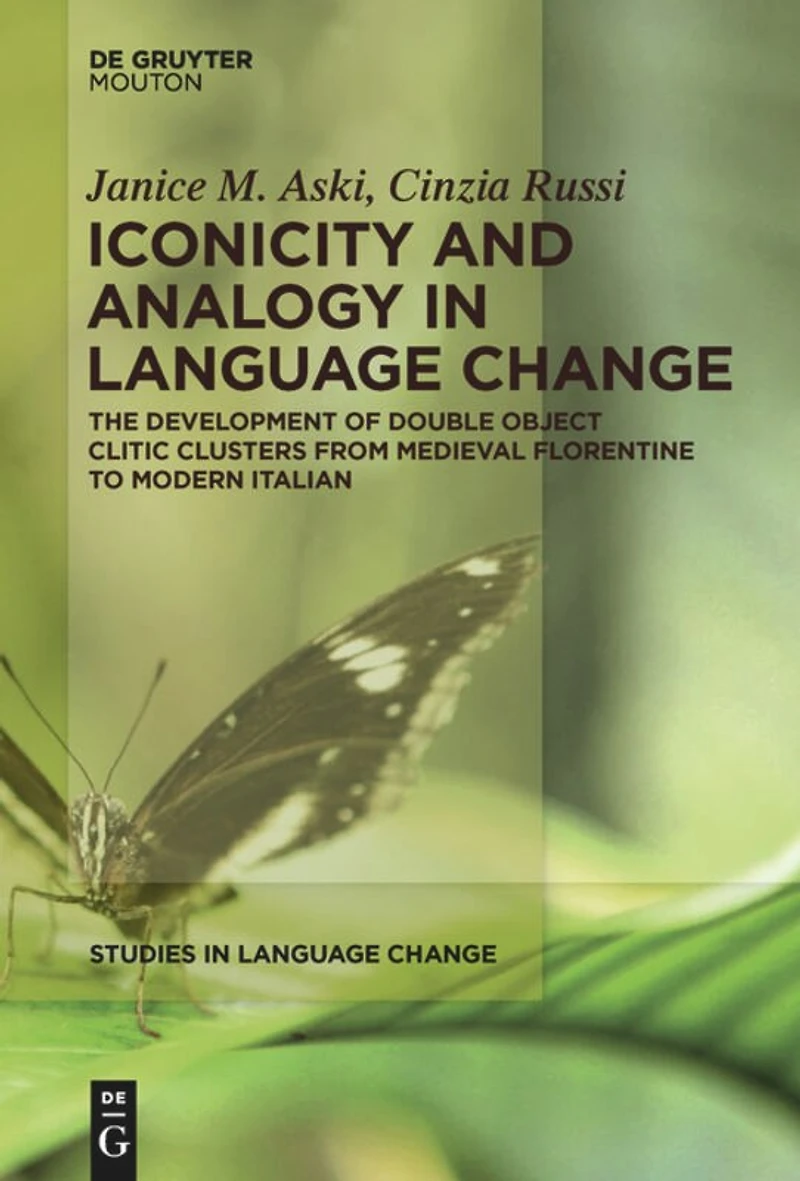
Iconicity and Analogy in Language Change: The Development of Double Object Clitic Clusters from Medieval Florentine to Modern Italian
Current price: $220.99

Iconicity and Analogy in Language Change: The Development of Double Object Clitic Clusters from Medieval Florentine to Modern Italian
Current price: $220.99
Loading Inventory...
Size: Hardcover
*Product information may vary - to confirm product availability, pricing, shipping and return information please contact Indigo
This book examines the alternation between accusative-dative and dative-accusative order in Old Florentine clitic clusters and its decline in favor of the latter. Based on an exhaustive analysis of data collected from medieval Florentine and Tuscan texts we offer a novel analysis of the rise of the variable order, the transition from one order to the other, and the demise of the alternation that relies primarily on iconicity and analogy. The book employs exophoric pragmatic iconicity, a language-external iconic relationship based on similarity between linguistic structure and the speaker/writer's conceptualization of reality, and endophoric iconicity, a language-internal iconic relationship where the iconic ground is construed between linguistic signs and structures. Analogy is viewed as a productive process that generalizes patterns or extends grammatical rules to formally similar structures, and obtains the form of the analogical relationship between the masculine singular definite article and the third person singular accusative clitic, which shared the same phonotactically constrained distribution patterns. The data indicate that exophoric pragamatic iconicity exploits and maintains the alternation, whereas endophoric iconicity and analogy conspire to end it.
This book examines the alternation between accusative-dative and dative-accusative order in Old Florentine clitic clusters and its decline in favor of the latter. Based on an exhaustive analysis of data collected from medieval Florentine and Tuscan texts we offer a novel analysis of the rise of the variable order, the transition from one order to the other, and the demise of the alternation that relies primarily on iconicity and analogy. The book employs exophoric pragmatic iconicity, a language-external iconic relationship based on similarity between linguistic structure and the speaker/writer's conceptualization of reality, and endophoric iconicity, a language-internal iconic relationship where the iconic ground is construed between linguistic signs and structures. Analogy is viewed as a productive process that generalizes patterns or extends grammatical rules to formally similar structures, and obtains the form of the analogical relationship between the masculine singular definite article and the third person singular accusative clitic, which shared the same phonotactically constrained distribution patterns. The data indicate that exophoric pragamatic iconicity exploits and maintains the alternation, whereas endophoric iconicity and analogy conspire to end it.
You May Also Like








More About Indigo at Erin Mills Town Centre
The largest book retailer in Canada also offers toys, music, home décor, gifts and lifestyle products. What's Inside...Books, Magazines, CD’s and DVD’s, Toys and Gifts, Home Accents, Electronics, Baby’s and Children’s Section, Bath and Body, Kitchen and Bedroom, Stationary Located outside in the exterior plaza.
5015 Glen Erin Dr, Mississauga, ON L5M 0R7, Canada
Find Indigo at Erin Mills Town Centre in Mississauga ON
Visit Indigo at Erin Mills Town Centre in Mississauga ON