

GIVE THE PERFECT GIFT
Erin Mills Town Centre Gift Cards are the perfect choice for your gift giving needs.Purchase gift cards at kiosks near the food court or centre court, at Guest Services, or click below to purchase online.PURCHASE HEREHome
Investigating Foreign Language Anxiety: Lessons for Research into Individual Differences
Indigo
Loading Inventory...
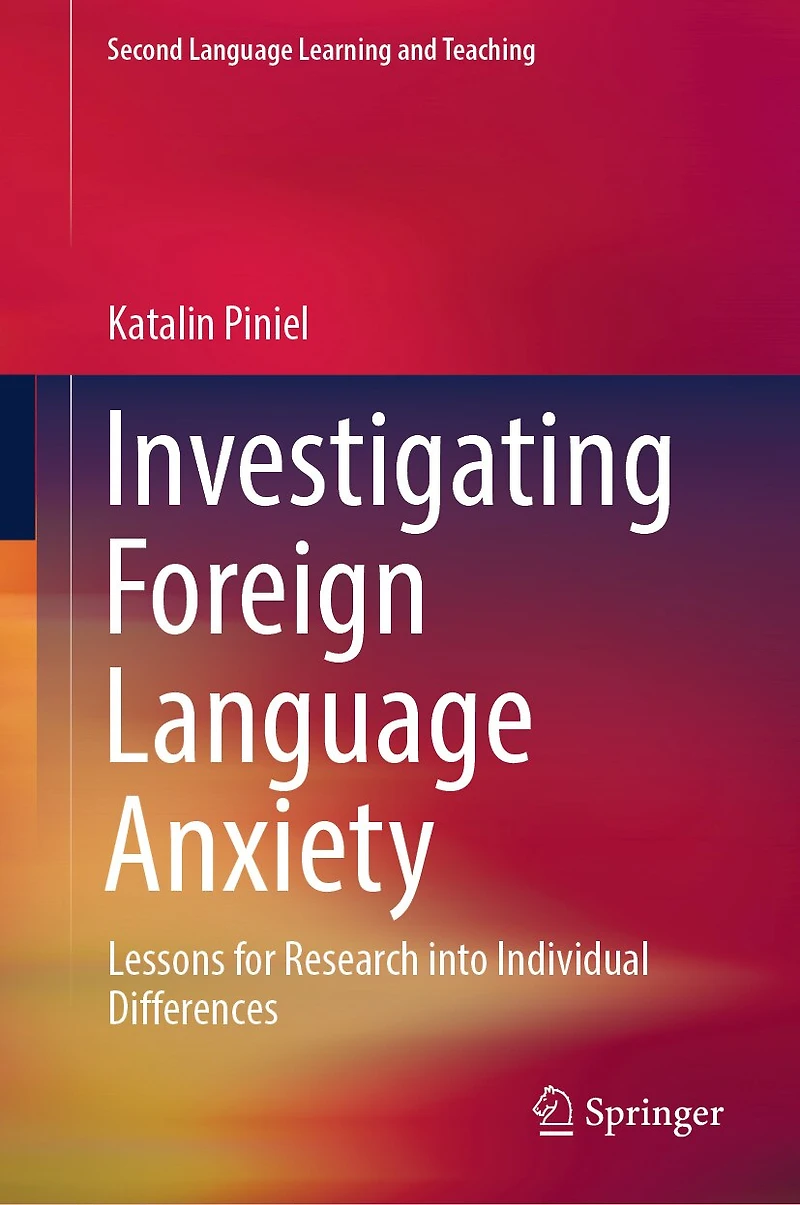
Investigating Foreign Language Anxiety: Lessons for Research into Individual Differences
Current price: $248.50

Investigating Foreign Language Anxiety: Lessons for Research into Individual Differences
Current price: $248.50
Loading Inventory...
Size: Hardcover
*Product information may vary - to confirm product availability, pricing, shipping and return information please contact Indigo
The introduction and a theoretical summary of language anxiety research (Chapter 1) are followed by four chapters: Chapter 2 presents a meta-analysis of the widely used Foreign Language Classroom Anxiety Scale 's (Horwitz, et al., 1986) factorial structure; Chapter 3 reports on a validation study of the Hungarian version of MacIntyre and Gardner's (1994) Input, Process, and Output Anxiety Scales ; Chapter 4 presents the development of a skills-based anxiety questionnaire through a three-phased study consisting of an exploratory qualitative phase as well as two quantitative phases using Rasch analysis; and Chapter 5 focuses on empirical approaches available for tapping into the dynamic change of this emotion, including the idiodynamic method and quantitative analyses such as latent growth curve modeling and dynamic cluster analysis.
The introduction and a theoretical summary of language anxiety research (Chapter 1) are followed by four chapters: Chapter 2 presents a meta-analysis of the widely used Foreign Language Classroom Anxiety Scale 's (Horwitz, et al., 1986) factorial structure; Chapter 3 reports on a validation study of the Hungarian version of MacIntyre and Gardner's (1994) Input, Process, and Output Anxiety Scales ; Chapter 4 presents the development of a skills-based anxiety questionnaire through a three-phased study consisting of an exploratory qualitative phase as well as two quantitative phases using Rasch analysis; and Chapter 5 focuses on empirical approaches available for tapping into the dynamic change of this emotion, including the idiodynamic method and quantitative analyses such as latent growth curve modeling and dynamic cluster analysis.
You May Also Like










More About Indigo at Erin Mills Town Centre
The largest book retailer in Canada also offers toys, music, home décor, gifts and lifestyle products. What's Inside...Books, Magazines, CD’s and DVD’s, Toys and Gifts, Home Accents, Electronics, Baby’s and Children’s Section, Bath and Body, Kitchen and Bedroom, Stationary Located outside in the exterior plaza.
5015 Glen Erin Dr, Mississauga, ON L5M 0R7, Canada
Find Indigo at Erin Mills Town Centre in Mississauga ON
Visit Indigo at Erin Mills Town Centre in Mississauga ON