

GIVE THE PERFECT GIFT
Erin Mills Town Centre Gift Cards are the perfect choice for your gift giving needs.Purchase gift cards at kiosks near the food court or centre court, at Guest Services, or click below to purchase online.PURCHASE HEREHome
Italian Syntax: A Government-Binding Approach
Indigo
Loading Inventory...
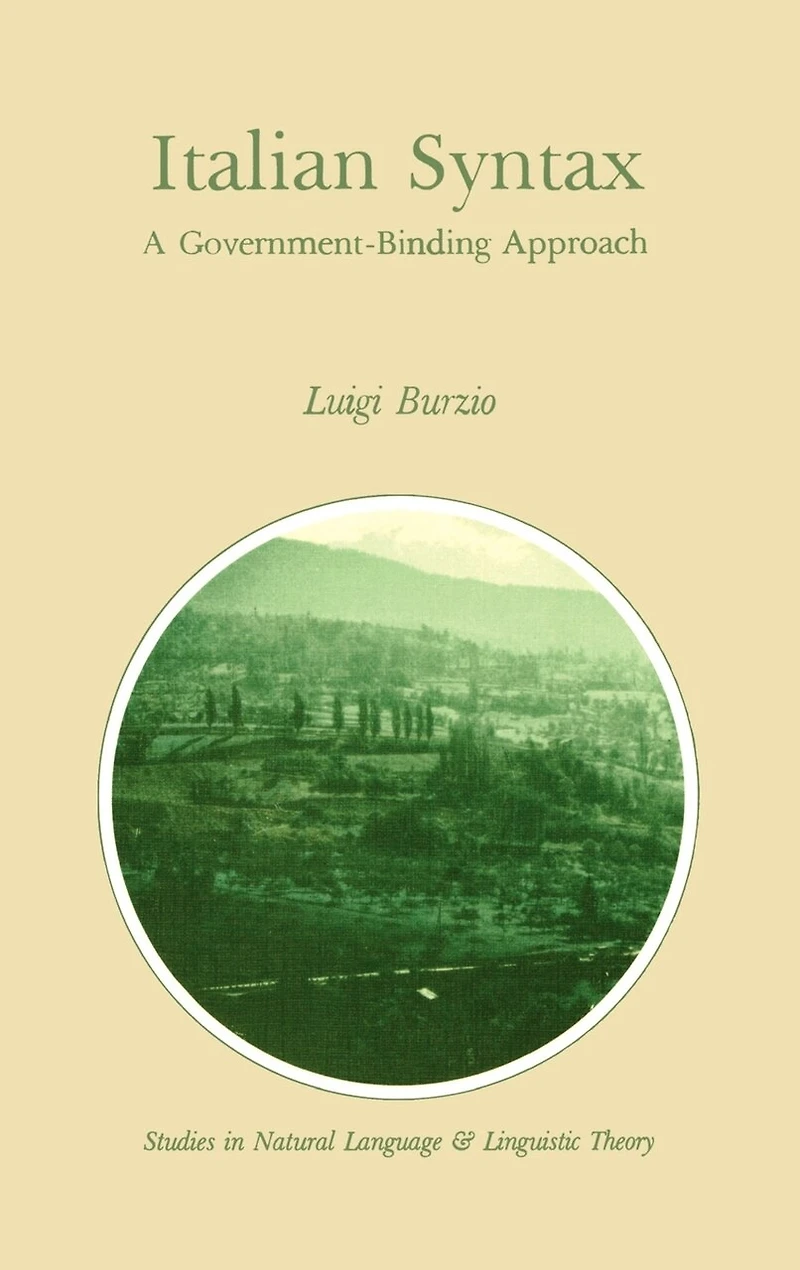
Italian Syntax: A Government-Binding Approach
Current price: $220.95

Italian Syntax: A Government-Binding Approach
Current price: $220.95
Loading Inventory...
Size: Hardcover
*Product information may vary - to confirm product availability, pricing, shipping and return information please contact Indigo
In the course of our everyday lives, we generally take our knowledge of language for granted. Occasionally, we may become aware of its great practical importance, but we rarely pay any attention to the formal properties that language has. Yet these properties are remarkably complex. So complex that the question immediately arises as to how we could know so much. The facts that will be considered in this book should serve well to illustrate this point. We will see for example that verbs like arrivare 'arrive' and others like telefonare 'telephone', which are superficially similar, actually differ in a large number of respects, some fairly well known, others not. Why should there be such differencces. we may ask. And why should it be that if a verb behaves like arrivare and unlike tetefonare in one respect. it will do so in all others consistently, and how could everyone know it? To take another case, Italian has two series of pronouns: stressed and unstressed. Thus, for example, alongside of reflexive se stesso 'himself which is the stressed form. one finds si which is unstressed but otherwise synonymous. Yet we will see that the differences between the two could not simply be stress versus lack of stress, as their behavior is radically different under a variety of syntactic conditions.
In the course of our everyday lives, we generally take our knowledge of language for granted. Occasionally, we may become aware of its great practical importance, but we rarely pay any attention to the formal properties that language has. Yet these properties are remarkably complex. So complex that the question immediately arises as to how we could know so much. The facts that will be considered in this book should serve well to illustrate this point. We will see for example that verbs like arrivare 'arrive' and others like telefonare 'telephone', which are superficially similar, actually differ in a large number of respects, some fairly well known, others not. Why should there be such differencces. we may ask. And why should it be that if a verb behaves like arrivare and unlike tetefonare in one respect. it will do so in all others consistently, and how could everyone know it? To take another case, Italian has two series of pronouns: stressed and unstressed. Thus, for example, alongside of reflexive se stesso 'himself which is the stressed form. one finds si which is unstressed but otherwise synonymous. Yet we will see that the differences between the two could not simply be stress versus lack of stress, as their behavior is radically different under a variety of syntactic conditions.
You May Also Like








More About Indigo at Erin Mills Town Centre
The largest book retailer in Canada also offers toys, music, home décor, gifts and lifestyle products. What's Inside...Books, Magazines, CD’s and DVD’s, Toys and Gifts, Home Accents, Electronics, Baby’s and Children’s Section, Bath and Body, Kitchen and Bedroom, Stationary Located outside in the exterior plaza.
5015 Glen Erin Dr, Mississauga, ON L5M 0R7, Canada
Find Indigo at Erin Mills Town Centre in Mississauga ON
Visit Indigo at Erin Mills Town Centre in Mississauga ON