

GIVE THE PERFECT GIFT
Erin Mills Town Centre Gift Cards are the perfect choice for your gift giving needs.Purchase gift cards at kiosks near the food court or centre court, at Guest Services, or click below to purchase online.PURCHASE HEREHome
Item Response Theory for Creativity Measurement
Indigo
Loading Inventory...
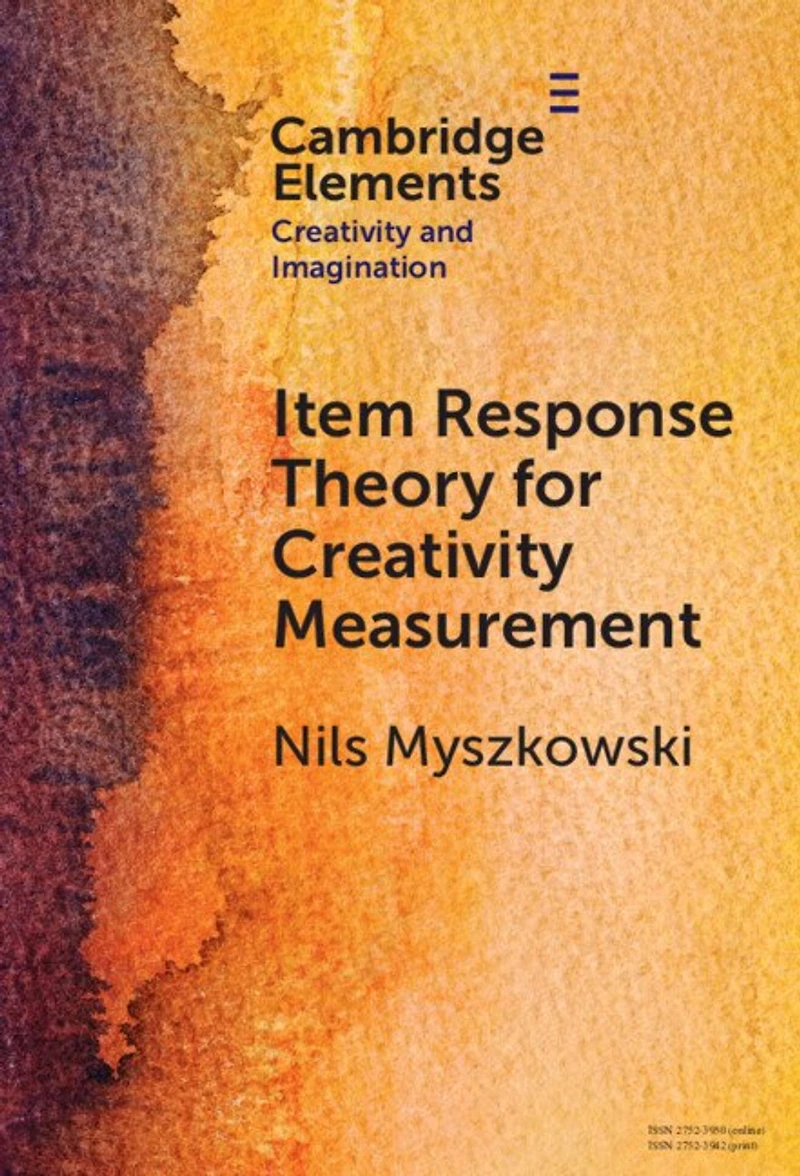
Item Response Theory for Creativity Measurement
Current price: $94.73

Item Response Theory for Creativity Measurement
Current price: $94.73
Loading Inventory...
Size: Hardcover
*Product information may vary - to confirm product availability, pricing, shipping and return information please contact Indigo
Item-response theory (IRT) represents a key advance in measurement theory. Yet, it is largely absent from curricula, textbooks and popular statistical software, and often introduced through a subset of models. This Element, intended for creativity and innovation researchers, researchers-in-training, and anyone interested in how individual creativity might be measured, aims to provide 1) an overview of classical test theory (CTT) and its shortcomings in creativity measurement situations (e.g., fluency scores, consensual assessment technique, etc.); 2) an introduction to IRT and its core concepts, using a broad view of IRT that notably sees CTT models as particular cases of IRT; 3) a practical strategic approach to IRT modeling; 4) example applications of this strategy from creativity research and the associated advantages; and 5) ideas for future work that could advance how IRT could better benefit creativity research, as well as connections with other popular frameworks.
Item-response theory (IRT) represents a key advance in measurement theory. Yet, it is largely absent from curricula, textbooks and popular statistical software, and often introduced through a subset of models. This Element, intended for creativity and innovation researchers, researchers-in-training, and anyone interested in how individual creativity might be measured, aims to provide 1) an overview of classical test theory (CTT) and its shortcomings in creativity measurement situations (e.g., fluency scores, consensual assessment technique, etc.); 2) an introduction to IRT and its core concepts, using a broad view of IRT that notably sees CTT models as particular cases of IRT; 3) a practical strategic approach to IRT modeling; 4) example applications of this strategy from creativity research and the associated advantages; and 5) ideas for future work that could advance how IRT could better benefit creativity research, as well as connections with other popular frameworks.
You May Also Like








More About Indigo at Erin Mills Town Centre
The largest book retailer in Canada also offers toys, music, home décor, gifts and lifestyle products. What's Inside...Books, Magazines, CD’s and DVD’s, Toys and Gifts, Home Accents, Electronics, Baby’s and Children’s Section, Bath and Body, Kitchen and Bedroom, Stationary Located outside in the exterior plaza.
5015 Glen Erin Dr, Mississauga, ON L5M 0R7, Canada
Find Indigo at Erin Mills Town Centre in Mississauga ON
Visit Indigo at Erin Mills Town Centre in Mississauga ON