

GIVE THE PERFECT GIFT
Erin Mills Town Centre Gift Cards are the perfect choice for your gift giving needs.Purchase gift cards at kiosks near the food court or centre court, at Guest Services, or click below to purchase online.PURCHASE HEREHome
Jaati ke Viruddh Gandhi ka Sangharsh by Nishikant Kolge, Paperback | Indigo Chapters
Indigo
Loading Inventory...
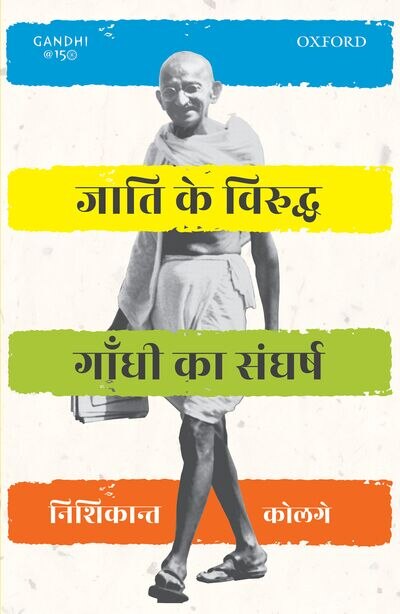
Jaati ke Viruddh Gandhi ka Sangharsh by Nishikant Kolge, Paperback | Indigo Chapters
By Nishikant Kolge
Current price: $32.87

By Nishikant Kolge
Jaati ke Viruddh Gandhi ka Sangharsh by Nishikant Kolge, Paperback | Indigo Chapters
Current price: $32.87
Loading Inventory...
Size: 25.4 x 216 x 1
*Product information may vary - to confirm product availability, pricing, shipping and return information please contact Indigo
In 1909, while still in South Africa, Gandhi publicly decried the caste system for its inequalities. Shortly after his return to India though, he spoke of the generally beneficial aspects of caste. Gandhi's writings on caste reflect contradictory views and his critics accuse him of neglectingthe unequal socio-economic structure that relegated Dalits to the bottom of the caste hierarchy. So, did Gandhi endorse the fourfold division of the Indian society or was he truly against caste? In this book, Nishikant Kolge investigates the entire range of what Gandhi said or wrote about castedivisions over a period of more than three decades: from his return to India in 1915 to his death in 1948. Interestingly, Kolge also maps Gandhi's own statements that undermined his stance against the caste system. These writings uncover the strategist Gandhi who understood that socialtransformation had to be a slow process for the conservative but powerful section of Hindus who were not yet ready for radical reforms. Seven decades after it attained freedom from colonial powers, caste continues to influence the socio-political dynamics of India, and Gandhi against caste - thebattle is not over yet. | Jaati ke Viruddh Gandhi ka Sangharsh by Nishikant Kolge, Paperback | Indigo Chapters
In 1909, while still in South Africa, Gandhi publicly decried the caste system for its inequalities. Shortly after his return to India though, he spoke of the generally beneficial aspects of caste. Gandhi's writings on caste reflect contradictory views and his critics accuse him of neglectingthe unequal socio-economic structure that relegated Dalits to the bottom of the caste hierarchy. So, did Gandhi endorse the fourfold division of the Indian society or was he truly against caste? In this book, Nishikant Kolge investigates the entire range of what Gandhi said or wrote about castedivisions over a period of more than three decades: from his return to India in 1915 to his death in 1948. Interestingly, Kolge also maps Gandhi's own statements that undermined his stance against the caste system. These writings uncover the strategist Gandhi who understood that socialtransformation had to be a slow process for the conservative but powerful section of Hindus who were not yet ready for radical reforms. Seven decades after it attained freedom from colonial powers, caste continues to influence the socio-political dynamics of India, and Gandhi against caste - thebattle is not over yet. | Jaati ke Viruddh Gandhi ka Sangharsh by Nishikant Kolge, Paperback | Indigo Chapters
You May Also Like













More About Indigo at Erin Mills Town Centre
The largest book retailer in Canada also offers toys, music, home décor, gifts and lifestyle products. What's Inside...Books, Magazines, CD’s and DVD’s, Toys and Gifts, Home Accents, Electronics, Baby’s and Children’s Section, Bath and Body, Kitchen and Bedroom, Stationary Located outside in the exterior plaza.
5015 Glen Erin Dr, Mississauga, ON L5M 0R7, Canada
Find Indigo at Erin Mills Town Centre in Mississauga ON
Visit Indigo at Erin Mills Town Centre in Mississauga ON