

GIVE THE PERFECT GIFT
Erin Mills Town Centre Gift Cards are the perfect choice for your gift giving needs.Purchase gift cards at kiosks near the food court or centre court, at Guest Services, or click below to purchase online.PURCHASE HEREHome
Japanese Mathematics in the Edo Period (1600-1868): A study of the works of Seki Takakazu (?-1708) and Takebe Katahiro (1664-1739)
Indigo
Loading Inventory...
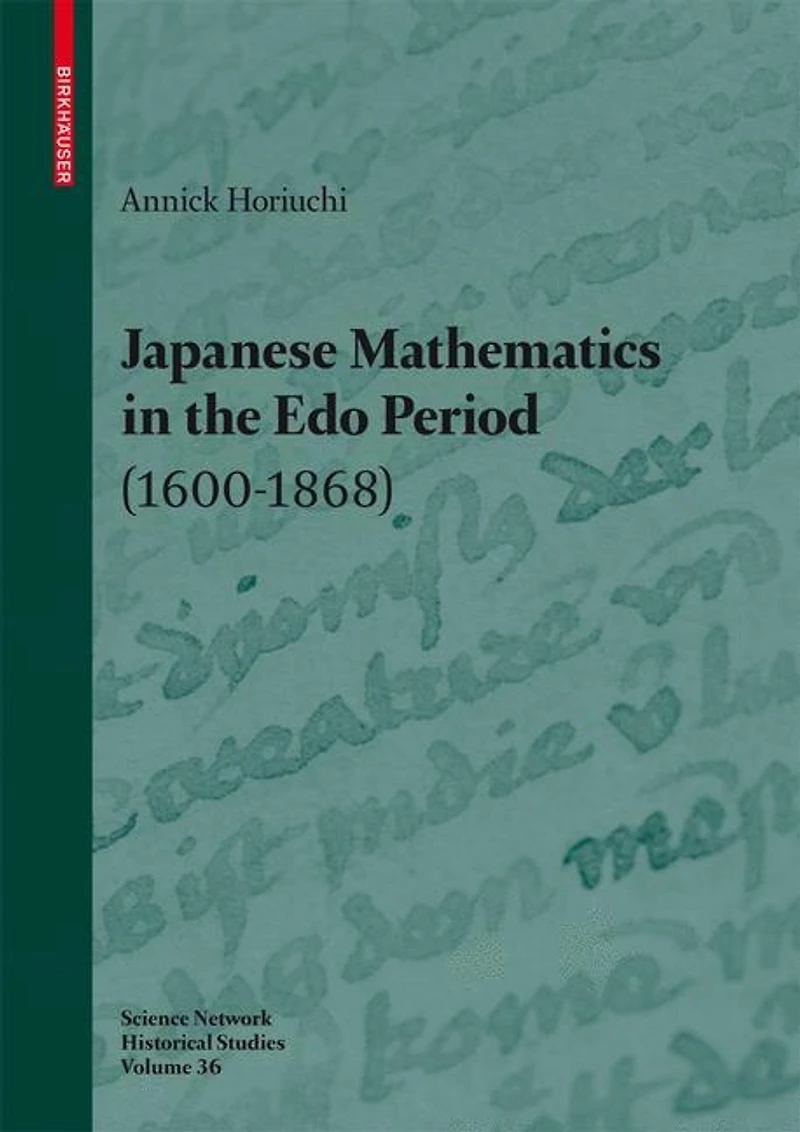
Japanese Mathematics in the Edo Period (1600-1868): A study of the works of Seki Takakazu (?-1708) and Takebe Katahiro (1664-1739)
Current price: $364.95

Japanese Mathematics in the Edo Period (1600-1868): A study of the works of Seki Takakazu (?-1708) and Takebe Katahiro (1664-1739)
Current price: $364.95
Loading Inventory...
Size: Hardcover
*Product information may vary - to confirm product availability, pricing, shipping and return information please contact Indigo
More than ?fteen years have passed since this book was published in French. Ideally this work, which originated from a doctoral thesis defended in 1990 at the University of Paris Diderot, should have been partially rewritten for the English edition, thereby incorporating the latest research results in its argumentation. But this was not the choice taken, since it would have delayed making this work, which brings together useful information for all those who are interested in wasan and eager to delve more deeply into its tradition, available to the English reader. Indeed, the special feature of this study is to present a high-level mathematical production while at the same time placing it in its historical context. This context here is Tokugawa Japan and, more speci?cally, the milieu of the scholars of samurai (warrior) origin. While explaining the indispensable social, economical and poli- cal background, we have not neglected mathematical analysis, since wasan reached its most beautiful results with the two mathematicians Seki Takakazu and Takebe Katahiro. Their works abound in lessons, not only for all those who are interested in the history of algebra and of analysis, but also in epistemological questions.
More than ?fteen years have passed since this book was published in French. Ideally this work, which originated from a doctoral thesis defended in 1990 at the University of Paris Diderot, should have been partially rewritten for the English edition, thereby incorporating the latest research results in its argumentation. But this was not the choice taken, since it would have delayed making this work, which brings together useful information for all those who are interested in wasan and eager to delve more deeply into its tradition, available to the English reader. Indeed, the special feature of this study is to present a high-level mathematical production while at the same time placing it in its historical context. This context here is Tokugawa Japan and, more speci?cally, the milieu of the scholars of samurai (warrior) origin. While explaining the indispensable social, economical and poli- cal background, we have not neglected mathematical analysis, since wasan reached its most beautiful results with the two mathematicians Seki Takakazu and Takebe Katahiro. Their works abound in lessons, not only for all those who are interested in the history of algebra and of analysis, but also in epistemological questions.
You May Also Like














More About Indigo at Erin Mills Town Centre
The largest book retailer in Canada also offers toys, music, home décor, gifts and lifestyle products. What's Inside...Books, Magazines, CD’s and DVD’s, Toys and Gifts, Home Accents, Electronics, Baby’s and Children’s Section, Bath and Body, Kitchen and Bedroom, Stationary Located outside in the exterior plaza.
5015 Glen Erin Dr, Mississauga, ON L5M 0R7, Canada
Find Indigo at Erin Mills Town Centre in Mississauga ON
Visit Indigo at Erin Mills Town Centre in Mississauga ON