

GIVE THE PERFECT GIFT
Erin Mills Town Centre Gift Cards are the perfect choice for your gift giving needs.Purchase gift cards at kiosks near the food court or centre court, at Guest Services, or click below to purchase online.PURCHASE HEREHome
Jena Romanticism and Its Appropriation of Jakob Böhme: Theosophy, Hagiography, Literature
Indigo
Loading Inventory...
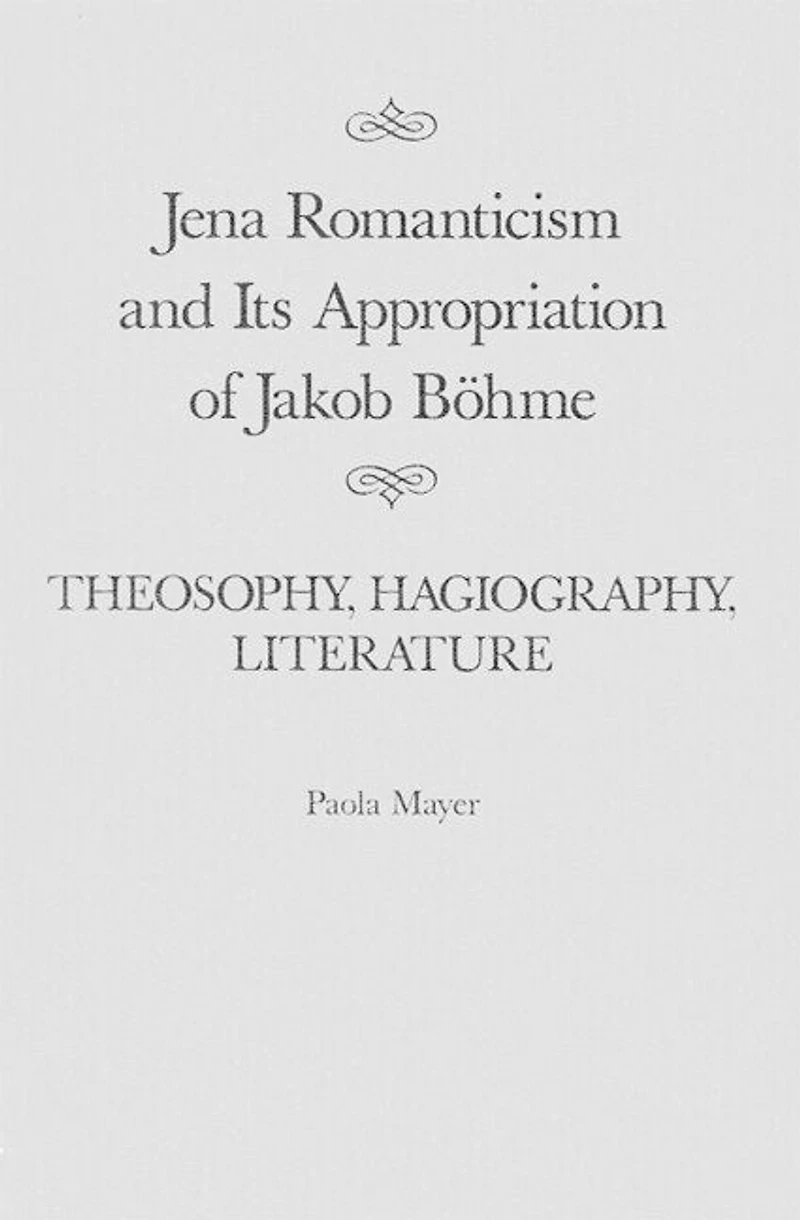
Jena Romanticism and Its Appropriation of Jakob Böhme: Theosophy, Hagiography, Literature
Current price: $125.00

Jena Romanticism and Its Appropriation of Jakob Böhme: Theosophy, Hagiography, Literature
Current price: $125.00
Loading Inventory...
Size: Hardcover
*Product information may vary - to confirm product availability, pricing, shipping and return information please contact Indigo
Interest in German Romanticism has been revitalized in recent years by new post-structural, interdisciplinary, and intertextual perspectives. However until now this renewed interest has not led to a re-examination of Jakob Böhme's formative influence on Jena Romanticism. In Jena Romanticism and Its Appropriation of Jakob Böhme Paola Mayer radically revises previous views, arguing that the relationship between Böhme and the Jena Romantics should be understood as appropriation rather than influence. This reversal of perspective leads to the recognition that Romanticism's interaction with Böhme was not passive but polemical, selective, and predatory. Not only was there not an influence, there was not even a Böhme, since his name and aspects of the writings were adapted to promote ideas wholly unrelated to any historical person or body of thought that might have been Böhme.
These appropriations fall into two main groups: those pertaining to the name Böhme or a life assigned to it, and those involving concepts or images from the mystic's oeuvre. The first group constituted an attempt to co-opt the aura of sanctity attached to portrayals of the poet-prophet in order to invest Romantic Poesie with the sacral standing of religion. The second group, exemplified by Friedrich Schlegel and Friedrich Schelling, involved the borrowing and radical redefinition of a few concepts and images from Böhme's work in the hope of bridging the gap between the abstract first principle of idealism and the personal God that became an emotional necessity for both thinkers.
Jena Romanticism and Its Appropriation of Jakob Böhme treats the Romantic reception of Böhme as a striking example of how the past is appropriated and rewritten in the service of self-affirmation. Analysing the need and the techniques for this self-affirmation sheds light on the nature of the self to be affirmed and on the content and underlying motivation of the Romantic program.
Interest in German Romanticism has been revitalized in recent years by new post-structural, interdisciplinary, and intertextual perspectives. However until now this renewed interest has not led to a re-examination of Jakob Böhme's formative influence on Jena Romanticism. In Jena Romanticism and Its Appropriation of Jakob Böhme Paola Mayer radically revises previous views, arguing that the relationship between Böhme and the Jena Romantics should be understood as appropriation rather than influence. This reversal of perspective leads to the recognition that Romanticism's interaction with Böhme was not passive but polemical, selective, and predatory. Not only was there not an influence, there was not even a Böhme, since his name and aspects of the writings were adapted to promote ideas wholly unrelated to any historical person or body of thought that might have been Böhme.
These appropriations fall into two main groups: those pertaining to the name Böhme or a life assigned to it, and those involving concepts or images from the mystic's oeuvre. The first group constituted an attempt to co-opt the aura of sanctity attached to portrayals of the poet-prophet in order to invest Romantic Poesie with the sacral standing of religion. The second group, exemplified by Friedrich Schlegel and Friedrich Schelling, involved the borrowing and radical redefinition of a few concepts and images from Böhme's work in the hope of bridging the gap between the abstract first principle of idealism and the personal God that became an emotional necessity for both thinkers.
Jena Romanticism and Its Appropriation of Jakob Böhme treats the Romantic reception of Böhme as a striking example of how the past is appropriated and rewritten in the service of self-affirmation. Analysing the need and the techniques for this self-affirmation sheds light on the nature of the self to be affirmed and on the content and underlying motivation of the Romantic program.
You May Also Like









More About Indigo at Erin Mills Town Centre
The largest book retailer in Canada also offers toys, music, home décor, gifts and lifestyle products. What's Inside...Books, Magazines, CD’s and DVD’s, Toys and Gifts, Home Accents, Electronics, Baby’s and Children’s Section, Bath and Body, Kitchen and Bedroom, Stationary Located outside in the exterior plaza.
5015 Glen Erin Dr, Mississauga, ON L5M 0R7, Canada
Find Indigo at Erin Mills Town Centre in Mississauga ON
Visit Indigo at Erin Mills Town Centre in Mississauga ON